


Yellow Gold Cravat Pin
These yellow gold cravat pin examples are small Victorian and Edwardian jewels designed to fasten neckwear, offering a neat flash of gold and gems.
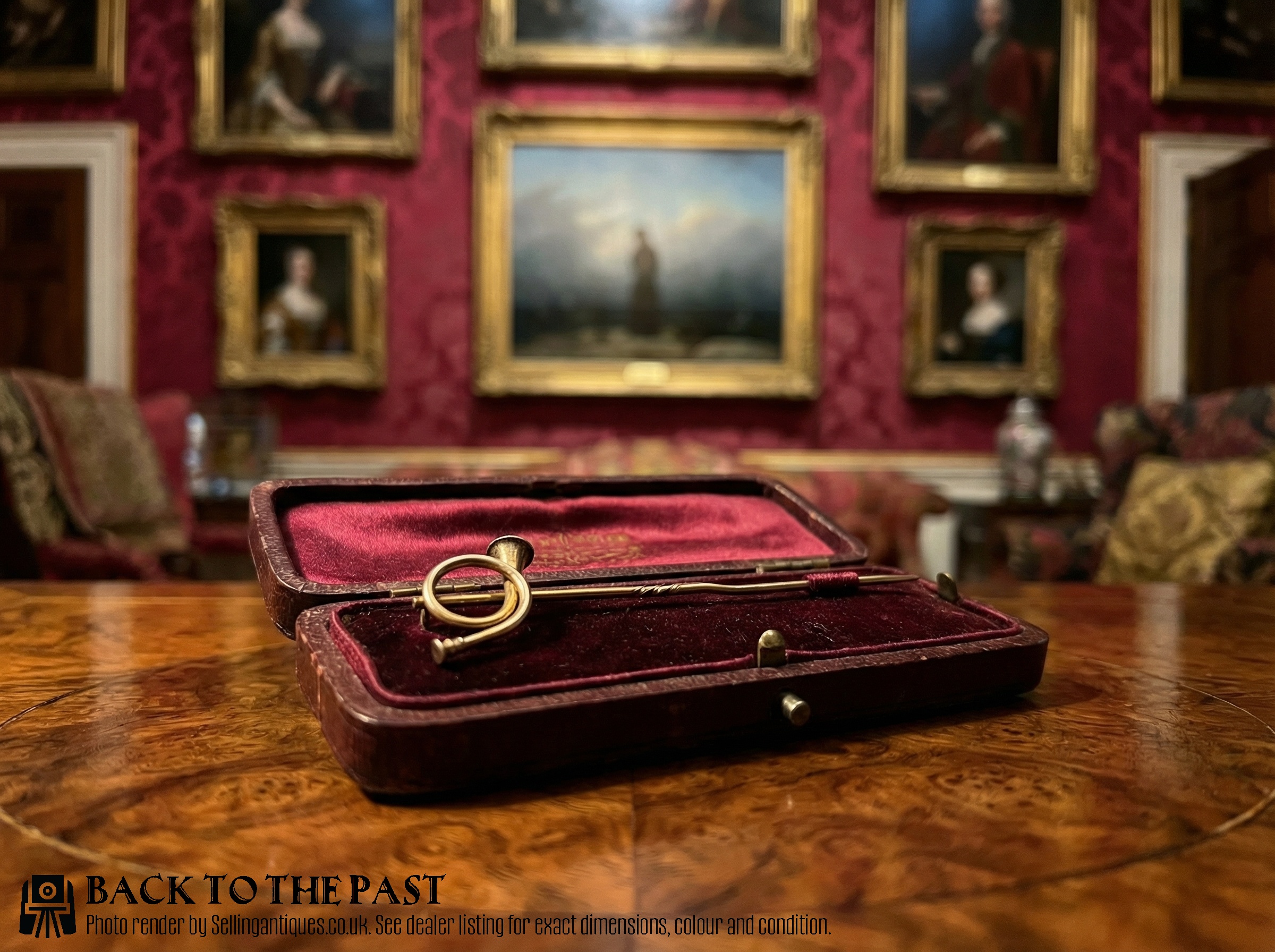
Yellow Gold Cravat Pin
A yellow gold cravat pin serves as a decorative fastener for traditional neckties and cravats, originating in periods when gentlemen wore elaborate collars and scarves. These items frequently appear as stick pins or small brooches, often adapted or worn interchangeably across the nineteenth and twentieth centuries.
The motifs reflect distinct equestrian, maritime, and sporting themes alongside miniature portraits and classic bar designs. Each piece demonstrates the precise craftsmanship expected of period gentlemen's jewellery.
Materials and construction
Makers shaped these jewels using varying purities of yellow gold, ranging from nine carat up to eighteen carat, paired with traditional hand fabrication techniques. Metalwork details include cannetille wirework and delicate bar structures designed to secure thick fabrics.
Gems such as old cut European diamonds, seed pearls, baroque pearls, and garnets are flush or prong set into the gold mountings. Specialised artistic inclusions like Essex crystal and miniature portraits on ivory or card further augment the decorative heads.
Listings feature gold purities ranging from 9ct to 18ct, alongside platinum and silver elements.
Determining quality in period stick pins
Quality rests upon the crispness of the chased or engraved metalwork, particularly in figurative motifs like jockey caps or hunting bugles where detail defines the subject. Superior examples maintain intact pin stems and secure stone settings that withstand regular wear.
The choice of embellishment separates standard utility items from finer workshop output, distinguishing simple gold wire from pieces set with matched old cut diamonds or high quality pearls. Preservation of original enamelling, crystal tops, and precious metal hallmarks further elevates an individual piece.
The Yellow Gold Cravat Pin Glossary
- Cravat pin
- A decorative pin used to secure a cravat or necktie in place. These items typically feature an ornamental head mounted on a long metal pin.
- Cannetille
- A form of filigree ornamentation resembling gold or silver embroidery wire. This technique was popular during the nineteenth century to create textured, lightweight metal designs.
- Essex crystal
- A method of carving the reverse of a rock crystal cabochon and painting a detailed miniature subject beneath. When viewed from the front, the design appears three dimensional.
- Old cut diamond
- A hand faceted diamond shape predating modern brilliant cuts, characterised by a small table, high crown, and open culet. These stones catch candlelight and low illumination effectively.
Yellow Gold Cravat Pin: Frequently Asked Questions
What is a cravat pin used for?
A cravat pin fastens a gentleman's neckwear by piercing through the folds of the cloth and securing against a backing or into the fabric. They functioned as both practical fasteners and visible statements of personal taste.
Today, collectors wear them as lapel pins, hat ornaments, or scarf fasteners, adapting their traditional function to modern wardrobes.
How do I date an antique stick pin?
Dating relies on examining the metal purity marks, the cutting style of any gemstones, and the specific motifs associated with distinct eras. Victorian pieces often display naturalistic or sporting themes, while Edwardian versions favour lighter filigree and pearls.
Stylistic clues like cannetille work or miniature portraits point directly to nineteenth century workshop practices.
Are these pins strong enough to wear?
Most period pins retain sturdy gold shafts suitable for placement through medium weight fabrics like wool or heavy silk. Care is required when pushing the pin through tightly woven materials to avoid bending the thin metal.
Using the original safety cap or a modern backing clutch helps secure the piece during daily wear.
What motifs are common on these pins?
Equestrian and sporting themes dominate the selections, featuring items like horseshoes, jockey caps, hunting bugles, and fox heads. Maritime badges and miniature portraits also appear frequently.
These subjects reflect the leisure pursuits and club memberships of the original owners.