




Yellow Flower Oil Painting
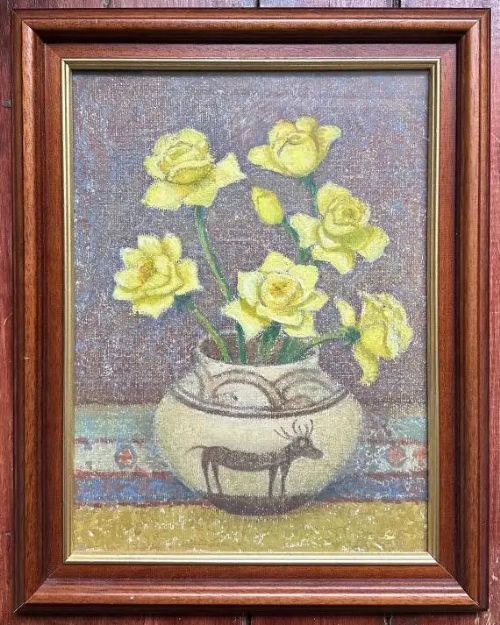
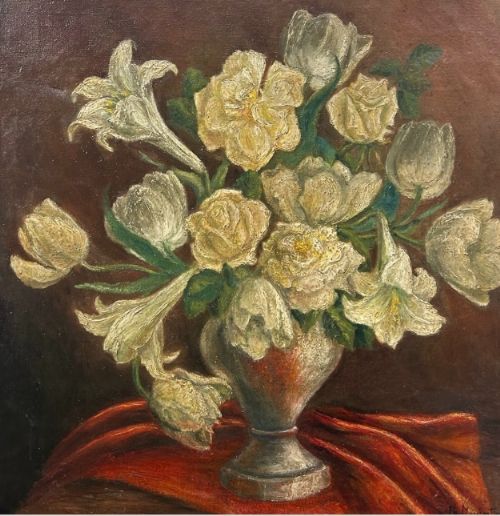
A yellow flower oil painting brings immediate light and warmth into a room, offering enduring floral subjects rendered in rich pigments.
Yellow Flower Oil Painting
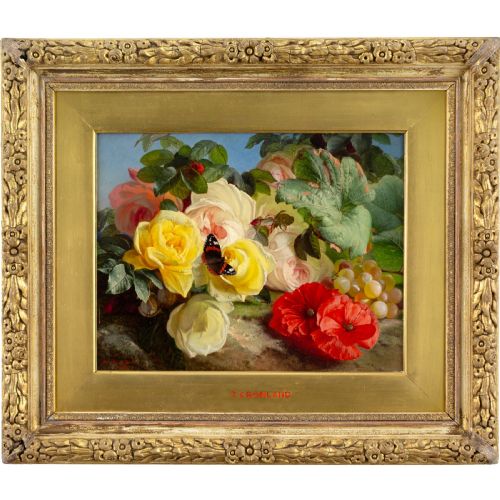
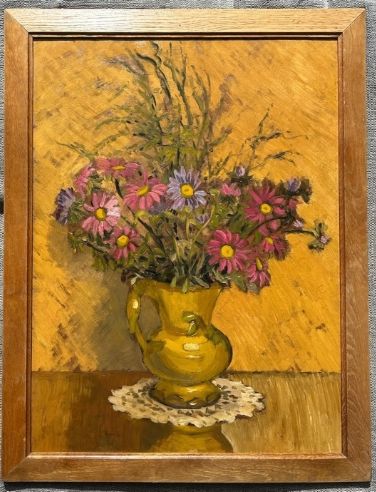
A yellow flower oil painting captures botanical subjects through various historical periods, spanning from Victorian and nineteenth-century works to mid-century modern interpretations. These pieces typically depict still life arrangements in vases, baskets, or garden settings.
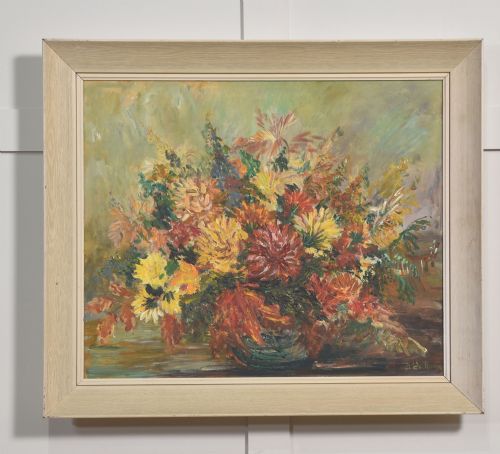
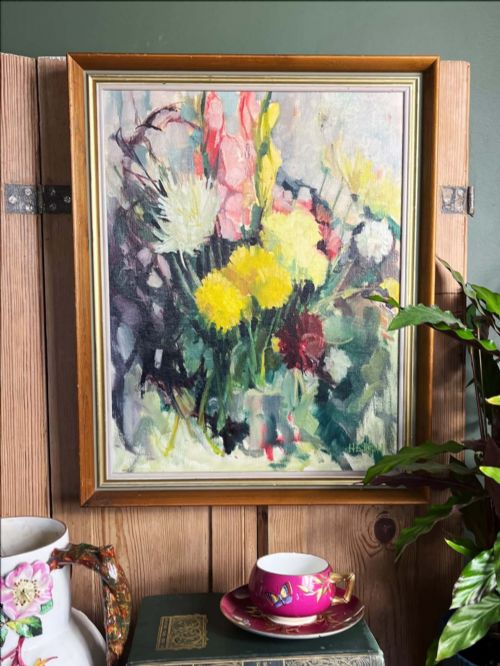
The selection frequently includes mid-century examples from British, French, and Belgian artists working in impressionist and modern styles. Buyers encounter both intimate studies on board and larger canvases depicting vibrant floral displays.
Materials and methods
Artists apply oil paint using traditional brushwork or impasto techniques onto supports such as canvas, wood, board, and occasionally metal. The dense pigmentation of oil allows for rich colour layering and textured depiction of petals and foliage.
Many works retain their original gilt or wooden frames, which complement the painted compositions and protect the edges of the canvas or board over decades of display.
The inventory records post-impressionist, mid-century modern, and nineteenth-century realism styles applied to floral compositions.
Gradations of quality
Quality rests in the confidence of the brushwork and the harmony of the colour palette, where skilled handling brings depth and luminosity to the floral subject. Superior compositions demonstrate a strong sense of light and space within the still life arrangement.
The distinction between standard decorative works and finer pieces often lies in the artist's ability to capture transient natural forms with expressive immediacy and balanced proportions.
Theude Grönland·Kenneth Cozens·D. L. Williams·Emma Fordyce MacRae·Amile Coppieters·Sir Matthew Smith·Robin MacKertich·Freda Marston·James Stuart Park·Ernest Higgins Rigg·Julien Stappers·Bertoldo Taubert·Louisa Mary Bancroft·William Greaves
The Yellow Flower Oil Painting Glossary
- Oil paint
- A slow-drying paint made by combining pigments with a drying oil, typically linseed oil. This medium allows artists to blend colours smoothly and build thick textured layers.
- Impasto
- A technique where paint is laid onto a surface in very thick layers, usually thick enough that the brush or painting-knife strokes are visible. It adds tactile dimension to floral petals.
- Still life
- A work of art depicting mostly inanimate subject matter, typically commonplace objects which may be either natural or man-made. Floral arrangements form a central category within this tradition.
- Post-Impressionism
- A predominantly French art movement that developed from about 1886 to 1905, extending impressionism while rejecting its limitations. Artists sought greater emotional expression through bold colour and form.
- Gilt
- A thin layer of gold applied to wood or other surfaces to create a decorative frame finish. Gilt frames are frequently found on nineteenth and twentieth-century paintings.
Yellow Flower Oil Painting: Frequently Asked Questions
What periods do these paintings come from?
The available selection spans from the Victorian era and the nineteenth century through the early decades of the twentieth century, with a strong representation of mid-century modern pieces from the 1950s and 1960s.
Different decades bring distinct stylistic approaches, moving from nineteenth-century realism toward impressionistic and modern British interpretations.
What surfaces were used for these artworks?
Artists painted on several distinct supports, most commonly stretched canvas and wooden board. Some works utilise canvas applied to board or metal sheets, particularly within mid-century and continental examples.
The choice of support often relates to the period and the artist's preferred method of applying oil pigments.
How should I hang and care for an oil painting?
Oil paintings require placement away from direct sunlight and excessive humidity to protect the canvas and pigments. Stable indoor environments prevent the wood and canvas from warping over time.
Dusting the surface gently with a soft, dry brush keeps the paint and frame in sound condition without risking moisture damage.
Are these paintings supplied with frames?
Many pieces retain their period frames, which often include wooden or gilt mouldings appropriate to the era of creation. These frames help complete the visual presentation of the artwork.
Details regarding the inclusion of a specific frame can be verified within individual listing descriptions.