




Yellow Etched Glass Vase
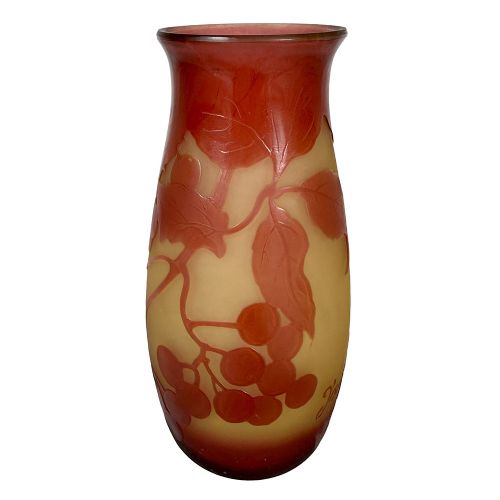
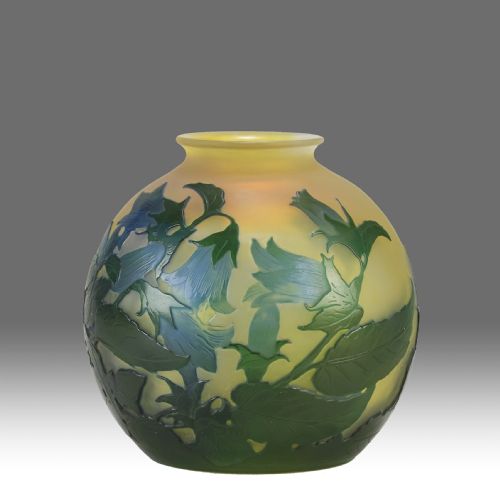
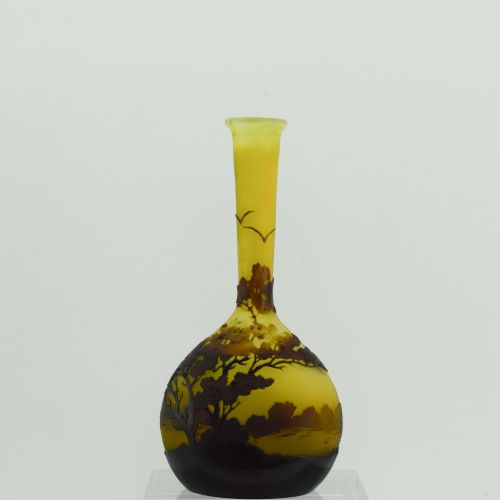
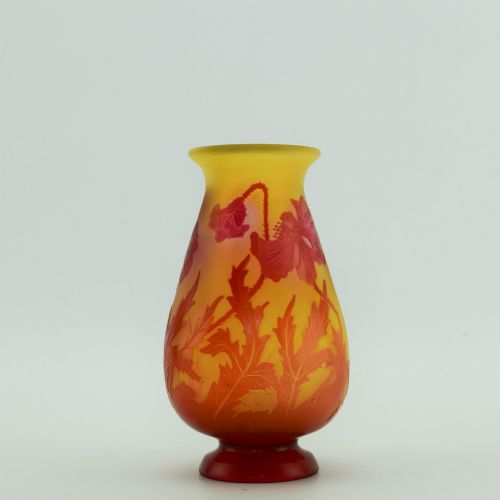
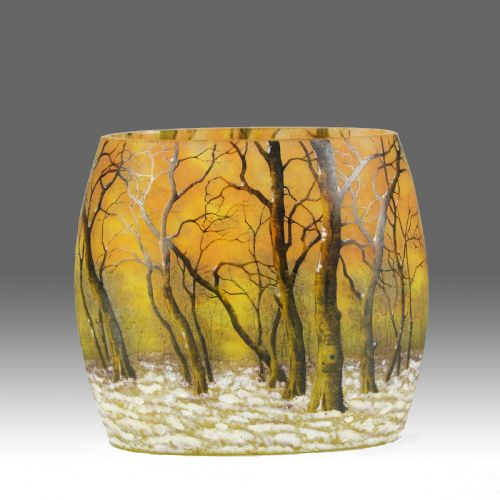
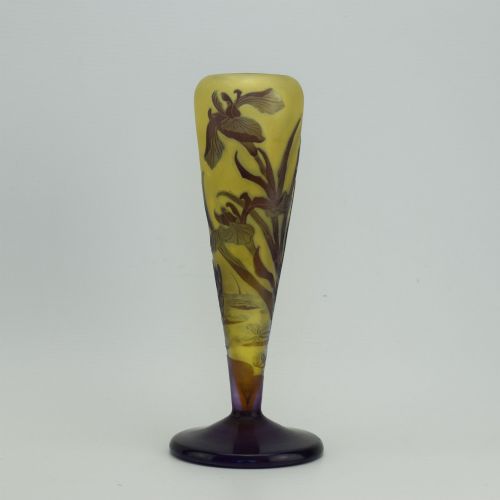
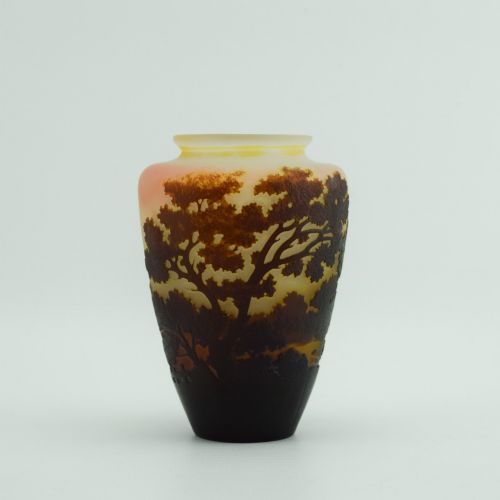
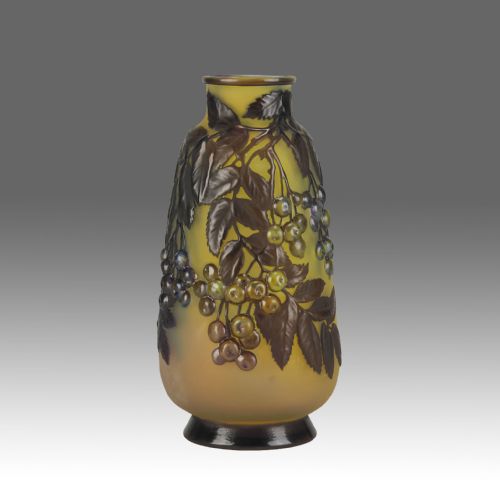
These yellow etched glass vase examples bring together the intricate botanical and landscape motifs of the early twentieth century.
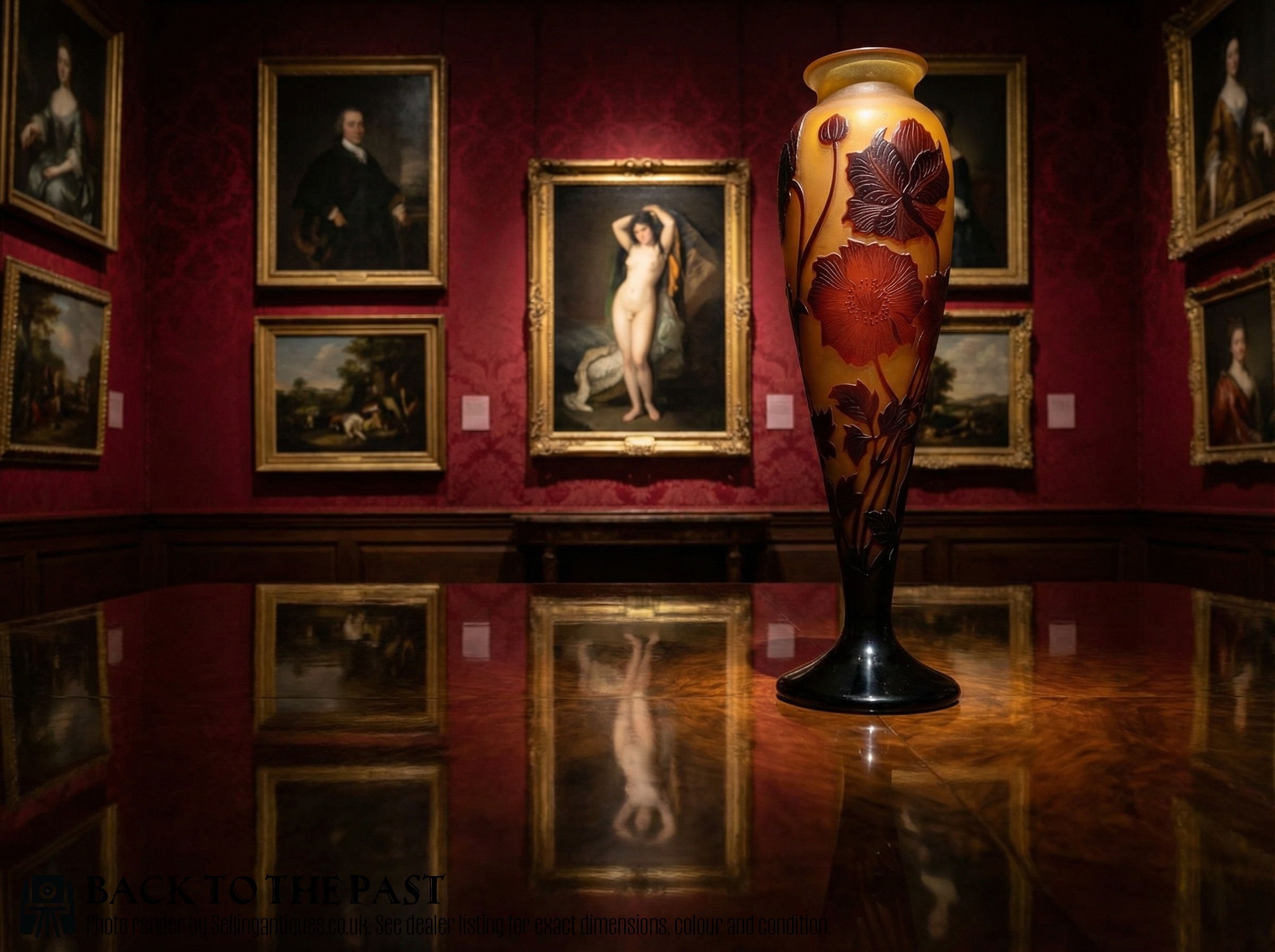
Yellow Etched Glass Vase
A yellow etched glass vase bridges the distinct decorative movements of the early twentieth century, spanning both organic Art Nouveau forms and geometric Art Deco designs. These vessels frequently display natural subjects rendered through layered or surfaced treatments upon a bright yellow ground.
The versions most common on this page date from the nineteen hundreds through the nineteen thirties, originating primarily from French and Czech workshops. They showcase varying silhouettes from slender banjo profiles to broad footed cylinders.
How they were made
Makers utilised layered cameo glass techniques alongside acid-etching and surface enamelling to build up rich, multi-toned botanical scenes. Molten glass additions and surface carving allowed artists to cut back through contrasting coloured layers to reveal the yellow ground beneath.
Acid treatments provided fine control over frosted textures and sharp outlines, while hand-applied enamel added contrasting colour details to floral and landscape subjects.
Several botanical vases manage to capture everlasting summer fields entirely in glass.
What varies in quality
The sophistication of the cameo carving dictates the visual depth of the design, with superior examples showing precise relief and nuanced shading across the floral or landscape motifs. Shallower etching yields a flatter silhouette lacking the atmospheric perspective seen in finer studio output.
The harmony of the colour palette and the crispness of the enamel work distinguish masterworks from standard production pieces. A well-balanced yellow ground enhances the contrast of the overlaid glass layers.
Emile Gallé·Daum Frères·Karl Palda·Paul Nicolas·Legras
The Yellow Etched Glass Vase Glossary
- Cameo Glass
- Glass vessels formed of two or more distinct layers of colours fused together, allowing portions to be carved away to create raised designs. This method requires considerable skill to avoid cutting through the thin outer layer.
- Acid-Etched Glass
- Glass treated with hydrofluoric acid to eat away exposed surfaces for decorative patterns or frosted textures. The technique became widespread during the Art Nouveau period for mass-producing intricate surface designs.
- Enamel
- Opaque or translucent vitreous composition applied to the glass surface and fired to bond permanently. It provides vibrant supplementary colour details on floral and landscape scenes.
- Frosted Glass
- A translucent surface finish achieved by acid treatment or sandblasting to diffuse light uniformly. This texture softens the appearance of the glass and highlights carved details.
- Art Nouveau
- A decorative style popular around nineteen hundred characterised by fluid, asymmetrical plant and floral motifs. Makers translated these organic lines directly onto curved glass surfaces.
Yellow Etched Glass Vase: Frequently Asked Questions
What periods do these pieces span?
The available selection focuses primarily on the early twentieth century, capturing the height of Art Nouveau production around nineteen hundred and nineteen ten.
Later examples extend into the nineteen thirties, reflecting the geometric shift toward Art Deco aesthetics in Central Europe.
How should I display my vase?
Placing the vessel near a natural light source allows translucent cameo layers and frosted backgrounds to illuminate fully.
Sufficient clearance lets the botanical or landscape motifs be viewed clearly from multiple angles without visual clutter.
What subjects appear on these vessels?
Decorations frequently feature botanical studies such as poppies, irises, cornflowers, and sycamore leaves, alongside atmospheric winter or summer landscapes.
These naturalistic subjects utilise the underlying yellow glass to simulate sunlight filtering through foliage or petals.