
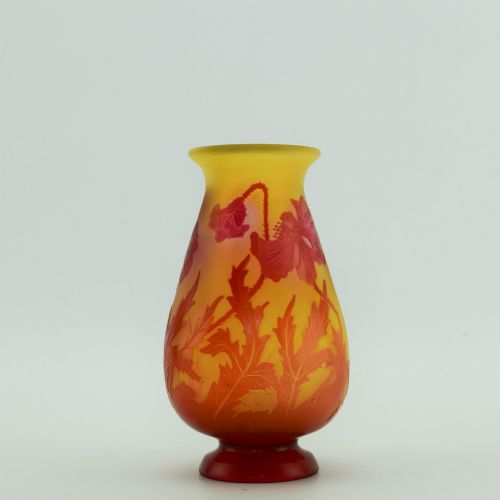
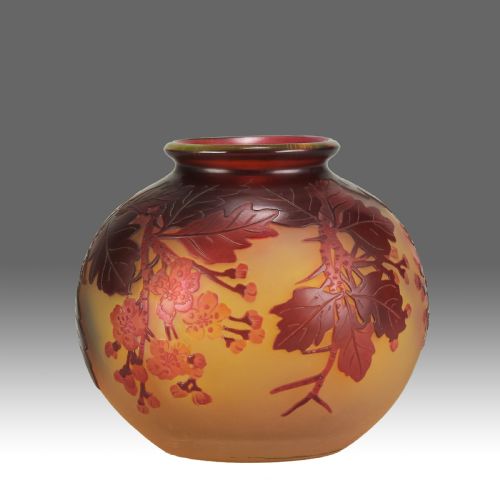


Red Floral Glass Vase
These red floral glass vase pieces bring rich botanical colour and cameo craftsmanship into a room.
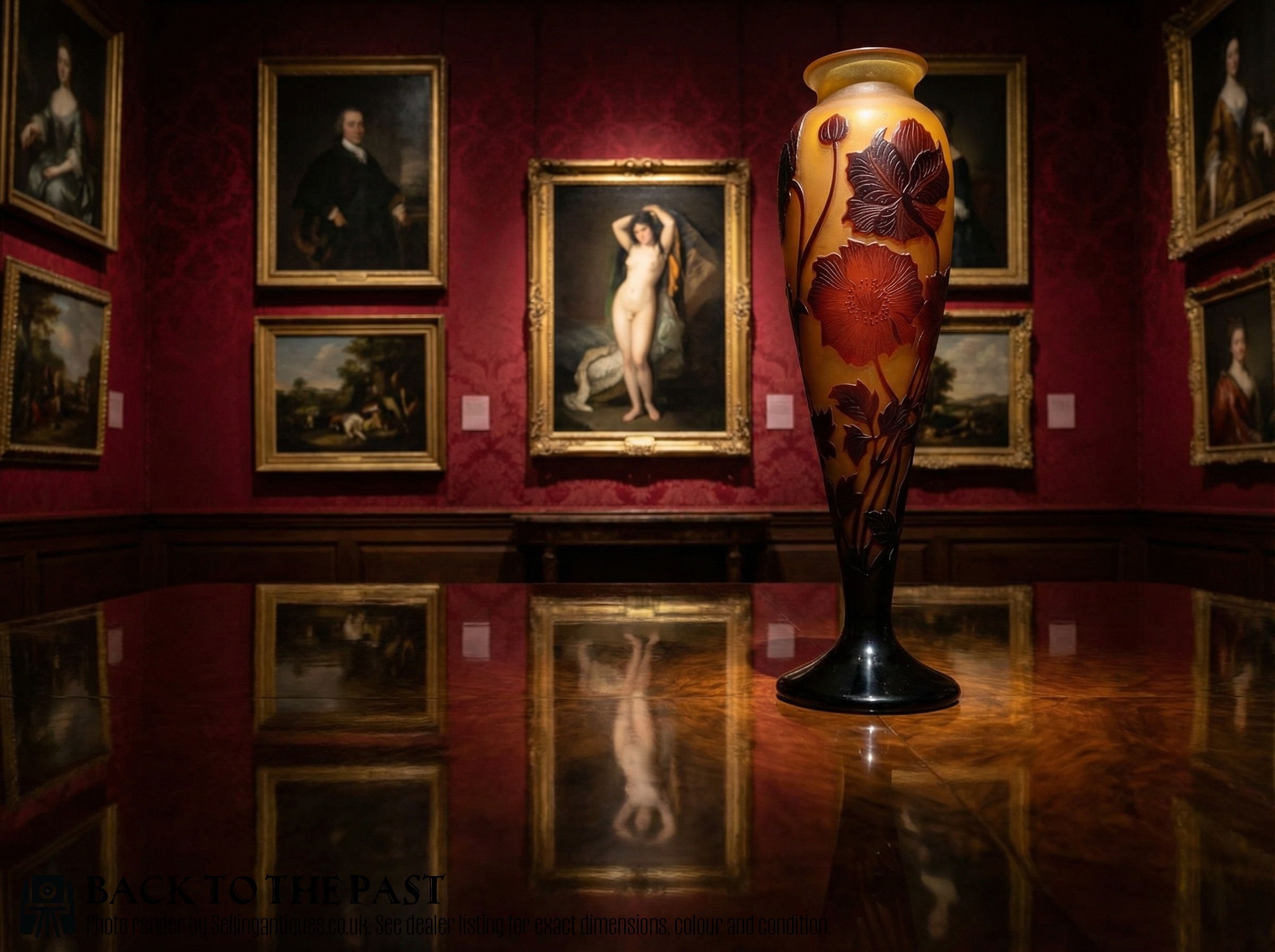
Red Floral Glass Vase
A red floral glass vase brings together layered glass techniques and botanical decoration, often taking the form of bulbous vessels and footed shapes. These pieces frequently showcase floral motifs such as poppies, camellias, apple blossoms, and clematis executed in contrasting hues.
The selections available here span the late Victorian period through the Art Nouveau and Art Deco eras, capturing the height of cameo glass production. French and English workshops dominate the records, showing distinct regional approaches to botanical subjects on coloured glass grounds.
Methods and materials
Makers utilised layered cameo glass techniques, fusing multiple colours of glass together before carving or acid-etching the surface to reveal the floral design in relief. Some examples incorporate frosted or blown glass bodies alongside detailed etching to create depth.
Certain pieces integrate surface embellishments like gold leaf to highlight the botanical motifs, while others rely entirely on the contrast between opaque red overlays and pale backgrounds.
Clematis and poppy petals frozen in red glass ensure eternal bloom without the need for watering.
Assessing quality and execution
Quality rests in the depth and undercut of the cameo carving, where sharper definition and subtle colour gradation distinguish finer vessels from simpler productions. The crispness of acid-etching and the harmony of the floral composition dictate the overall artistic success.
Provenance and signature placement also influence standing, particularly on works attributed to prominent French and English glass houses where the glassmaker's hand is clearly discernible.
Galle·Thomas Webb and Sons·Baccarat·Paul Nicholas for D'Argental
The Red Floral Glass Vase Glossary
- Cameo Glass
- A form of luxury glassware produced by fusing layers of different coloured glass and then carving or acid-etching the outer layer away to create a contrasting design. This method demands immense skill from the glassmaker to maintain even thickness.
- Acid-Etched Glass
- Glass decorated by applying acid to eat away exposed areas, leaving the protected design in relief. It offers a precise alternative to hand-carving.
- Frosted Glass
- Glass treated to have a textured, translucent surface rather than a transparent finish. This treatment softens the light passing through the vessel.
- Art Nouveau
- A decorative style characterised by flowing, organic lines inspired by natural forms. It heavily influenced the floral motifs found on turn of the century glassware.
Red Floral Glass Vase: Frequently Asked Questions
How do I care for my vase?
Wash the glass gently by hand using lukewarm water and mild soap, avoiding harsh scrubbing brushes or abrasive cleaning agents that might harm the surface. Dry with a soft, lint-free cloth to protect the decorative carved layers.
Keep the piece away from direct sunlight and sudden temperature changes to preserve the integrity of the coloured glass and any applied details.
Where were these pieces made?
The pieces originate primarily from renowned European workshops in France and England during the late nineteenth and early twentieth centuries. French centres like Nancy produced significant cameo output.
English glasshouses such as those in Stourbridge also contributed major examples utilising similar cased glass techniques.
What is cameo glass?
Cameo glass is formed by fusing two or more distinct layers of coloured glass together while hot. Artisans then carve away the outer layer to expose the contrasting colour beneath.
This creates a striking relief decoration, particularly suited to floral and botanical themes.
How do I identify the period?
Dating relies on stylistic markers such as the flowing organic curves typical of Art Nouveau or the geometric tendencies of Art Deco. Signatures and acid-stamps etched into the glass often provide firm attribution to specific makers and eras.
The weight, colour palette, and floral subject matter also align with known production periods from the Victorian era onward.