


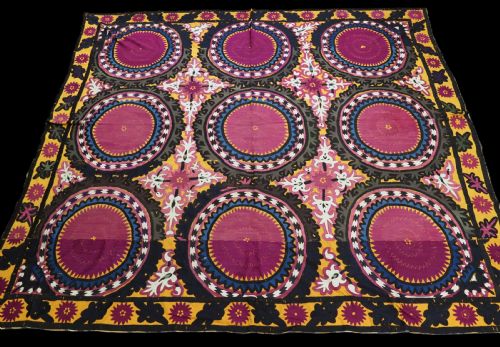


Yellow Embroidered Textile
These yellow embroidered textile pieces bring warmth and rich cultural history into a room through vibrant needlework.
Yellow Embroidered Textile
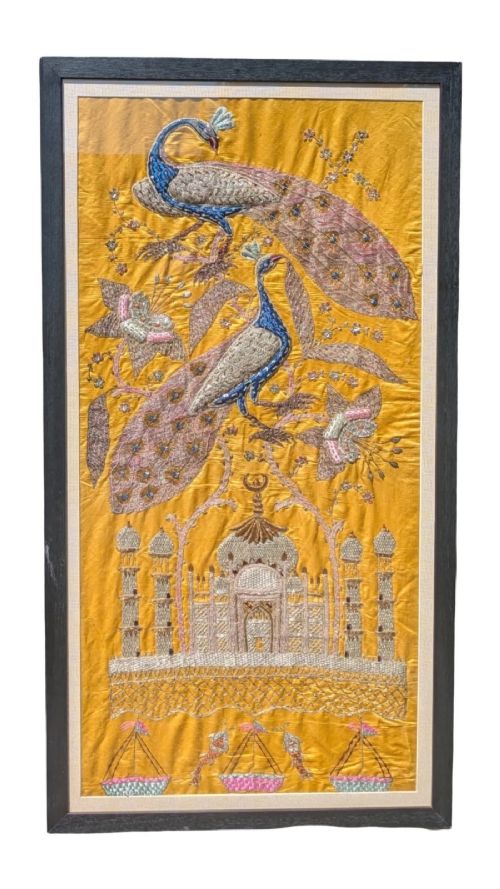
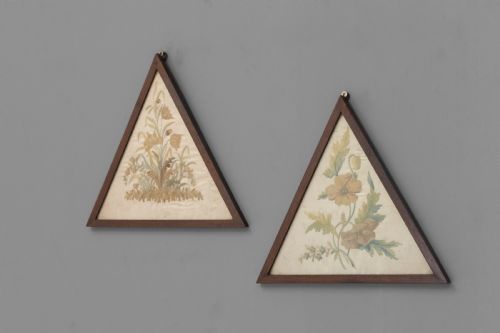
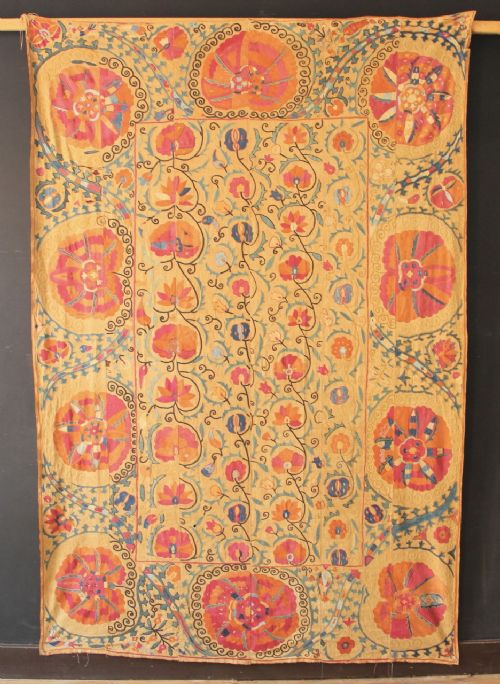
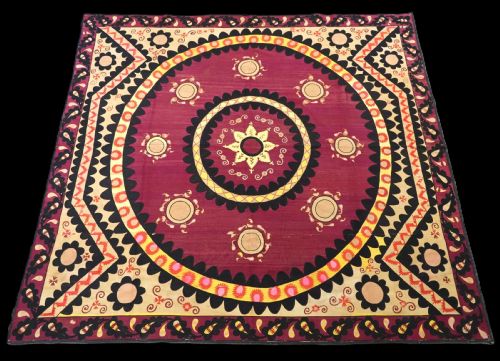
When you search for a yellow embroidered textile, you encounter works originating from Central Asia, India, and England, spanning from the nineteenth century into the twentieth century. The most common forms on this page are Uzbek suzanis, prayer suzanis, and framed Indian panels.
Makers utilised various formats, including large medallion variants, repeat designs, and fully embroidered Tashkent palak suzanis. Pieces serve as wall hangings, runners, and framed textile art for interiors.
The aesthetic ranges from tribal Central Asian motifs to English country house styles and Indian depictions of monuments like the Taj Mahal with peacocks. Each object displays distinct regional needlework traditions applied to cotton, silk, and wool grounds.
How they were made
Artisans worked silk embroidery threads onto cotton or wool foundations, sometimes incorporating metallic thread for enhanced detail. Certain Central Asian examples feature dense needlework covering the entire ground.
Makers constructed specialised formats such as prayer suzanis and dowry ilgich embroideries intended for wall hanging. Supporting structures sometimes include wooden frames and glass for protection.
The listings feature textiles spanning the nineteenth and early twentieth centuries, with materials including silk, cotton, wool, wood, glass, and metallic thread.
What varies in quality
The density and complexity of the needlework define the upper tier of these textiles, particularly in fully embroidered palak suzanis. Finer execution shows in the precision of repeat designs and medallion variants.
Material selection and colour saturation also separate standard examples from superior ones, especially where silk thread retains its vibrancy on cotton grounds. The survival of intricate metallic thread work contributes to a piece's visual impact.
The Yellow Embroidered Textile Glossary
- Suzani
- A type of embroidered tribal textile originating from Central Asia, traditionally worked in silk on a cotton ground. These large decorative hangings often feature floral and medallion motifs.
- Palak
- A fully embroidered Central Asian suzanis style where the background is densely covered in needlework. This intensive technique represents a high standard of regional craftsmanship.
- Ilgich
- A dowry embroidery created by tribes such as the Lakai for domestic display and wall hanging. These pieces carry specific cultural significance within Central Asian textile traditions.
- Prayer format
- A compositional layout featuring an architectural arch or mihrab design, commonly found in rugs and textiles intended for devotional contexts.
Yellow Embroidered Textile: Frequently Asked Questions
How do I hang a textile?
Many of these pieces function effectively as wall art or framed textiles. Proper mounting methods prevent strain on the historical fabric.
Larger suzanis and runner rugs suit direct wall hanging when supported evenly across the upper edge.
What is a suzani?
A suzani is a traditional embroidered textile from Uzbekistan and surrounding Central Asian regions. Artisans typically stitched silk threads onto cotton grounds.
These items served decorative and ceremonial purposes, including dowry displays and wall coverings.
How do I date an embroidery?
Dating relies on stylistic markers, materials, and regional traditions recorded in pieces from periods like the nineteenth and early twentieth centuries.
Examining the types of silk thread and cotton ground helps determine the era of production.
Where were these textiles made?
The pieces originate primarily from Central Asian workshops and tribes, including Uzbek and Lakai makers. Other examples hail from India and English country house traditions.
Regional styles dictate the specific motifs, such as medallion variants and architectural scenes.