

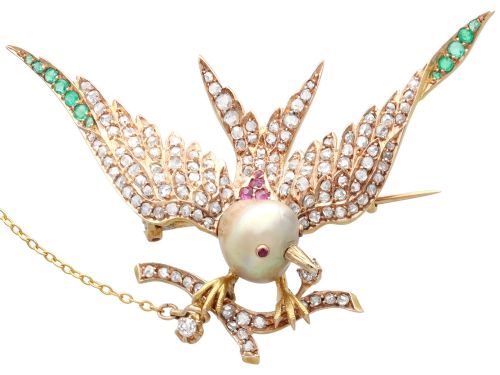


Yellow Diamond Brooch
A yellow diamond brooch brings together warm precious metal and brilliant stones, offering a distinctive piece of historic jewellery to pin to a lapel or wear as a pendant.
Yellow Diamond Brooch
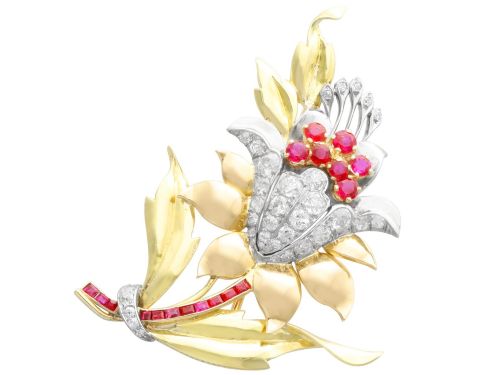
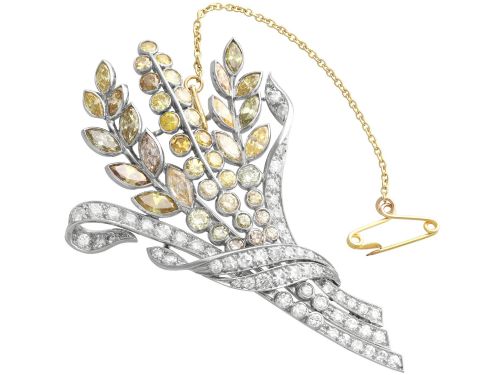
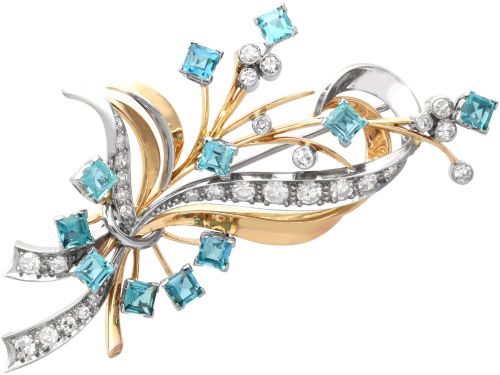
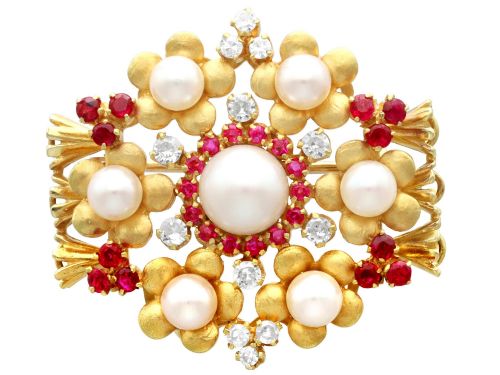
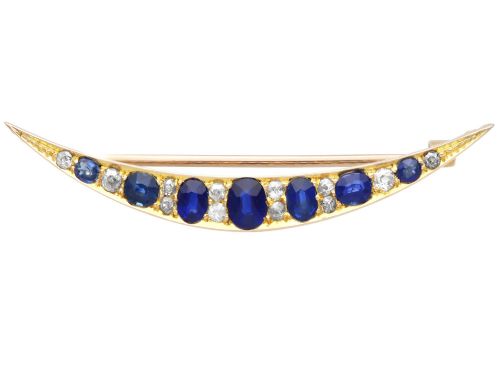
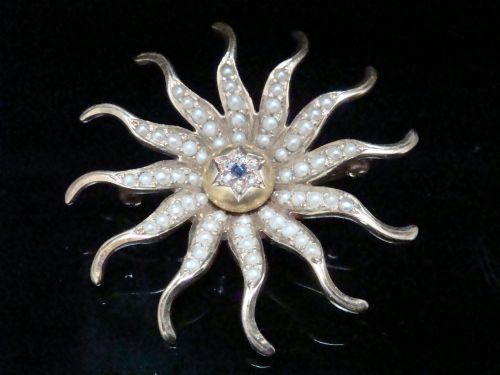
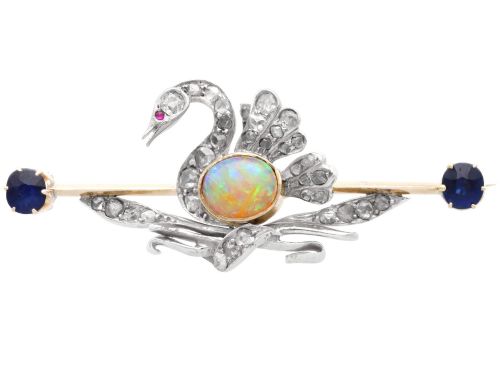
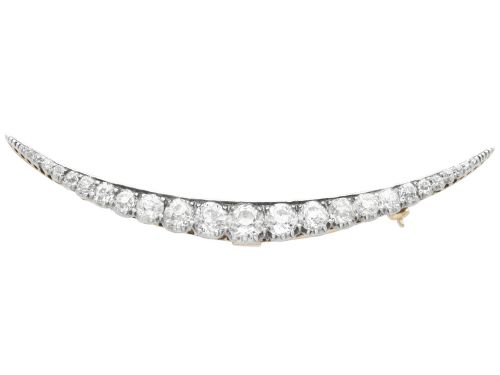
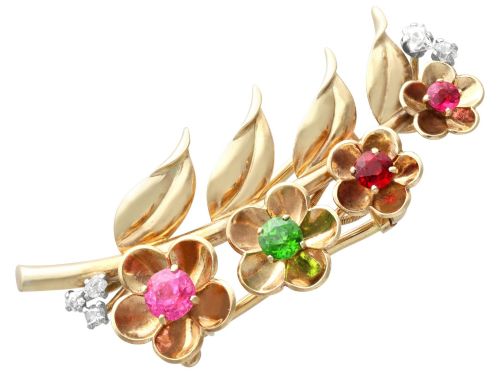
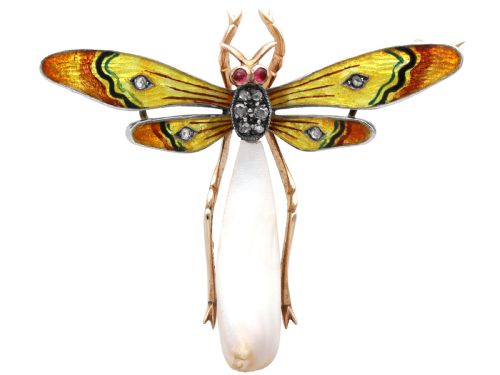
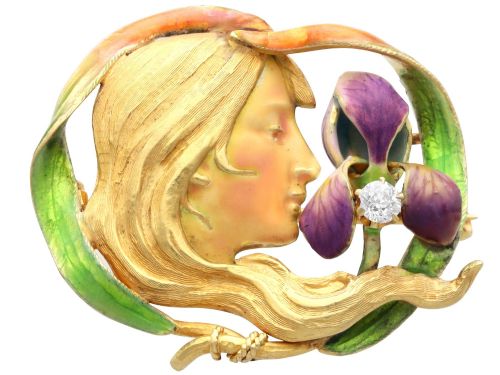
When you search for a yellow diamond brooch, you encounter pieces that span late nineteenth-century Victorian designs through to mid-century modern creations. The inventory draws heavily on Victorian, Edwardian, and Art Deco periods, encompassing floral sprays, crescent shapes, and zoomorphic forms such as birds and insects.
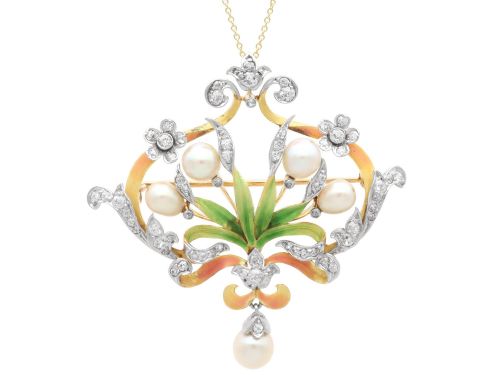
Many examples double as pendants, offering versatility through integrated loops or folding Bails alongside traditional pin mechanisms. Common configurations pair the central diamonds with contrasting coloured gems like rubies, sapphires, opals, and emeralds set in yellow gold, platinum, or silver.
Materials and Construction
Goldsmiths utilised varying purities of yellow gold, ranging from nine carat up to eighteen carat, occasionally combining rose gold or incorporating platinum and palladium settings to enhance the brilliance of the stones. Metalwork techniques such as cannetille work, delicate wire twist, and cast floral motifs provided structural depth to the brooch frames.
Lapidaries cut stones by hand, employing old European cuts and rose cuts that scatter candlelight and daylight differently than modern brilliant cuts. Stones are securely collet set, claw set, or flush set into the precious metal base, often accompanied by natural pearls, enamel work, or coloured gemstones.
Yellow Diamond Brooch Retail Price Guide 2026
Typical asking prices for yellow diamond brooch among the pieces listed under this phrase on Sellingantiques today, from the lower quarter to the upper quarter. They describe what is for sale here now, not the wider market.
Markers of Quality
Superior examples demonstrate meticulous hand-craftsmanship in the articulation of intricate forms, such as the wings of a bird or the petals of a flower spray, ensuring the piece maintains structural integrity without feeling overly heavy. The integration of maker signatures, assay marks, or clear hallmarks elevates certain pieces through documented provenance and verifiable metal standards.
The choice and matching of supporting gemstones alongside the central diamonds dictate the visual harmony of the brooch. Master jewellers balanced colour saturation in accompanying rubies or sapphires and selected well-matched pearls to create cohesive, enduring compositions.
Cartier·Kutchinsky·Ben Rosenfeld
The Yellow Diamond Brooch Glossary
- Cannetille
- A fine nineteenth-century wirework technique that creates intricate, lace-like patterns resembling gold embroidery on the surface of the jewellery.
- Collet setting
- A collar of metal that encircles the girdle of a gemstone, holding it securely in place with a smooth, continuous edge.
- Jabot pin
- A long, decorative pin originally designed to secure the folds of a jabot cravat, featuring an ornamental terminal at one end.
- Old European cut
- An early form of brilliant-cut diamond characterised by a small table, high crown, and large culet facet.
- Rose cut
- A vintage diamond cut featuring a flat base and a domed crown covered in triangular facets that resemble an unopened rosebud.
Yellow Diamond Brooch: Frequently Asked Questions
How do I wear a pendant brooch?
Many historical brooches feature hidden loops or fold-down bails that allow you to thread a chain through the reverse. This lets you transition easily between wearing the piece pinned to a jacket lapel and suspended as a pendant around your neck.
Ensure the pin mechanism is safely locked or secured when worn on fabric so the weight of the piece hangs correctly without pulling.
How do I care for antique gold jewellery?
Clean your gold and gemstone pieces gently using warm soapy water and a very soft brush to remove dust from behind the settings. Avoid harsh chemical dips, ultrasonic cleaners, and abrasive cloths, particularly when pearls or soft gems are present.
Store each piece individually in a lined box or soft pouch to prevent the metal and stones from scratching against other items in your collection.
Were these always worn on lapels?
Historical styling placed decorative pins across necklines, bodices, hats, and cravats depending on the prevailing fashions of the nineteenth and twentieth centuries. Zoomorphic and floral motifs served as versatile accents that adorned evening wear, day dresses, and heavy winter coats alike.
Experimenting with placement allows you to secure scarves or drape chains across heavy fabrics while highlighting the detailed metalwork.