
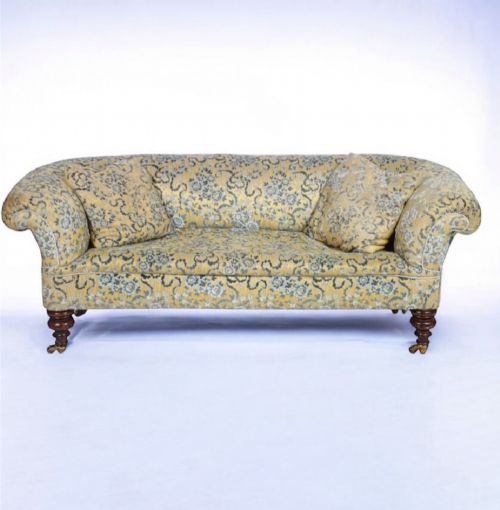


Yellow Damask Settee
A yellow damask settee brings warmth and refined pattern to a room, offering classic upholstered seating shaped by centuries of stylistic revival.
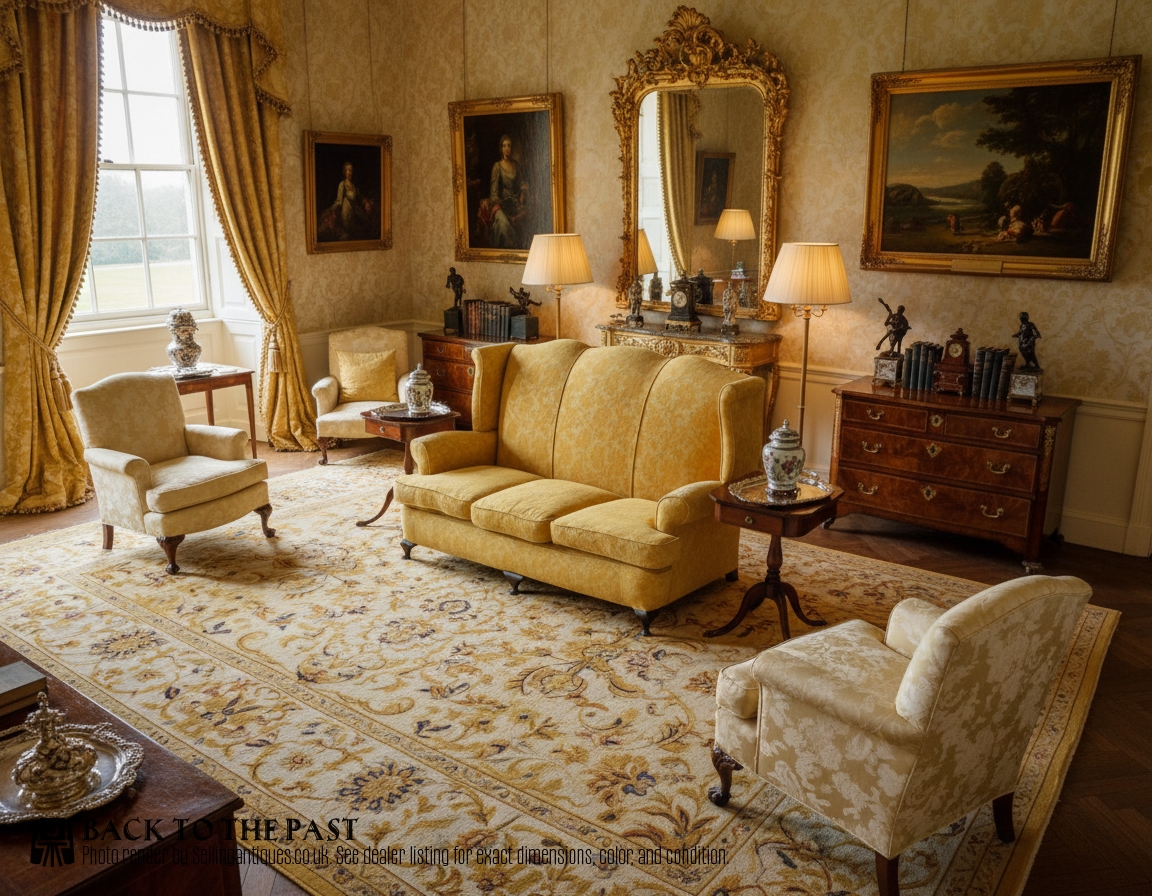
Yellow Damask Settee
A yellow damask settee provides elegant seating through traditional forms like the Chesterfield, camel back, and Knole sofa. These pieces combine historic woodwork with patterned textile upholstery in bright or golden tones.
Buyers searching for a yellow damask settee most frequently encounter Victorian examples alongside later revival pieces from the early twentieth century. These incorporate stylistic references ranging from George III designs to Victorian Chippendale interpretations.
The objects listed under this phrase span specific historical periods, notably the nineteenth century, alongside items dated around eighteen-eighty, nineteen hundred, and nineteen ten. Their forms vary from two-seater settees to larger sofas with distinct wooden frames.
How they were made
Makers constructed the primary frames of these settees using solid hardwoods such as mahogany and walnut, ensuring structural stability beneath the upholstery. Timber components were often shaped with turned legs or inlaid details.
Upholstery techniques applied damask fabric over traditional stuffing materials, secured with secondary elements like brass fittings where appropriate. Skilled craftspeople also formed distinct silhouettes including camel backs and high-sided Knole designs.
Some nineteenth-century makers hid their turned walnut legs behind deep damask skirts, keeping the timber entirely secret until moving the furniture.
What varies in quality
The standard of a settee rests largely on the execution of its wooden frame and the finesse of its structural carving. Pieces featuring refined turned walnut legs or inlaid mahogany demonstrate superior craftsmanship compared to simpler builds.
Visual appeal depends on the harmony between the wooden support and the quality of the damask textile applied. Higher-grade examples maintain integrity in both their internal construction and their exterior fabric presentation.
The Yellow Damask Settee Glossary
- Damask
- A reversible figured fabric traditionally woven on a jacquard loom with patterns that catch the light. This textile provides the characteristic sheen and textured pattern seen on these settees.
- Camel back
- A traditional sofa or settee backrest profile that curves upwards in a gentle, continuous arch resembling a camel's hump. This shape gained popularity during the eighteenth century and subsequent revival periods.
- Chesterfield
- A large upholstered sofa distinguished by deep button tufting and rolled arms of the same height as the back. It remains a standard form in traditional seating.
- Knole sofa
- An early historic sofa style featuring high, adjustable or hinged arms tied with decorative braids and heavy vertical upholstery panels. It derives its name from the historic English country house where the original prototype resides.
- Inlaid
- A decorative technique where contrasting pieces of wood or other materials are inserted into recesses in the primary timber surface to form ornamental patterns.
Yellow Damask Settee: Frequently Asked Questions
What periods do these settees come from?
The pieces span the nineteenth century and the early decades of the twentieth century. Specific dates recorded include eighteen-eighty, nineteen hundred, and nineteen ten.
Revival pieces also appear, referencing earlier Georgian and Victorian aesthetics while maintaining their own twentieth-century manufacture dates.
Which wood types are used in the frames?
Makers utilised timbers such as mahogany and walnut for the visible legs and structural supports. Some examples incorporate inlaid woodwork to enhance the decorative finish of the frame.
Underlying timber frameworks provide the rigid skeleton necessary to support heavy upholstery and daily use.
How do camel back sofas differ from other settees?
Camel back settees feature a distinct curved top rail that rises centrally in a smooth, continuous arch. This silhouette contrasts with the straight or uniform heights found on standard Victorian or Chesterfield sofas.
The style originates from eighteenth-century cabinet-making traditions and reappears in later revival periods.
What is a Knole sofa?
A Knole sofa is a traditional seating form characterised by high, straight arms that are often adjustable or secured with decorative braids. It provides a formal appearance with substantial upholstered side panels.
Original designs date to the seventeenth century, though antique and vintage interpretations continue to be produced in later periods.