
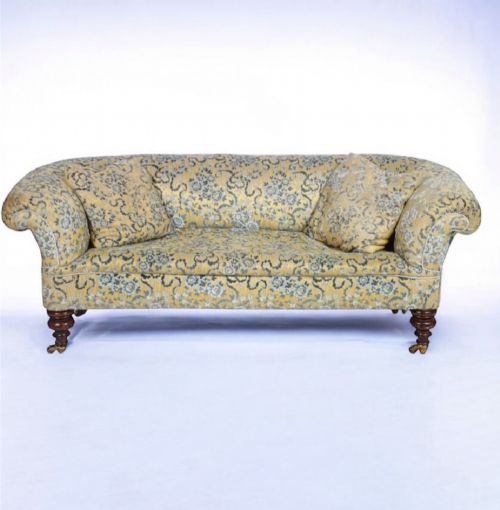
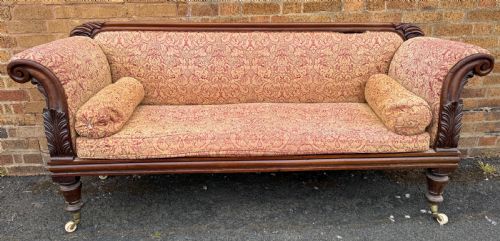


Vintage Damask Couch
A vintage damask couch brings texture and period character to a room, offering deep seating wrapped in patterned silk or wool.
Vintage Damask Couch
A vintage damask couch encompasses nineteenth-century settees, Edwardian drawing-room seats, and early twentieth-century couches upholstered in patterned textiles. These pieces range from substantial Victorian Chesterfields and scroll-end sofas to lighter Edwardian frames and carved walnut settees.
Buyers meet various regional and stylistic interpretations on this page, including English country house pieces, French gilt canapes, and Irish William IV double-ended designs. Many examples feature exposed timber frames in mahogany or walnut alongside patterned upholstery.
The selection includes both large multi-seat sofas suited for principal reception rooms and paired settees intended for smaller chambers. Form follows period, moving from heavy scroll ends to serpentine camel backs and adjustable Knole designs.
Materials and construction
Frames rely on dense hardwoods such as mahogany and walnut, often shaped with hand-carved details along the show wood, scroll ends, and legs. Cabinetmakers utilised sturdy timber construction to support deep upholstery and rigorous daily use.
Upholstery combines traditional stuffing techniques with patterned woven textiles like damask, silk, and heavy cotton fabrics. Brass castors and turned wooden legs frequently finish the bases of these substantial frames.
The inventory includes Chesterfield, Knole, and camel back forms alongside French canape designs.
Assessing quality and craftsmanship
The distinction between standard examples and superior pieces rests on the crispness of the timber carving and the architectural proportion of the frame. Higher-grade couches display refined joinery, well-balanced scroll arms, and harmonious integration of show wood with the upholstered body.
Textile quality and historical integrity also separate tiers of production, particularly where original or period-appropriate damask fabric remains intact. The weight of the timber frame and the subtlety of stylistic revivals, such as Chippendale or Queen Anne interpretations, signal workshop skill.
The Vintage Damask Couch Glossary
- Damask
- A reversible figured fabric with patterns formed by contrasting warps and wefts, traditionally woven in silk, wool, or linen. It provides the characteristic sheen and tactile surface seen on period upholstery.
- Chesterfield
- A large, deep-buttoned sofa traditionally featuring arms and back of the same height. This form offers robust seating with distinctive rolled upholstery.
- Knole sofa
- A historic couch design featuring hinged or adjustable sides that can be lowered or raised upright. Edwardian makers revived this form, often pairing it with decorative bullion fringe.
- Show frame
- A wooden structural framework left visible around the upholstered portions of a settee. This technique highlights the carved mahogany or walnut beneath the cushions.
- Settee
- A medium-sized upholstered seat with a back and arms, designed for two or more occupants. The term often interchanges with sofa in nineteenth and early twentieth-century descriptions.
Vintage Damask Couch: Frequently Asked Questions
How do I clean vintage damask fabric?
Vacuum the surface gently using a soft brush attachment to remove dust from the woven pattern without snagging the threads. Professional specialist cleaning is recommended for deeper marks to protect the delicate silk or wool fibres.
Avoid applying water or standard domestic detergents directly to the textile, as moisture can alter the tension and sheen of the weave. Test any mild conservation treatment on a hidden underside first.
Can I use a antique sofa daily?
Most nineteenth and early twentieth-century couches are structurally robust enough for regular sitting when the internal webbing and springs remain sound. Placing the piece away from direct sunlight protects the damask upholstery from fading.
Rotating cushions regularly helps distribute wear evenly across the seating surface. Gentle treatment preserves the historic joints and antique timber frames for continued use.
What is the difference between a settee and a sofa?
Historically, a settee described a lighter upholstered seat designed for multiple occupants, whereas a sofa denoted a larger, fully padded piece for reclining. Over time these definitions overlapped significantly in trade catalogues.
Today the terms are often used interchangeably to describe nineteenth and early twentieth-century seating. The actual scale and frame construction matter more than the historical terminology used in the listing.
How do I identify the period of a couch?
Examine the timber framing, leg style, and silhouette to match characteristic traits of Victorian, Edwardian, or Regency design. Heavy scroll ends and deep buttoning typically point to the nineteenth century, while lighter carved walnut often indicates Edwardian production.
Revival styles also offer clues, as cabinetmakers frequently borrowed motifs from earlier Georgian and Queen Anne eras. Comparing the joinery and upholstery style helps narrow down the decade of manufacture.