


Yellow Damask Couch
A yellow damask couch brings warmth and texture to a room, offering classic seating shaped by centuries of English design.
Yellow Damask Couch
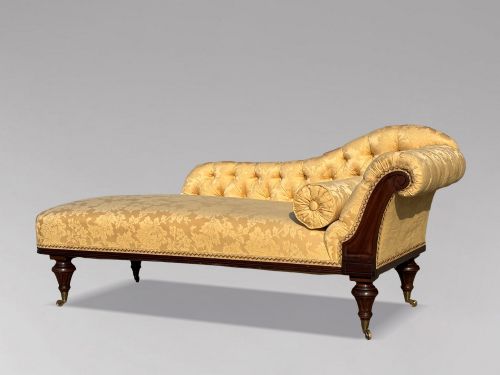
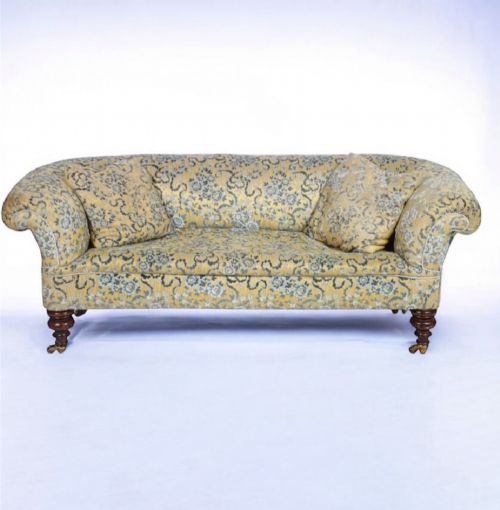
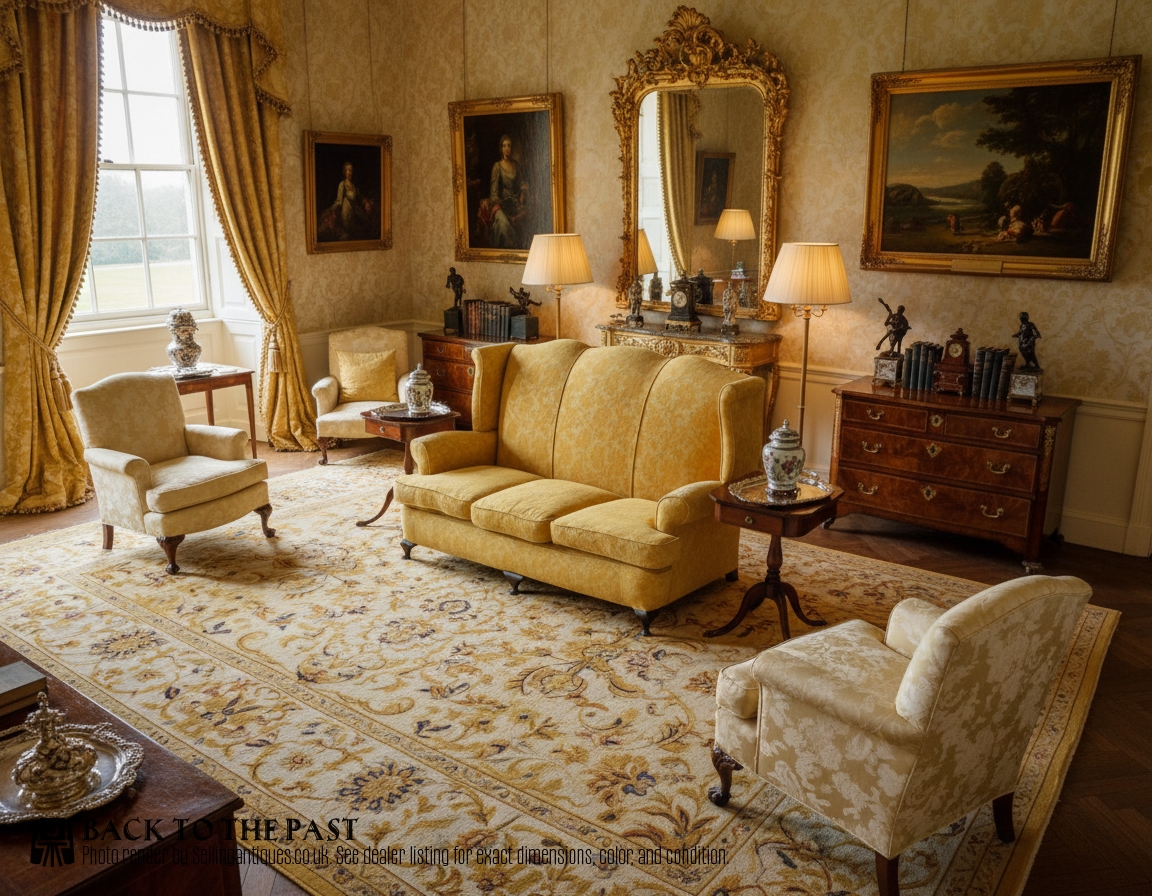
A yellow damask couch encompasses antique settees, daybeds, and sofas upholstered in patterned fabric, spanning periods from the nineteenth century to the mid twentieth century. Buyers seeking this style will encounter Victorian chesterfields, knole sofas, and Regency chaise longues upholstered in gold or yellow damask.
The forms range from camel-backed frames in the Georgian revival style to low nineteenth-century settees resting on turned walnut legs. These seating pieces bridge formal drawing-room aesthetics and comfortable English country house interiors.
Materials and construction
Frames are constructed from dense timbers including mahogany and walnut, providing structural integrity for upholstered seating. Brass fittings occasionally appear on castors or decorative elements.
Damask fabric provides the distinctive patterned surface, secured over traditional stuffing and webbing. Woodwork shows hand-turned legs and shaped mahogany frames characteristic of cabinetmakers.
Listings feature mahogany, walnut, and brass alongside damask fabric across nineteenth-century and early twentieth-century periods.
Judging quality and character
Superior examples display crisp carving on exposed mahogany or walnut frames and harmonious proportions in camel backs and settee curves. Finer pieces retain well-executed upholstery that respects the original period style.
Construction depth separates standard production from exceptional pieces, visible in the firmness of the frame and the quality of the timber beneath the fabric.
The Yellow Damask Couch Glossary
- Damask
- A reversible figured fabric with patterns formed by contrasting weaves, traditionally utilised for formal upholstery. It catches the light differently across the design.
- Chaise longue
- An upholstered sofa shaped like a chair with a long seat for reclining, originating in French fashion but common in nineteenth-century English interiors. These pieces suit bedrooms and boudoirs.
- Camel back
- A sofa or settee back with a distinctive convex curve resembling a camel's hump, popular in Georgian and revival furniture. This profile adds elegance to formal seating.
- Knole sofa
- A historic settee design featuring adjustable hinged arms that can be raised or lowered, traditionally upholstered in rich fabric. It remains a hallmark of country house style.
Yellow Damask Couch: Frequently Asked Questions
What periods do these sofas belong to?
The listings span the nineteenth century, Victorian era, and early twentieth century, alongside later revival pieces.
Craftsmanship follows traditional English styles such as Georgian, Regency, and Victorian Chippendale.
How do I identify a camel back sofa?
Look for the characteristic undulating top rail that curves upward in the centre like a camel's back.
This silhouette appeared frequently during the Georgian period and later revival eras.
What wood types are used in the frames?
Makers utilised sturdy hardwoods including mahogany and walnut for visible legs and structural elements.
Timber choice often reflects the specific period and stylistic revival of the piece.
Where should I place a settee in my home?
These pieces suit formal drawing rooms, large living spaces, or bedrooms requiring a statement seating option.
Their rich fabric and classic woodwork pair well with traditional interiors.