
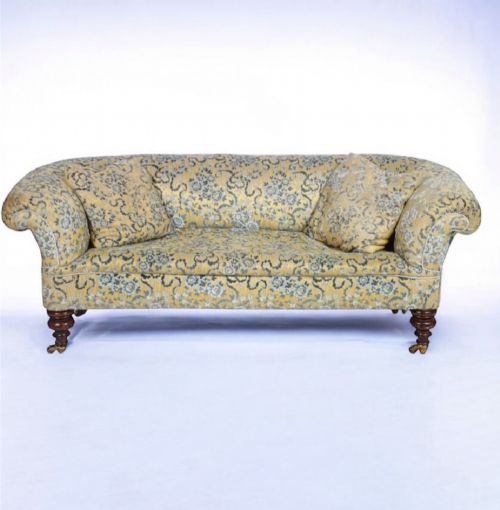


Damask Fabric Couch
A damask fabric couch offers a distinguished seating option, bringing rich pattern and historical presence into a room.
Damask Fabric Couch
When you search for a damask fabric couch, you encounter a variety of antique seating forms designed for formal and comfortable spaces alike. These pieces range from substantial 19th Century Chesterfied sofas and large suites to elegant Victorian settees and chaise longues.
The versions you are most likely to meet on this page date primarily from the Victorian era and the 19th century, alongside occasional earlier George III style examples. They frequently combine traditional upholstery textiles with sturdy timber frames.
Makers and workshops constructed these items as statement furniture for drawing rooms and parlours, utilising classic silhouettes such as the camel back or the low-slung lounge suite. Each form reflects the domestic tastes and social habits of its specific period.
How they were made
Craftsmen built the structural foundations of these couches using robust hardwoods such as mahogany and walnut. These timbers provided the necessary strength for heavily sprung and padded seating frames.
Upholsterers finished the exterior surfaces in woven damask fabric, often pairing the textile with exposed wooden legs, brass details, and hand-carved elements like lion paw feet. Turning and carving techniques defined the visible woodwork beneath the heavy upholstery.
Listings feature nineteenth-century pieces alongside eighteenth-century George III style sofas, upholstered in damask fabric over walnut and mahogany frames.
What varies in quality
The distinction between standard examples and the finest pieces lies in the sophistication of the woodwork and the ambition of the carved details. Hand-carved walnut components and sculptural elements such as lion paw feet elevate certain frames far above plain turned legs.
Additionally, the integrity of the original form and the distinction of the maker influence the standing of a piece within the range. Works associated with notable firms demonstrate superior joinery and more refined proportions than anonymous workshop productions.
Howard and Sons
The Damask Fabric Couch Glossary
- Chesterfield sofa
- A distinctive deep-buttoned upholstered sofa traditionally featuring arms and back of the same height. This form remains a staple of traditional British interior design.
- Damask
- A reversible figured fabric woven on a loom, featuring patterns formed by contrasting warp and weft threads. It is traditionally utilised for formal upholstery and drapery.
- Chaise longue
- An upholstered long chair intended for reclining, combining the characteristics of a chair and a day bed. These pieces often feature a single raised end for head support.
- Camel back
- A sofa style defined by a graceful, undulating serpentine curve along the top of the backrest. This silhouette gained prominence during the Georgian period.
- Settee
- A medium-sized upholstered seat with a back and arms, designed for two or more occupants. It sits between a chair and a full-length sofa in scale.
Damask Fabric Couch: Frequently Asked Questions
How do I date an antique sofa?
Dating relies on examining the timber of the frame, the turning of the legs, and the overarching style, such as Victorian or George III.
Changes in silhouette, carving techniques, and upholstery methods help specialists place a piece within its historical period.
Were these couches used daily?
In their original domestic contexts, these furnishings served as primary seating in drawing rooms, parlours, and country house reception spaces.
They accommodated family members and guests during formal social calls and afternoon leisure.
How do I care for antique damask?
Preserving antique damask requires protecting the woven fabric from direct sunlight and regular, gentle vacuuming with a soft brush attachment.
Avoid harsh chemical cleaners and consult a specialist textile conservator for deep cleaning.