


Yellow Carpet
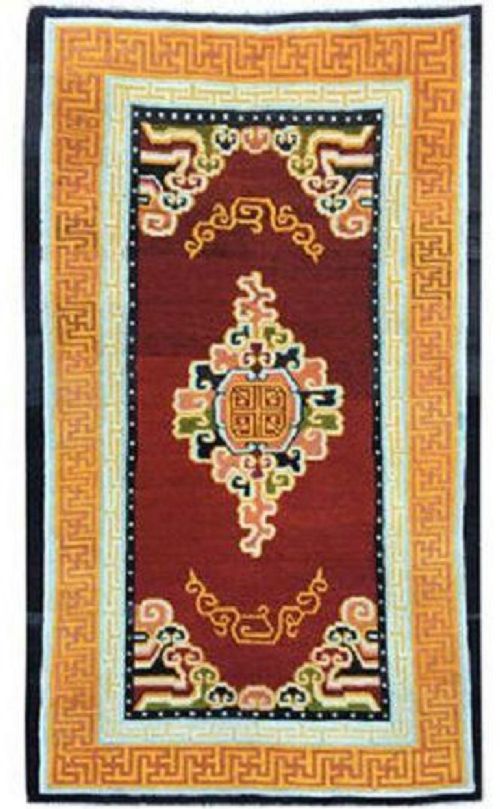
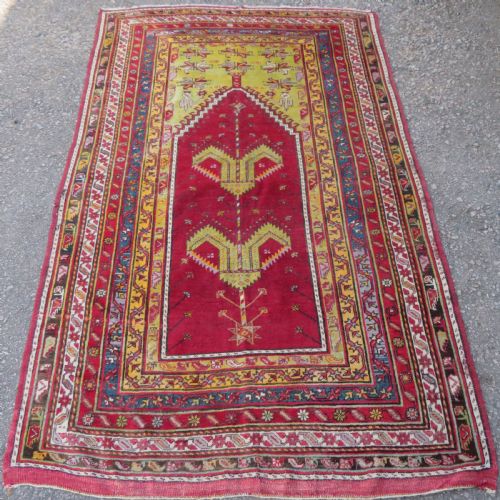
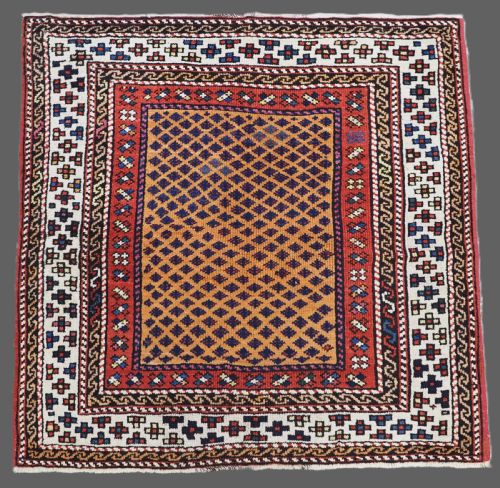
When you search for a yellow antique carpet, you enter a diverse tradition of hand-knotted and flat-woven floor coverings spanning Turkish, Persian, Chinese, and Caucasian origins.
Yellow Carpet
A yellow antique carpet encompasses everything from expansive room-sized Oushak and Fereghan weaves to smaller prayer rugs, runner rugs, and seating mats produced across the nineteenth and early twentieth centuries. These pieces display distinct regional aesthetics, ranging from the geometric lattices of Caucasian Gendje and Dagestan pieces to the expansive floral fields of Turkish Ushak carpets and Persian Bijar and Khorassan formats.
Buyers encountering this search phrase frequently meet Turkish and Anatolian village rugs alongside Persian workshops and Central Asian tribal trappings. Pieces span origins from the Ottoman Empire, Qing Dynasty China, and the Caucasus, showcasing a wide variety of formats including square sizes, long runners, and compact spindle-bags.
The aesthetic presentation relies heavily on ground colours featuring golden, faded, or bright yellow tones, often serving as a dramatic backdrop for shrubs, medallions, and floral motifs. Whether evaluating an Uzbek Suzani kilim or a Chinese Ningxia pillar rug, collectors engage with textiles that blend utilitarian floor covering with local symbolic artistry.
Materials and Construction Techniques
The physical structure of these textiles relies predominantly on natural wool and cotton foundations, with many older examples incorporating hand-spun wool for pile yarns and structural warps and wefts. Weavers utilised natural dyes to achieve the varied yellow ground colours, resulting in nuanced shifts in tone across the surface of the carpet over decades of light exposure and use.
Production methods vary according to regional tradition, encompassing intricate pile knots tied on vertical looms for carpets from Oushak, Bijar, and Kirsehir, as well as flat-woven techniques seen in Bessarabian and Uzbek kilims. Artisans incorporated durable wool and cotton fibres to ensure structural integrity, whether constructing large room carpets or smaller seating mats and prayer rugs.
Evaluating Quality and Execution
Distinctions in quality rest upon the handling of natural dyes, the fineness of the knotting or weave, and the integrity of the wool. Superior examples exhibit depth of colour where natural dye lots create subtle variations across the yellow ground, avoiding flat or chemically uniform tones.
Structural precision also dictates tier, visible in the exact execution of geometric lattices, prayer arches, and border systems. Master weavers achieved crisper lines and resilient pile density, ensuring that large formats like Fereghan carpets or smaller pieces like Dagestan prayer rugs maintained structural stability.
Gavin Morton Donegal
The Yellow Carpet Glossary
- Pile
- The raised, soft surface of a carpet formed by the cut ends of knots tied to the warp and weft foundation. This layer takes the direct wear of foot traffic and displays the primary colour design.
- Warp
- The vertical threads stretched tightly on the loom before weaving begins, carrying the fringe at both ends of the finished carpet. Weft threads are interlaced across these foundational elements.
- Kilim
- A flat-woven textile produced without a pile, traditionally utilised as a floor covering, wall hanging, or storage sack across Anatolia, the Caucasus, and Central Asia. These pieces rely on tightly packed weft yarns to form graphic patterns.
- Prayer Rug
- A compact rug featuring a mihrab or arch design indicating the direction of prayer, historically created across Turkish and Caucasian weaving centres. These formats are generally smaller in scale to accommodate individual use.
- Natural Dyes
- Colourants derived from plant, insect, and mineral sources prior to the invention of synthetic aniline dyes in the mid-nineteenth century. These materials yield complex hues that age with distinct patination.
Yellow Carpet: Frequently Asked Questions
How do I date an old yellow carpet?
Dating relies on stylistic analysis, structural examination, and the presence of natural dyes characteristic of nineteenth and early twentieth-century production. Comparing knot density, material preparation, and regional design motifs helps establish the likely decade of manufacture.
Changes in dyestuff chemistry over time also provide clues, as carpets woven before the widespread adoption of synthetic dyes exhibit organic variations in their yellow grounds.
Where were these carpets originally woven?
Production centres span a vast geographic range, including Western Turkey for Oushak and Ushak carpets, Central Anatolia for Kirsehir and Konya pieces, and Persia for Bijar and Khorassan weaves. Other significant regions include the Caucasus, Central Asia, and Northern China.
Each weaving culture developed distinct local palettes, structural techniques, and symbolic vocabularies that distinguish an Anatolian village rug from a Chinese Ningxia mat.
How should I care for an antique wool carpet?
Maintenance requires gentle vacuuming without a rotating beater bar to protect fragile wool pile and historic foundations. Professional cleaning tailored to antique textiles preserves the natural dyes and structural integrity.
Keeping the carpet out of direct, continuous sunlight prevents excessive fading of the yellow ground colours and protects natural animal fibres from becoming brittle.