


Yellow and Green Painting
A yellow and green painting brings together pigments of sunshine and leaf, capturing landscapes, florals, and abstracts across canvases and paper.
Yellow and Green Painting
A yellow and green painting encompasses works on canvas, paper, and board, ranging from nineteenth-century watercolours to mid-century abstracts. Buyers exploring this selection encounter botanical studies, rural landscapes, and modernist compositions created across the Georgian, Victorian, and later periods.
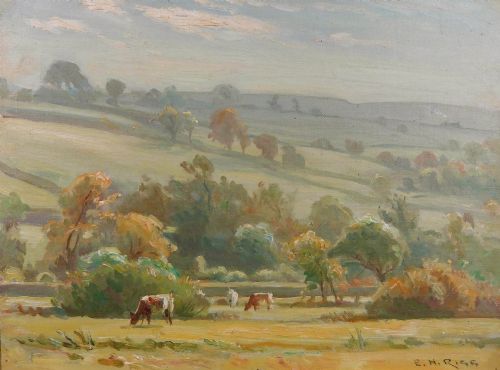
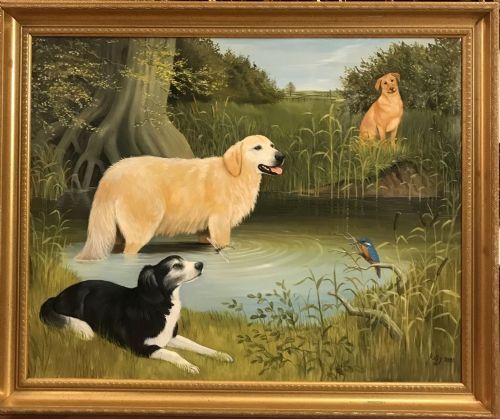
The palette unites bright ochres, yellows, and deep greens, frequently appearing in depictions of gardens, meadows, and coastal scenes. Artists utilise these hues to render natural light, foliage, and atmospheric depth within oil and watercolour mediums.
Pieces span distinct movements, including British Impressionism and Mid-Century Modernism, alongside provincial works. These creations reflect varied artistic approaches to colour harmony, from detailed nineteenth-century still lifes to expressive twentieth-century board paintings.
Materials and Techniques
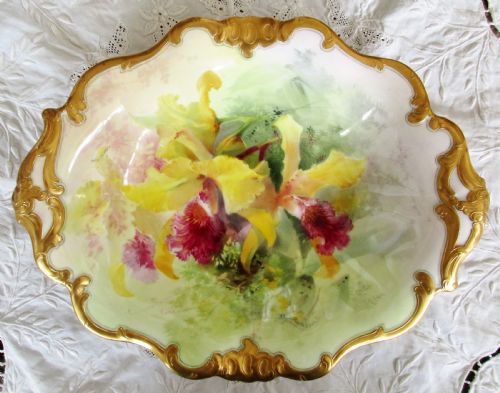
Artists executed these works primarily using oil paints or watercolour applied to stretched canvas, paper, or wooden panels. Painters built up layers of pigment to achieve tonal variation, capturing light and shadow within floral arrangements and landscape vistas.
Works on paper typically rely on delicate washes of watercolour, while oil paintings on canvas or board employ thicker applications of pigment. These differing methods determine the texture and surface finish of each piece.
A surrealist musician's landscape shares space with primroses on a mossy bank.
Distinctions in Quality
Quality rests upon the artist's control of tone and brushwork, determining how effectively the yellow and green pigments convey light and spatial depth. Superior examples demonstrate confident handling of the medium, whereas lesser works display muddy colour transitions or flat application.
Condition and preservation dictate the desirability of surviving pieces, particularly works on paper that remain susceptible to fading. Stronger examples retain their original pigments and surface integrity without extensive restoration.
Ernest Higgins Rigg·Harry Wanless·Henrietta Creswell·Henry Bailey·Cecil R. Doyly-John·Richards Rubin·John Sherrin·William Ernst Burwell·Robert Thomas Buttery·Daniel Sherrin·John Russell
The Yellow and Green Painting Glossary
- Oil painting
- A work created using pigments bound in a drying oil, typically linseed, applied to canvas or wood board. This medium allows for rich colour saturation and blended tones.
- Watercolour painting
- A method where water-soluble pigments are applied to paper, producing transparent washes of colour. It is frequently employed for botanical studies and delicate landscapes.
- Canvas
- A heavy woven fabric stretched across a wooden frame to serve as a support for oil paintings. It provides a textured surface that holds layered pigments securely.
- Board
- A rigid wooden or composite panel used as an alternative to canvas for oil and abstract paintings. It offers a firm, flat surface for direct application of paint.
- Impressionism
- An art movement focused on capturing light and atmospheric effects through visible brushstrokes and unblended colours. British practitioners applied these principles to local landscapes.
Yellow and Green Painting: Frequently Asked Questions
What subjects appear in these paintings?
The works depict botanical studies, garden scenes, coastal views, and rural British landscapes. Artists utilised yellow and green tones to render foliage, flowers, and natural light.
Abstract compositions also feature within the selection, alongside traditional portraits and still lifes executed in oil or watercolour.
How should I care for a watercolour painting?
Watercolour works require protection from direct sunlight to prevent the pigments and paper from fading over time. Displaying them away from moisture-prone areas preserves the delicate paper support.
Framing behind conservation-grade glass helps shield the artwork from environmental damage while maintaining its visual clarity.
What periods do these paintings represent?
The selection spans from the eighteenth century through the Victorian era and into the mid-twentieth century. Pieces reflect stylistic shifts from traditional Georgian portraiture to modern abstract interpretations.
Nineteenth-century watercolours and Edwardian landscapes sit alongside post-war abstract boards on canvas and wood.
Are these paintings signed by the artists?
Many of the works bear visible signatures or attribution to named painters, providing documentation of their origin. Archival records often link these pieces to specific active dates and regional schools.
Unsigned provincial works also appear, reflecting the broader output of British and European painters from various periods.