
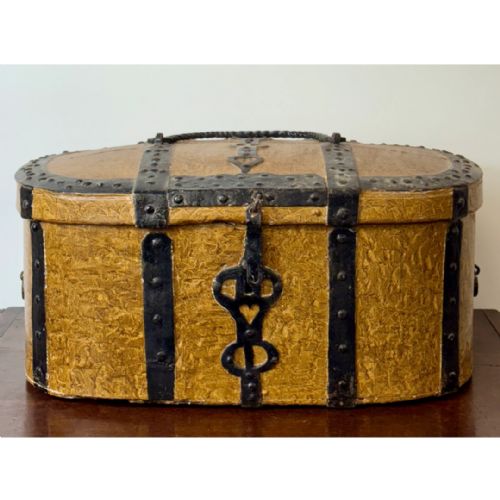
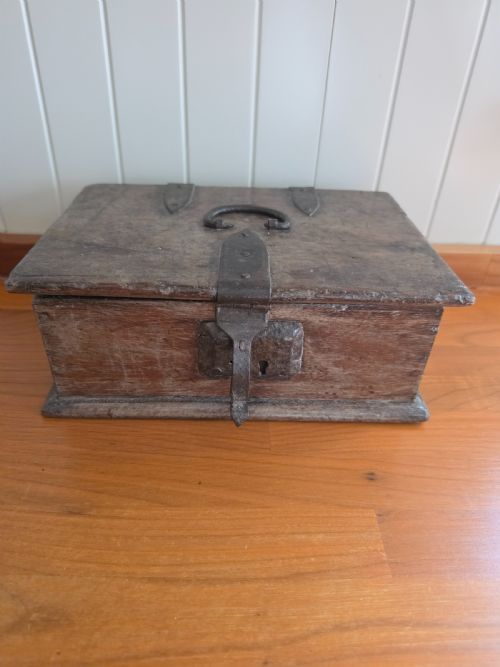
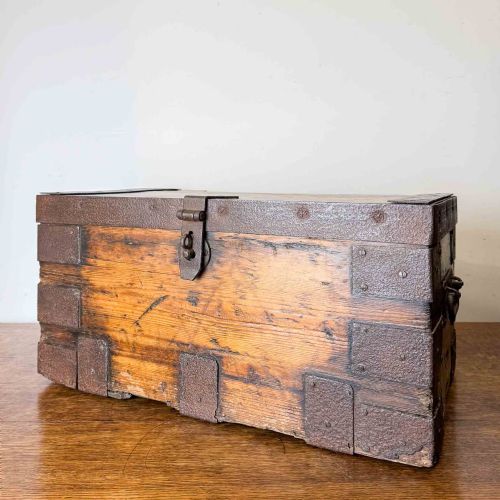


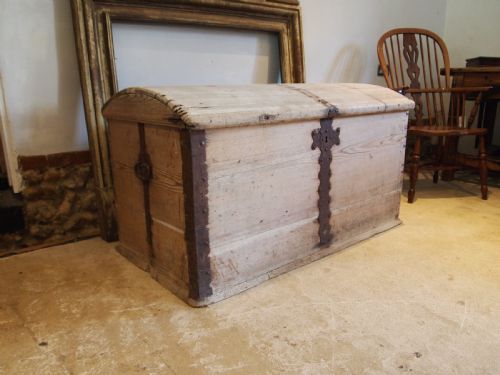


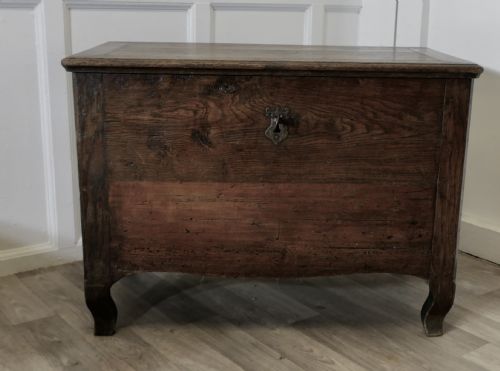


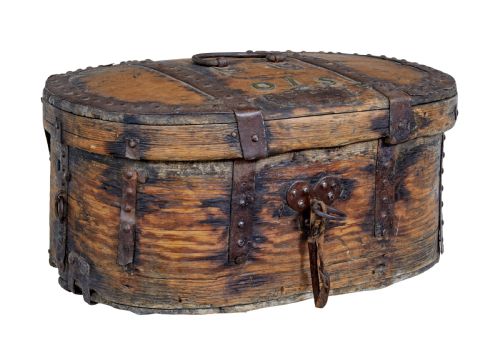
Wrought Iron Wooden Chest
These wrought iron wooden chest examples combine robust timber bodies with heavy metal mounts, offering practical storage with historic character.
Wrought Iron Wooden Chest
A wrought iron wooden chest typically presents as a sturdy box, trunk, or coffer designed for storage and travel across several historic periods. The versions you encounter most often span the eighteenth and nineteenth centuries, originating from Scandinavian, Spanish, French, and British provincial workshops.
Forms range from small travelling strongboxes with fitted locks to large domestic blanket chests and dome-top coffers. Many utilise local timbers such as pine, oak, elm, or walnut, reinforced with functional iron straps, hasps, and carrying handles.
Construction and materials
Carpenters constructed the primary bodies of these pieces using solid timbers like oak, pine, elm, and walnut, often joining boards with dovetail or pegged joints. Blacksmiths then forged the heavy wrought iron straps, hinges, and hasps by hand, securing them with iron nails or rivets to reinforce the corners and lids.
Surface treatments vary from plain waxed wood to hand-painted finishes, particularly in Scandinavian folk art pieces which feature traditional pigment decoration. Iron components frequently retain their original dark forged textures, sometimes paired with working internal locks and keys.
Geographic origins represented on this page include Scandinavian, Spanish, French, and Indian workshops.
Distinguishing quality
Quality in a wrought iron wooden chest rests on the integration between the timber body and the hand-forged metalwork. Finer examples display precise joinery and substantial blacksmithing, where iron straps follow the contours of the wood and serve a genuine structural purpose rather than a purely decorative one.
The survival of original painted surfaces, working locks with keys, and untouched interior compartments elevates certain pieces above standard utility boxes. The integrity of the original materials, including unblemished timber patination and authentic iron mounts, dictates the standing of each piece.
The Wrought Iron Wooden Chest Glossary
- Cofer
- A heavy wooden chest, often bound in iron, traditionally used for storing valuables and travel. These sturdy receptacles evolved from medieval storage chests into domestic furniture.
- Hasps
- A slotted metal plate that fastens over a staple and is secured with a pin or padlock. On these chests, hasps work alongside iron strapwork to reinforce the lid closure.
- Strongbox
- A secure box constructed for carrying money, documents, or precious items during transit. They frequently feature complex internal locks and robust iron bound exteriors.
- Dovetail
- A joint formed by interlocking wedge-shaped fingers of wood, providing strong tensile strength for box corners. Cabinet makers relied on this technique before the invention of mechanical fasteners.
- Dome top
- A rounded lid profile found on many early coffers and trunks, designed to shed water and increase internal capacity. This curved shape requires specialised framing by the carpenter.
Wrought Iron Wooden Chest: Frequently Asked Questions
What were these chests used for?
These boxes and coffers served primarily for storing and transporting valuable goods, household textiles, and documents securely. Their sturdy construction allowed them to withstand the rigours of travel across regions.
Domestic examples stayed in homes as blanket chests or marriage chests, while smaller strongboxes travelled with owners to safeguard currency and important papers.
How do I date an iron bound chest?
Dating relies on examining the timber species, construction joints, and the method used to forge the ironwork. Hand-cut dovetails, forged iron straps, and surface patination provide clues to the century of manufacture.
Regional styles also assist with chronology, as seventeenth and eighteenth-century pieces often display distinct Scandinavian folk art or Spanish Baroque decorative traits.
Are the locks and keys usually original?
Many pieces retain their working internal locks, though original keys are less common due to centuries of displacement. Blacksmiths integrated complex mechanism housings directly into the interior lids.
When a matching key survives, it adds significantly to the completeness and historical interest of the box.
How do I care for the wood and iron?
Preserving these pieces requires maintaining stable indoor humidity to prevent the timber from splitting or warping. Occasional application of a suitable wax feeds the historic wood surface.
Iron components need minimal intervention beyond keeping them dry to prevent active corrosion on the forged metal straps.