


Iron Mounted Wooden Box
An iron mounted wooden box is a robust storage piece offering security and tactile warmth, spanning centuries of practical craftsmanship.
Iron Mounted Wooden Box
An iron mounted wooden box brings together timber bodies and metal reinforcement, serving domestic and travel storage needs across centuries. The pieces collected here span domestic oak strong boxes, pine folk art chests, and burr wood caskets.
Most examples date from the seventeenth, eighteenth, and nineteenth centuries, featuring regional traditions from Britain, Scandinavia, continental Europe, and beyond. Common forms include dome-topped caskets, deed boxes, and heavy silver chests fitted with functional iron locks and hinges.
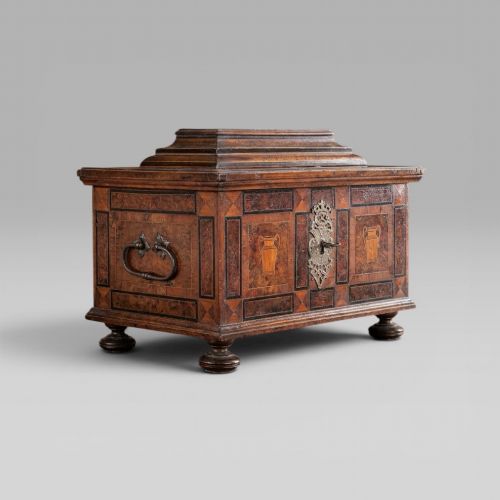
Buyers encounter everything from rough-hewn elm bible boxes to elaborate German marquetry coffre forts and painted Scandinavian strong boxes. Each object reflects the utilitarian security of its era, combining heavy timber construction with visible ironwork.
Materials and construction
These items rely on sturdy native and exotic timbers such as oak, pine, walnut, chestnut, and elm, often shaped into solid boards. Joinery techniques range from simple pegged construction to careful dovetailing and marquetry work.
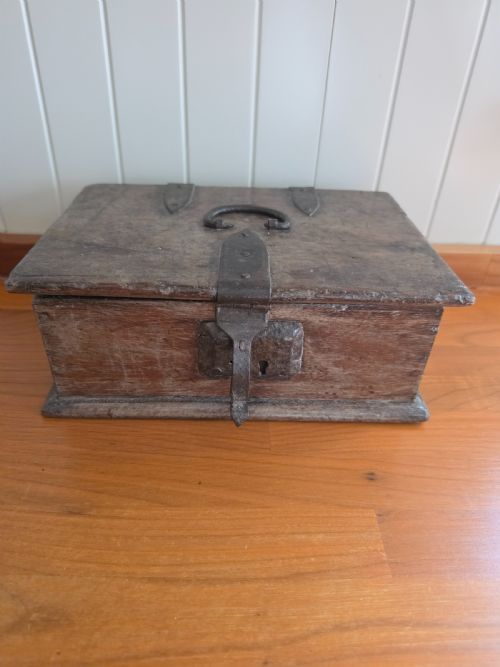
Wrought iron bands, strap hinges, and complex locks provide structural strength and physical security to the wooden carcasses. Blacksmiths hammered the iron components by hand, securing them with clenches or large iron nails that cross the timber faces.
The listings span from the sixteenth century through to the Edwardian period, incorporating oak, pine, walnut, and chestnut.
Evaluating craftsmanship and survival
Quality rests in the harmony between the timber selection and the execution of the ironwork. Finer boxes utilise dense hardwoods like oak or burr walnut alongside intricately forged, articulated locks rather than simple surface straps.
The degree of original survival dictates the character of each piece, distinguishing untouched painted surfaces and working locks from later restorations. Well-preserved internal fittings, original keys, and undisturbed patination elevate an example above standard utility wares.
The Iron Mounted Wooden Box Glossary
- Coffre fort
- A strong box designed for valuables, typically heavily reinforced with iron straps and complex locking mechanisms.
- Bible box
- A small desk-top box originally utilised for storing sacred texts and writing materials, often featuring a sloping lid.
- Strong box
- A secure chest built primarily to safeguard currency, plate, or documents against theft and fire.
- Marquetry
- The art of applying thin veneers of wood and other materials to form decorative patterns on a structural carcase.
Iron Mounted Wooden Box: Frequently Asked Questions
What were strong boxes used for?
These boxes secured precious documents, silver plate, and currency in domestic and institutional settings.
Their heavy iron mountings and robust locks prevented casual theft during a period when portable security was essential.
How do I date an iron mounted wooden box?
Dating relies on observing the tool marks on the timber, the style of the hinges, and the complexity of the lock mechanism.
Earlier pieces often display hand-sawn board edges and primitive forged ironwork, whereas nineteenth-century examples show more uniform industrial components.
Are the locks on these boxes still operational?
Many boxes retain functional iron locks, though some require specialist attention or replacement keys to operate smoothly.
Collectors often value the historical mechanics even if the key is absent, as the internal levers demonstrate period locksmithing skill.