


Woven Wool Flatweave
When you examine a woven wool flatweave, you handle textiles carrying centuries of tribal utility and village craftsmanship from Persia, Anatolia, and the Caucasus.
Woven Wool Flatweave
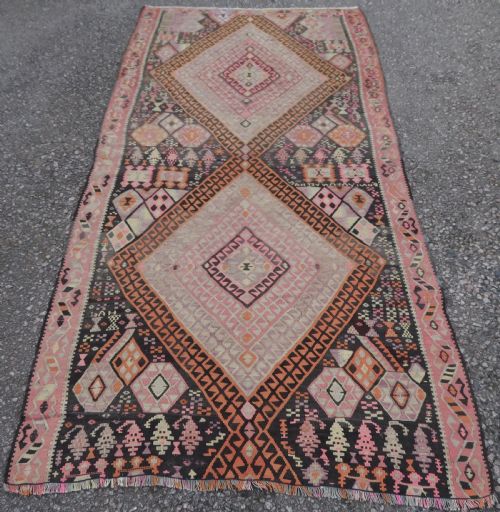
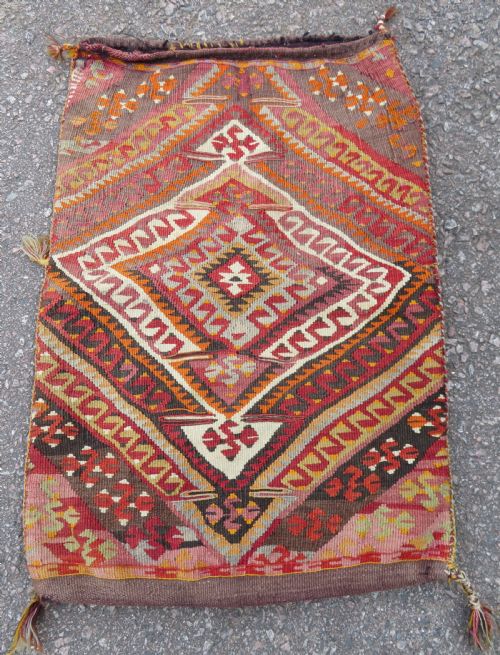
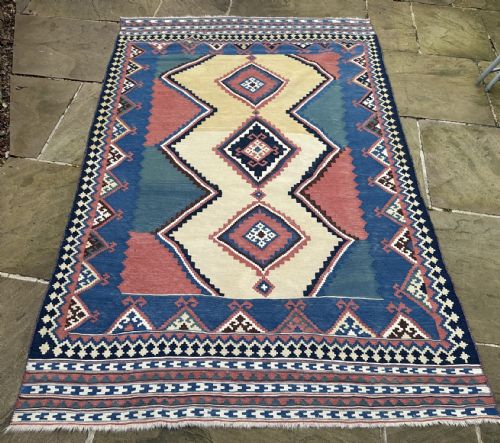
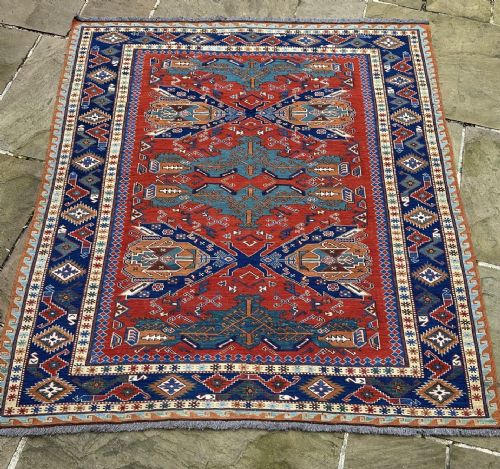
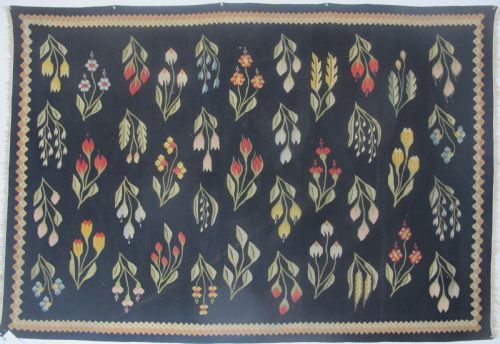
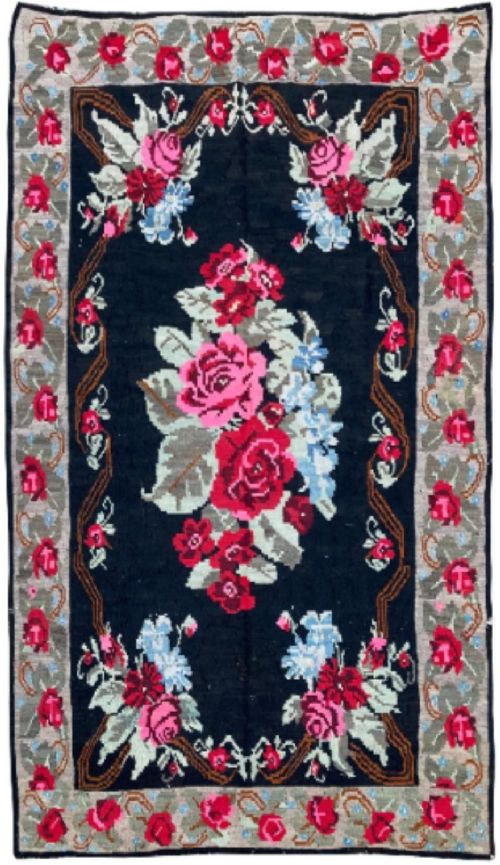
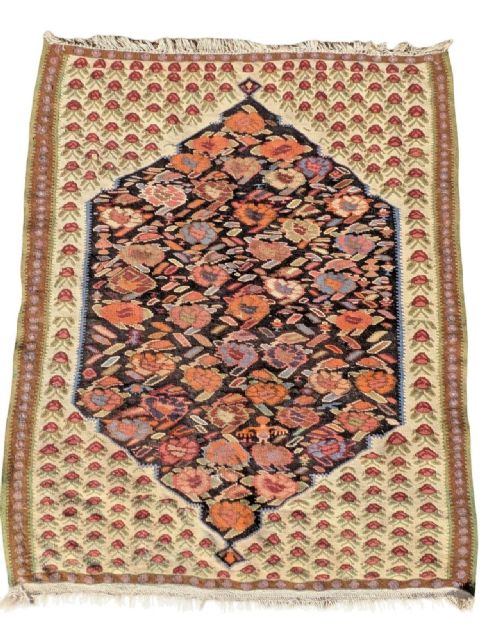
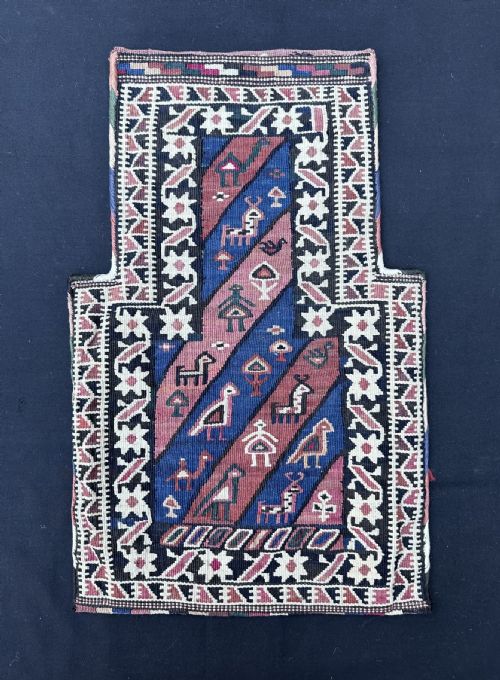
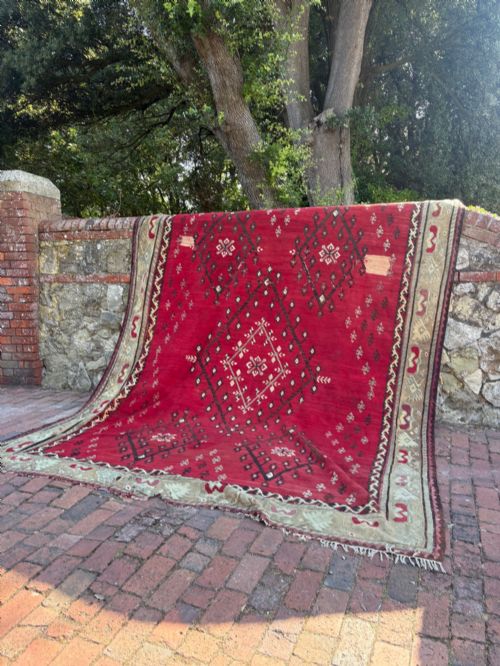
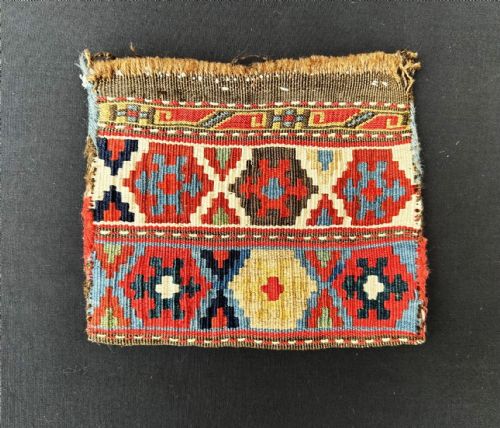
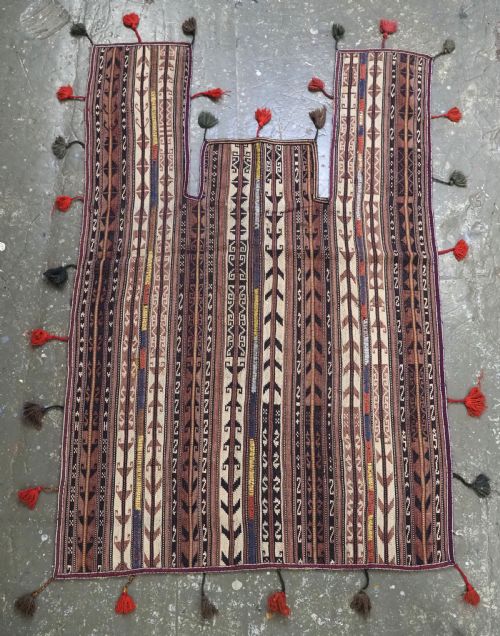
A woven wool flatweave represents a diverse category of nomadic and village textiles, encompassing everything from large room-size kilims to utilitarian salt-bags, bread sofrehs, and horse blankets. The examples met most frequently on this page originate from Persian, Anatolian, and Caucasian tribal groups, dating primarily from the late nineteenth century through to the early decades of the twentieth century.
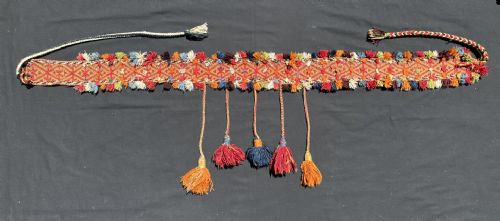
Makers utilised these flat-surfaced textiles for daily practical tasks within nomadic camps and rural settlements, rather than for decorative floor covering alone. Items like grain sacks, animaltrappings, and saddle-bags display structural integrity designed for rigorous transport and storage.
The aesthetic vocabulary relies on geometric motifs, tribal emblems, and regional colour palettes produced by generational weavers. Buyers encounter formats ranging from elongated runners to square bread cloths, each retaining the distinct structural properties of non-pile weaving traditions.
Materials and construction
The primary material foundation rests on hand-spun wool and cotton, often supplemented by goat hair for structural durability along selvages and occasionally cowrie shells for ornamentation. Natural dyes derived from regional plants and minerals provide the varied chromatic depth observed across Persian and Caucasian pieces.
Weavers employed slit-tapestry and related flat-weaving techniques, interlocking or wrapping weft threads around warp foundations without creating a raised pile surface. This method produces a structurally sound, reversible textile capable of enduring heavy utilitarian demands.
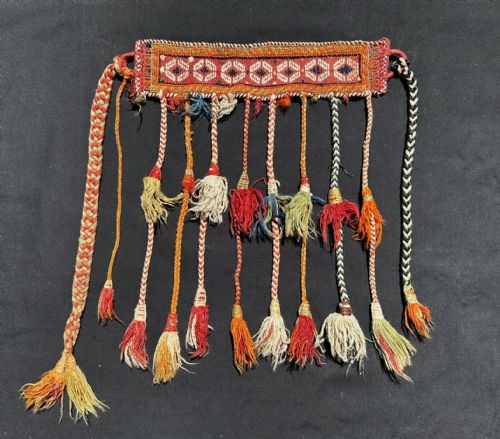
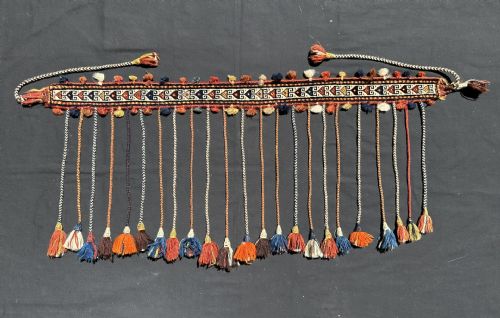
Certain animal trappings incorporate cowrie shells intended to ward off the evil eye from livestock.
Factors determining quality
Quality in these textiles depends on the tightness of the weave, the consistency of the hand-spun yarn, and the purity of the natural dye palette. Tighter, more precise structural execution allows intricate geometric patterns to maintain clarity and definition over decades of use.
Condition and originality dictate distinction within the category, separating items retaining intact original borders and uncompromised structural integrity from those requiring extensive intervention. The skill of the dyer and the weaver manifests in the harmonious saturation of colour and the balance of tribal iconography.
The Woven Wool Flatweave Glossary
- Kilim
- A pileless textile produced by tightly interweaving warp and weft strands to create a flat surface. These pieces serve primarily as floor coverings, wall hangings, or utilitarian covers.
- Sofreh
- A spread or cloth used traditionally for sharing meals, kneading bread, or processing grain. They feature strong geometric fields adapted to domestic utility.
- Soumak
- A brocade-like flat-weaving technique where coloured weft threads wrap around the warp threads in various sequences. This method creates a sturdier structure with a textured, ribbed face.
- Chuval
- A large storage bag produced by Turkmen and related Central Asian tribes. They display distinct gul motifs and were traditionally used within nomadic tents.
- Warp
- The stationary lengthwise threads set on a loom that form the structural foundation of the textile. Weft threads pass horizontally through these vertical elements.
Woven Wool Flatweave: Frequently Asked Questions
What is a flatweave rug?
A flatweave rug is a textile constructed without a pile, meaning the design emerges directly from the interweaving of warp and weft threads on a loom.
Unlike knotted carpets, these pieces lie completely flat and tend to be lighter in weight, originating predominantly from nomadic and village traditions across the Middle East and Central Asia.
How were salt-bags used?
Salt-bags served as practical receptacles within nomadic households for storing and transporting coarse rock salt required for livestock and domestic use.
Weavers decorated these small containers with protective tribal motifs, reflecting their importance in daily pastoral life.
How do I care for a flatweave?
Maintenance requires gentle regular vacuuming without a rotating brush roll to prevent catching the flat-surfaced threads.
Professional specialist cleaning is recommended for antique wool textiles to preserve natural dye stability and structural integrity.
How are tribal regions identified?
Tribal attribution relies on specific structural traits, structural proportions, and characteristic geometric or animal motifs unique to particular confederacies.
Analysing the wool quality, dye palette, and fringe finish helps connect a textile to specific groups such as the Qashqai, Shahsevan, or Afshar.