


Woven Tribal Bag Face
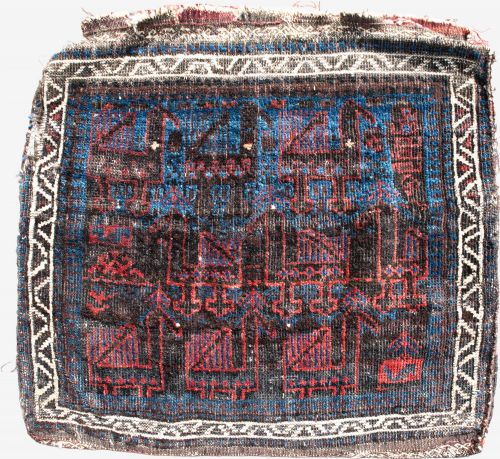
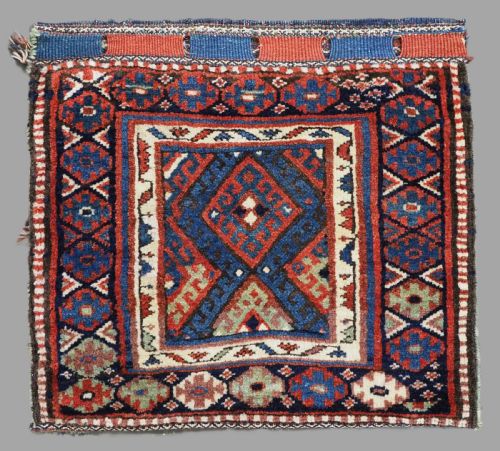
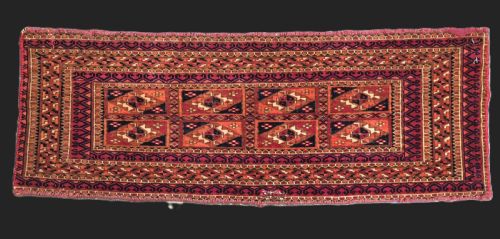
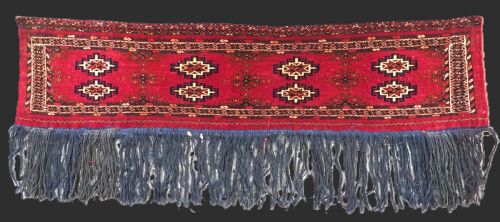
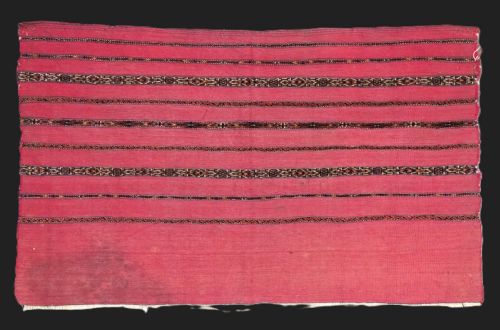
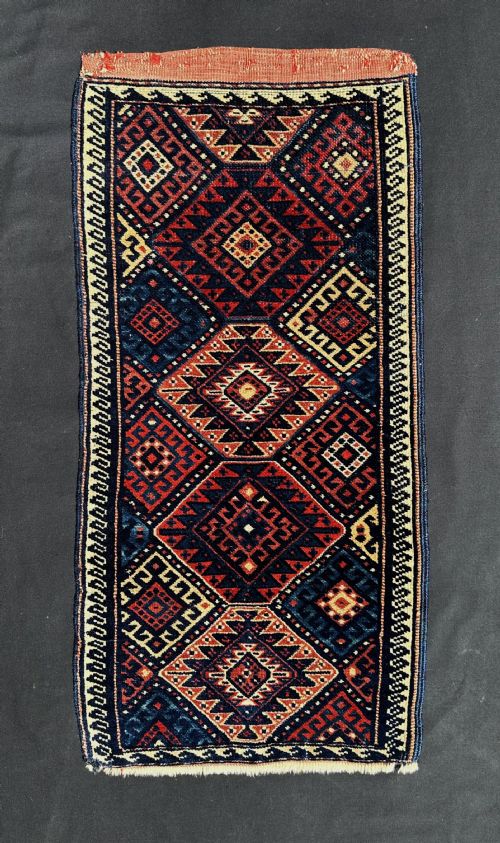
When you examine a woven tribal bag face, you are looking at the nomadic front panel of a utilitarian storage sack crafted by tribal weavers across Central Asia and Persia.
Woven Tribal Bag Face
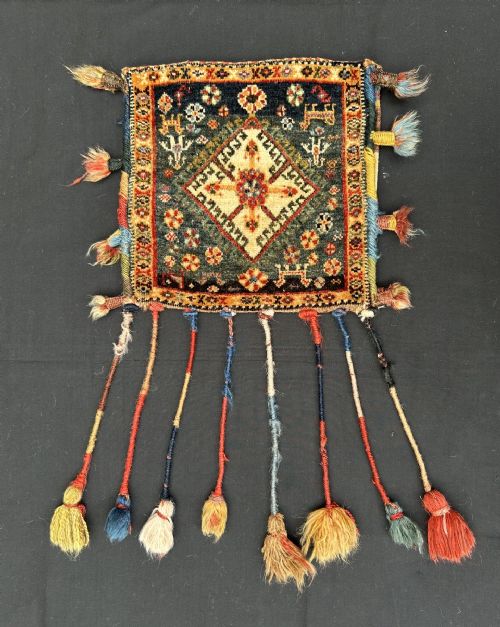
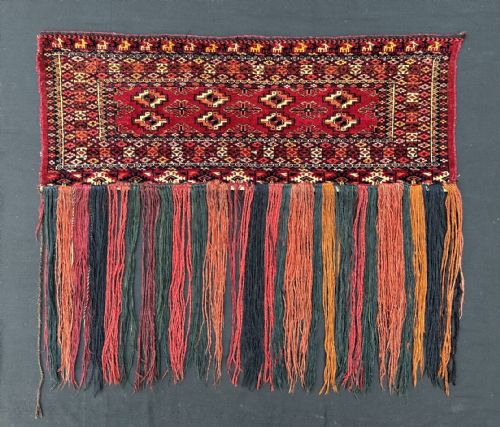
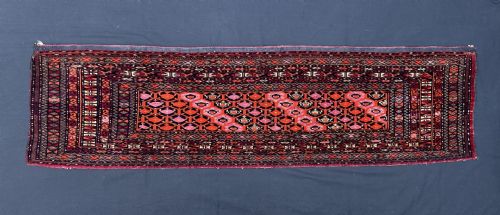
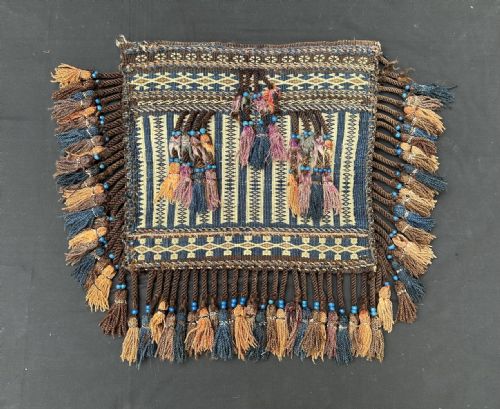
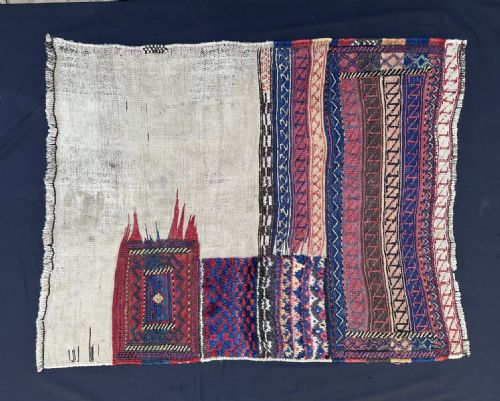
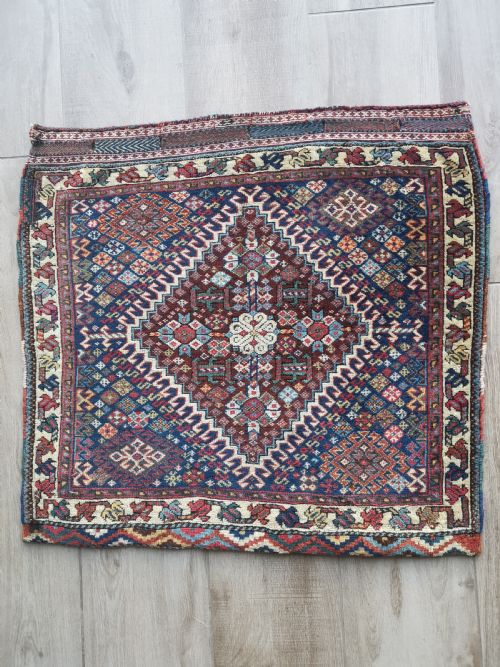
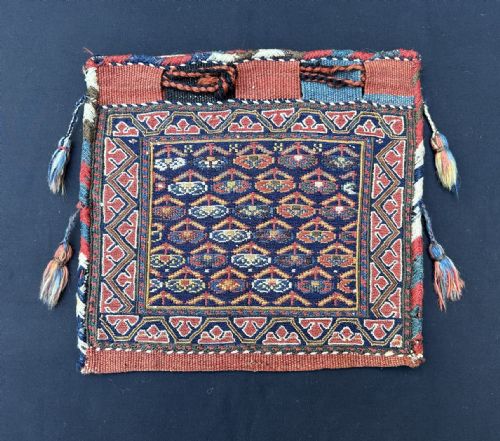
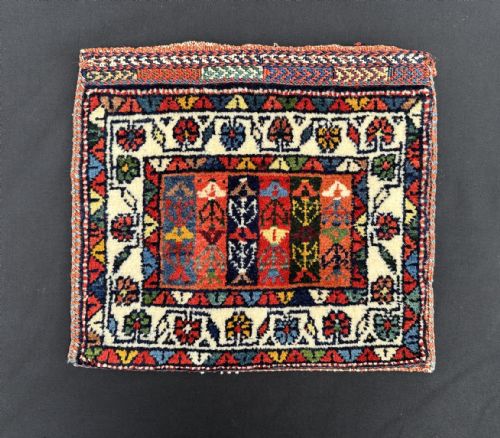
A woven tribal bag face represents the surviving decorative front of a larger storage container, such as a chuval, torba, or khorjin, used historically by nomadic and village communities for household storage and transport. These panels were originally produced by specific tribal groups including the Tekke, Yomut, Saryk, and Ersari Turkmen, alongside Baluch, Qashqai, and Lori-Bakhtiari weavers.
Most examples encountered on this page date from the late nineteenth and early twentieth centuries, reflecting the traditional weaving output of nineteenth century nomadic life. The forms range from small vanity bags and pillow faces to larger tent bags and storage sacks, often separated from their original plain weave backs over time.
What varies in quality
The primary distinction in quality lies in the density and precision of the knotting, where finer weaves allow for sharper definition of complex tribal motifs like guls and secondary ornaments. Superior examples display greater finesse in the handling of the wool and a more disciplined execution of traditional design layouts.
Quality is also determined by the purity and depth of the natural dyestuff palette, which yields harmonious coloration that ages gracefully across the wool surface. Pieces showing exceptional clarity in design structure and careful material preparation stand apart from more utilitarian or hastily executed tribal output.
Some surviving spindle bags still retain their original plain weave backs designed to safely hold spinning tools while on the move.
The Woven Tribal Bag Face Glossary
- Chuval
- A large tent storage bag produced by Turkmen and other nomadic groups for bedding and household possessions. These pieces typically feature multiple rows of primary guls.
- Torba
- A smaller horizontal storage bag traditionally hung inside the nomad tent for smaller valuables and utensils. They often display intricate border designs and specialised medallion formats.
- Gul
- A primary medallion or repeating octagonal motif used in Turkmen and Central Asian tribal weaving. Each design often signifies a specific tribe or sub-group.
- Khorjin
- A double saddlebag designed for transport across pack animals, featuring two matching face panels connected by a central web. Many surviving examples are separated into individual half-khorjins.
- Aina gul
- A specific design motif found on Turkmen bag faces featuring a diamond or mirror-like lattice structure. It translates literally to mirror flower.
Woven Tribal Bag Face: Frequently Asked Questions
What were tribal bag faces used for?
Nomadic tribes utilised these woven sacks for storing household goods, blankets, clothing, and grain inside portable dwellings. The decorative front panels served to display family identity, tribal affiliation, and weaving skill.
Over decades, many functional sacks lost their plain weave backs due to wear or separation, leaving only the decorative bag face to survive as a textile fragment or wall hanging.
How do I identify different tribal designs?
Design attribution relies on recognising specific structural motifs, such as the characteristic guls of Tekke, Yomut, or Saryk Turkmen weavers, or the field patterns typical of Baluch and Qashqai groups. Palette choices and secondary borders also provide strong clues to regional origin.
Consulting historical design classifications helps connect particular medallion structures to the exact nomadic confederations and geographic regions where the textiles originated.
How should I display a bag face?
These textile panels lend themselves well to mounting on stretched fabric backings or framing behind protective glazing for wall display. Alternatively, some owners convert them into decorative cushions or place them in low-traffic interior areas where physical abrasion is minimised.
Keeping the wool away from direct, harsh sunlight prevents the natural dyes from fading and preserves the contrast between dark madder grounds and ivory highlights.
Are these pieces made with natural dyes?
Nineteenth-century nomadic weavers relied predominantly on traditional natural dye sources, including madder for reds, indigo for blues, and plant extracts for yellows and browns. These materials produce subtle variations in tone known as abrash across the wool surface.
Examining the depth of colour within individual knots helps confirm the use of traditional dyeing methods prior to the widespread introduction of early synthetic dyes.