



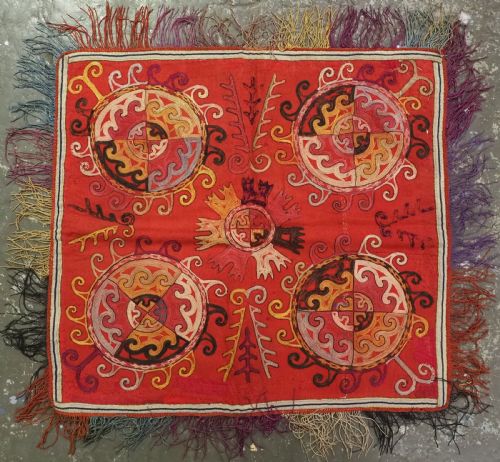


Wool Stitched Rug
These wool stitched rug pieces bring tactile warmth and regional pattern into a room, spanning from Central Asian tribal work to English needlepoint.
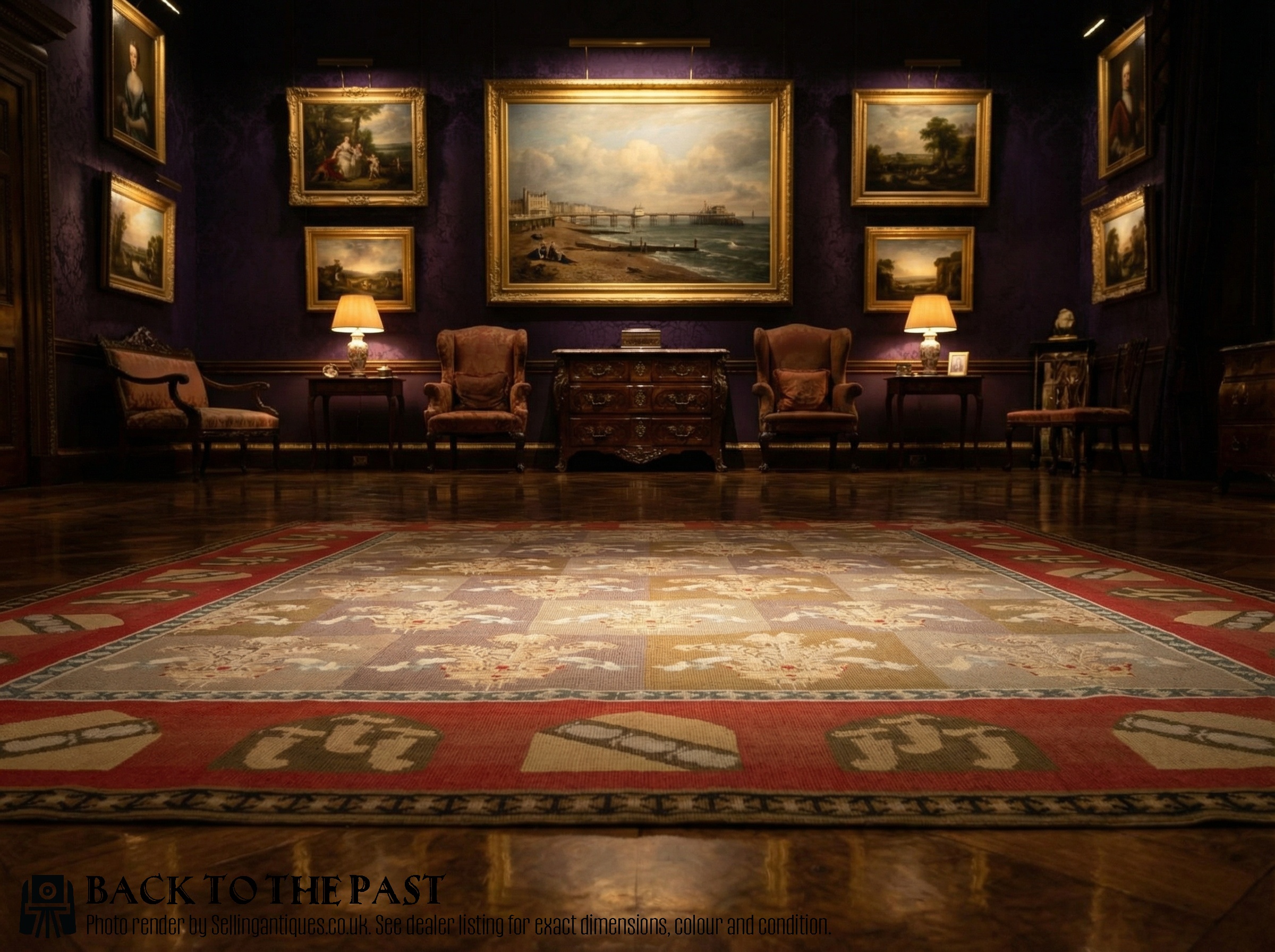
Wool Stitched Rug
When you search for wool stitched rug examples, you encounter a diverse range of textiles including Central Asian dowry embroideries, Portuguese needlepoint carpets, and Persian Rasht pieces. The selection on this page leans heavily toward Central Asian Lakai tribe ilgiches, Portuguese needlepoint panels, and Persian silk-on-felt embroideries.
These items serve multiple domestic functions as floor coverings, area rugs, and wall hangings. Formats range from large nineteenth-century English needlepoint carpets to smaller wall-hung tribal textiles and oval hand-stitched floor pieces.
Origins span across nineteenth-century England, Portugal, Kashmir, and Central Asian regions such as Uzbekistan. You will find traditional Kashmiri chain stitch carpets alongside Iberian traditional designs and Qajar-influenced Persian textiles.
What varies in quality
Quality rests upon the precision and density of the stitchwork, the complexity of the regional design, and the integrity of the base ground material. Finer silk threads and intricate pictorial or floral medallions separate superior examples from simpler formats.
The survival of secondary elements such as double-faced execution or complete border structures distinguishes better historical specimens. Material selection, notably the presence of pure silk embroidery over stable felt or canvas, dictates the tier of the piece.
Wool Stitched Rug Retail Price Guide 2026
Typical asking prices for wool stitched rug among the pieces listed under this phrase on Sellingantiques today, from the lower quarter to the upper quarter. They describe what is for sale here now, not the wider market.
Materials across these listings include wool, silk, cotton, felt, wool felt, canvas, and cotton canvas.
The Wool Stitched Rug Glossary
- Ilgich
- A Central Asian embroidered textile, frequently created by Lakai tribes as dowry items or wall hangings.
- Rasht embroidery
- A traditional Persian technique involving colourful silk embroidery and applique work on a felt ground.
- Needlepoint
- A form of counted or freehand canvas work where yarn is stitched through a stiff open-weave foundation.
- Chain stitch
- An embroidery technique where loop stitches form a continuous flowing chain line.
- Torba
- A small storage bag face or tribal trapping originating from Central Asian nomadic groups.
- Crewelwork
- Traditional embroidery utilising wool yarn on linen or heavy cotton twill grounds.
Wool Stitched Rug: Frequently Asked Questions
How do I hang a textile wall hanging safely?
Wall hangings require weight distribution across a continuous support rather than pinning at isolated points. A fabric sleeve stitched to the reverse allows a concealed wooden batten or metal rod to bear the load evenly.
Direct sunlight degrades natural wool and silk fibres over months, so positioning pieces away from bright windows preserves the original dye saturation.
Can these stitched rugs handle floor traffic?
Floor placement suits sturdier canvas-backed needlepoint carpets and heavier wool rugs. Finer silk-on-felt tribal embroideries and wall panels lack the structural resilience for heavy footsteps and fare better in low-traffic settings.
Placing a breathable non-slip underlay beneath floor rugs prevents sliding and reduces abrasive friction against the base materials.
How do I identify Central Asian tribal pieces?
Central Asian pieces typically feature geometric motifs, lively asymmetry, and saturated colour palettes worked onto heavy felted wool grounds. Tribal designations such as Lakai often appear in dowry embroideries intended for interior display.
Examining the reverse reveals the density of the stitching and the character of the base wool felt used by nomadic makers.
What is the difference between Portuguese and English needlepoint?
Portuguese needlepoint pieces often reflect traditional Iberian floral patterns and muted rustic palettes suited to regional interiors. English needlepoint carpets from the nineteenth century tend toward formal floral medallions and structured borders.
Both styles rely on canvas foundations, but the handling of negative space and botanical motifs separates the regional workshops.