


Needlepoint Rug
These needlepoint rug examples bring tactile warmth to a room, offering enduring texture and historical pattern through stitched wool on canvas foundations.
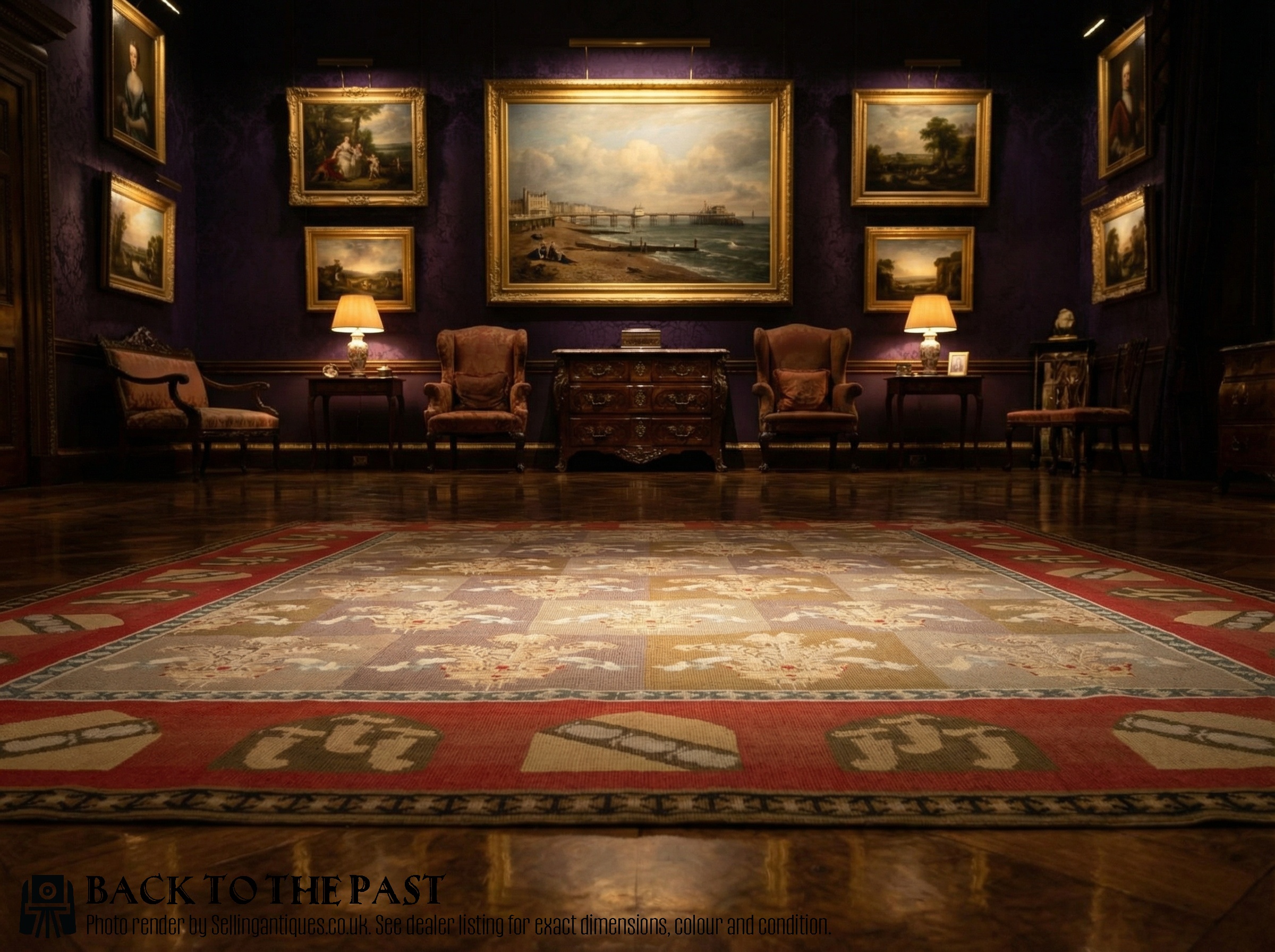
Needlepoint Rug
When you search for a needlepoint rug, you encounter textile floor coverings and wall hangings spanning the nineteenth century through the mid twentieth century. These flat-woven or stitched creations range from English room-sized carpets to smaller Portuguese and Iberian traditional floor pieces.
You are most likely to meet mid-twentieth-century Portuguese needlepoint works alongside nineteenth-century English examples on this page. Other regional traditions also appear, including Kashmiri chain stitch and Central Asian textile formats.
The assortment includes diverse regional aesthetics such as French Chateau influences, Portuguese Arraiolos styles, and traditional English room settings. Each piece utilises stitched surface designs upon structural foundation materials.
How they were made
Maker construction relies on wool yarn stitched meticulously onto sturdy canvas or cotton canvas backings. Some textiles incorporate silk elements to add subtle sheen and definition to the stitched motifs.
Techniques span traditional needlepoint stitchery, crewelwork embroidery, and chain stitch methods. Artisans built dense surface patterns by hand, creating durable floor coverings and decorative wall hangings.
Needlepoint Rug Retail Price Guide 2026
Typical asking prices for needlepoint rug among the pieces listed under this phrase on Sellingantiques today, from the lower quarter to the upper quarter. They describe what is for sale here now, not the wider market.
The listings span five distinct periods from the nineteenth century up to 1940, utilising wool, cotton, canvas, and silk.
What varies in quality
Quality depends upon the density of the stitch work and the complexity of the rendered pattern. Finer execution yields crisper botanical or geometric motifs that hold their structural integrity across decades of use.
The choice of foundation materials and the purity of the wool yarns influence the tactile weight and drape of the textile. Superior pieces display harmonious colour palettes and balanced composition across the entire canvas field.
The Needlepoint Rug Glossary
- Needlepoint rug
- A textile floor covering created by stitching yarn through a stiff open-weave canvas foundation. These pieces function as decorative floor coverings or wall hangings.
- Canvas
- A heavy woven fabric used as the structural base for needlepoint embroidery. It provides the rigid grid necessary for uniform stitch placement.
- Crewelwork
- A traditional form of surface embroidery utilising wool yarn. It creates textured, pictorial designs on heavy backing fabrics.
Needlepoint Rug: Frequently Asked Questions
How do I clean a needlepoint rug?
Gentle surface vacuuming without a beater bar removes loose dust from the wool fibres safely. Professional textile cleaning is recommended for deeper maintenance to protect the stitched canvas foundation.
Avoid excessive moisture or harsh chemical immersion during upkeep. Proper care preserves the historical integrity of the yarn and backing.
Where should I place a textile rug?
These pieces suit low-traffic areas such as bedrooms, studies, or formal sitting rooms where heavy foot traffic is minimised. Wall hanging is another traditional option for lighter textiles to prevent floor wear.
Keep them away from direct, prolonged sunlight to prevent fading of the dyed wool yarns. Using a quality rug underpad helps prevent slipping and cushions the canvas backing.
How do I identify a Portuguese needlepoint piece?
Portuguese examples often feature specific regional motifs influenced by traditional Arraiolos styles. They frequently date to the mid twentieth century and utilise sturdy wool stitching.
Examining the reverse side reveals the stitching technique and the canvas foundation structure. Comparing the border designs and colour palette helps distinguish them from English or Kashmiri equivalents.