




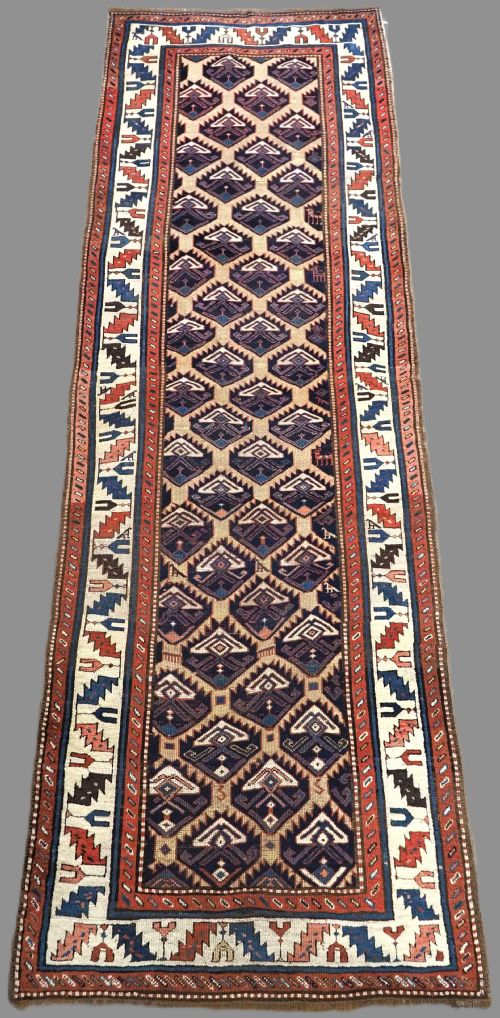
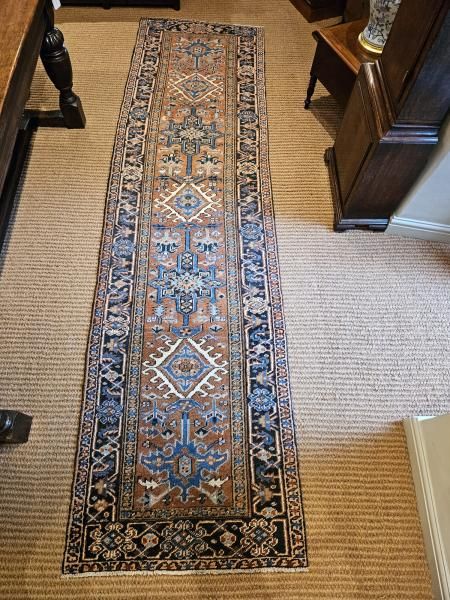

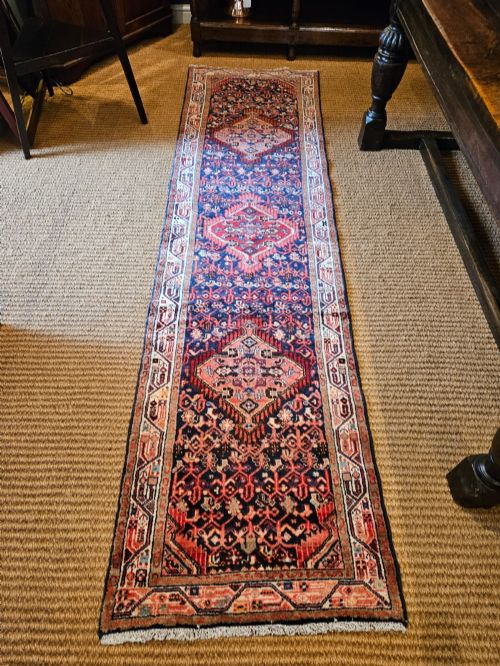
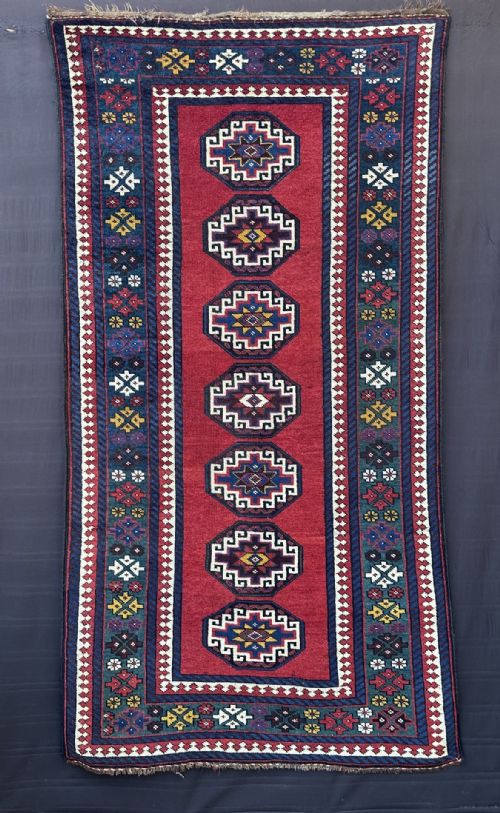
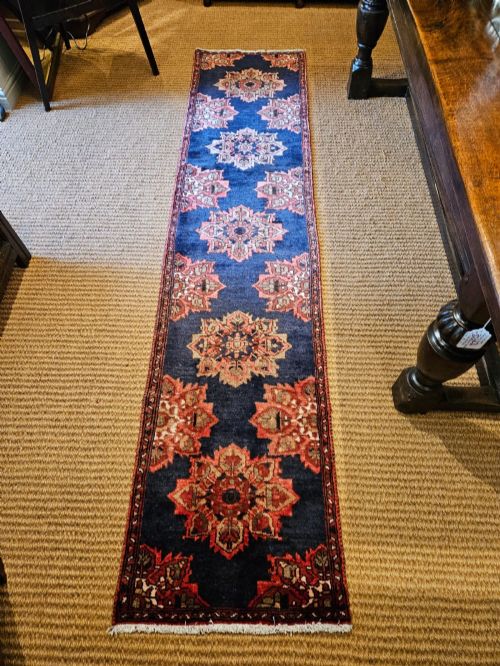
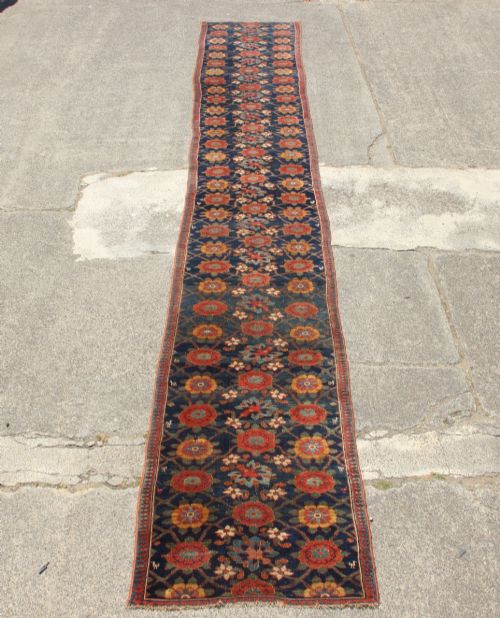
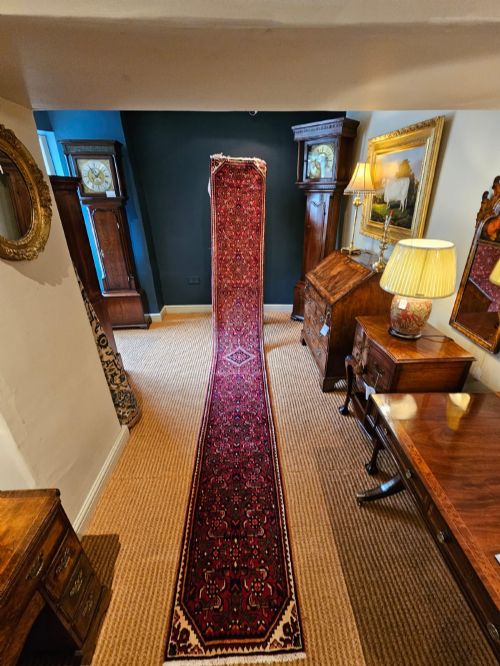
Wool Persian Hallway Rug
A wool persian hallway rug brings warmth and heavy pattern to a narrow corridor.
Wool Persian Hallway Rug
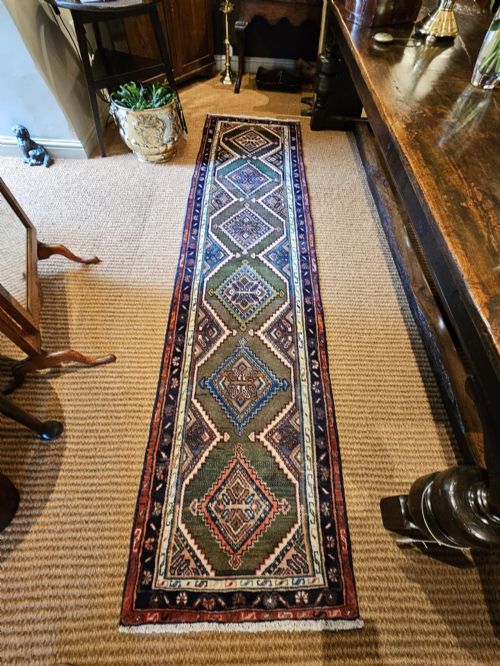
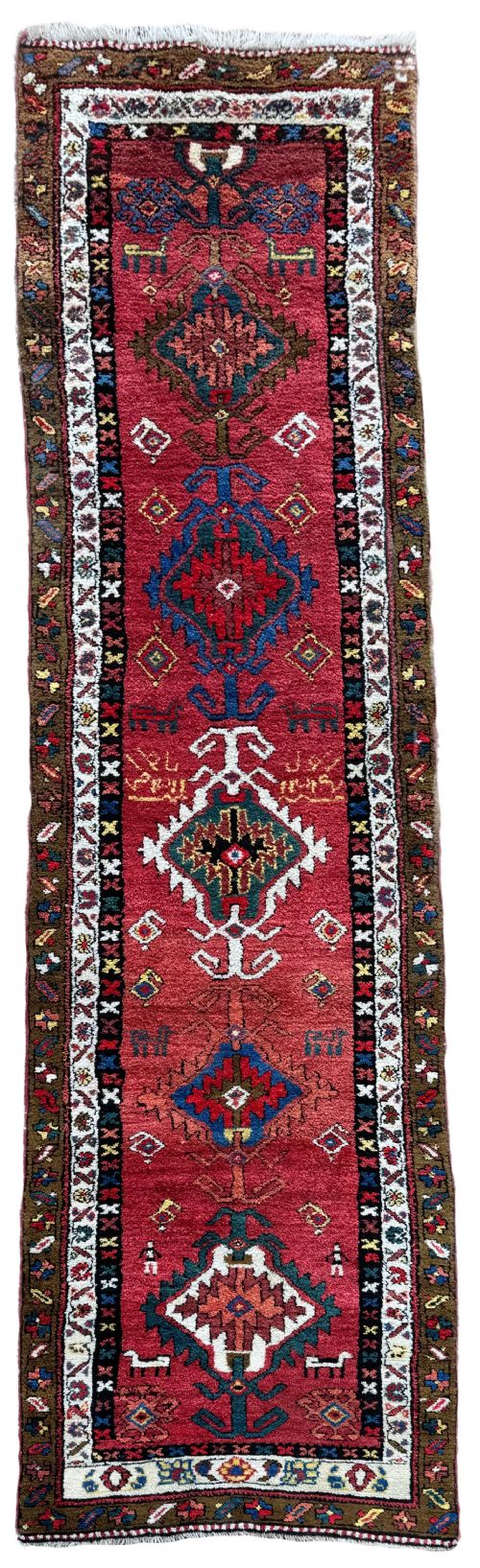
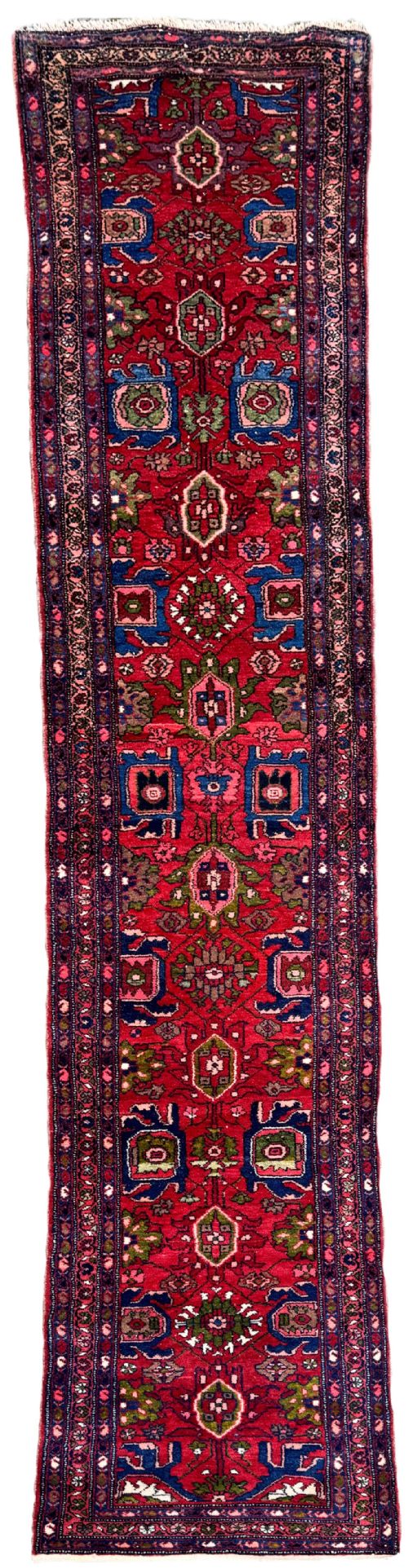
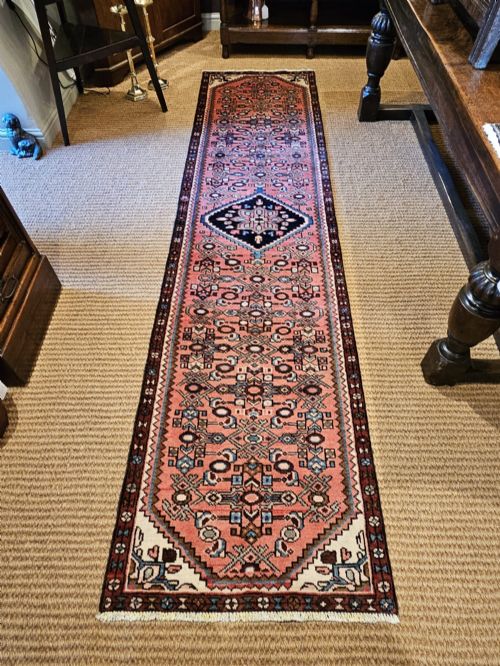
A wool persian hallway rug spans narrow, elongated formats designed specifically for corridors and passageways. These pieces originate from various villages and nomadic groups across regions such as Kurdistan, Heriz, and Hamadan.
The selections available here date principally from the late nineteenth century through to the early decades of the twentieth century. They present traditional tribal patterns, geometric layouts, and field designs that suit long spaces.
Materials and Construction
The structural foundation relies upon sturdy cotton warps and wefts, which provide stability for the heavy use corridors demand. Handspun wool forms the thick pile tied in traditional knots across the surface.
Natural dye sources create the rich, deep background tones of olive green, navy blue, and earthy reds. Artisans wove these runners on upright vertical looms using time-honoured techniques handed down through generations.
Evaluating Quality
The fineness of the weave and the tightness of the knotting dictate the crispness of the geometric motifs and floral lattice designs. Higher grade examples maintain an even pile and structural integrity despite decades of heavy foot traffic.
The depth and complexity of the natural dye palette separate standard village production from superior workshop pieces. Artisans who maintained strict control over their wool preparation produced runners with lasting visual resonance.
Heriz·Hamadan·Sarouk·Bidjar·Shirvan
The Wool Persian Hallway Rug Glossary
- Runner
- A long, narrow carpet format intended for corridors, staircases, and hallways. These pieces typically measure significantly longer than they are wide.
- Pile
- The vertical or slanted wool surface of a carpet formed by the cut ends of knots. This layer provides the tactile softness and displays the woven design.
- Warp
- The stationary lengthwise threads stretched tightly on the loom before weaving begins. Cotton forms this rigid skeleton that supports the entire structure.
- Weft
- The horizontal threads passed back and forth across the warp threads to secure each row of knots. This material binds the foundation firmly together.
- Knot
- The individual loops of coloured wool tied around the warp threads by hand. The density of these ties determines the intricacy of the pattern.
Wool Persian Hallway Rug: Frequently Asked Questions
Where should I place a long hallway runner?
These narrow formats fit naturally in entrance halls, corridors, and long landings where floor coverings soften footfalls. Their elongated proportions guide the eye down the length of the space.
Ensure you measure the corridor width carefully, leaving a uniform border of exposed wooden floorboards on either side for balance.
How do I care for antique wool runners?
Regular gentle vacuuming without a rotating power brush keeps dust from settling deep into the wool pile. Professional cleaning every few years preserves the natural lanolin in the fibres.
Rotate the runner occasionally to ensure even wear patterns develop across the surface from foot traffic.
What is the difference between village and tribal rugs?
Village pieces often feature structured geometric layouts and defined medallions woven by settled communities. Tribal runners showcase more spontaneous, highly stylised geometric patterns born from nomadic traditions.
Both categories utilise handspun wool and traditional dyes, but the artistic expression reflects different ways of life.
How do I determine the age of a runner?
Examining the wool consistency, natural colour variations, and edge finishes provides clues to the era of manufacture. Irregularities in the weave often point towards older, hand-produced village items rather than later commercial outputs.
Fringe wear and natural fading across the field also indicate long historical use.