
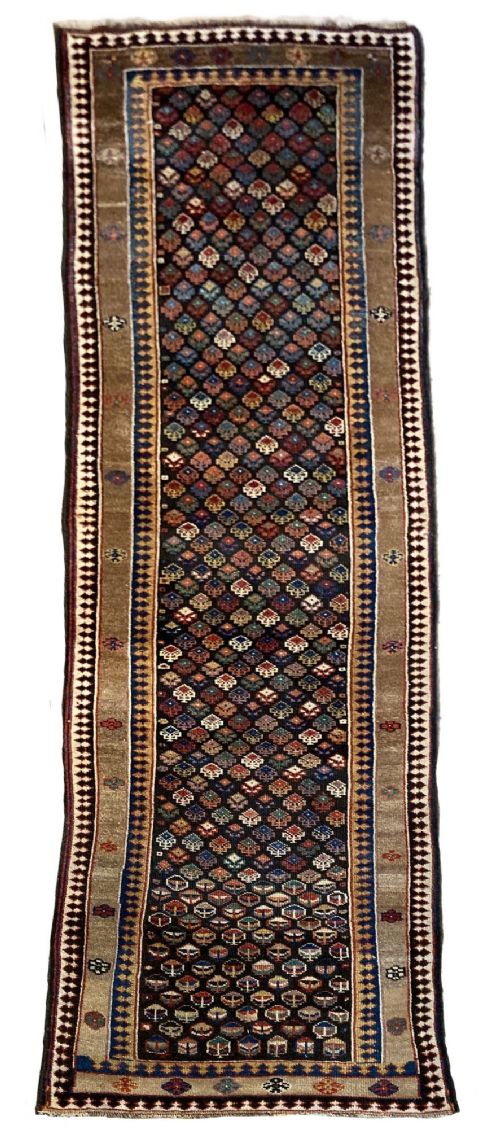


Wool Passage Rug
A wool passage rug provides a durable, decorative pathway for hallways and landings, bridging utility and traditional craftsmanship.
Wool Passage Rug
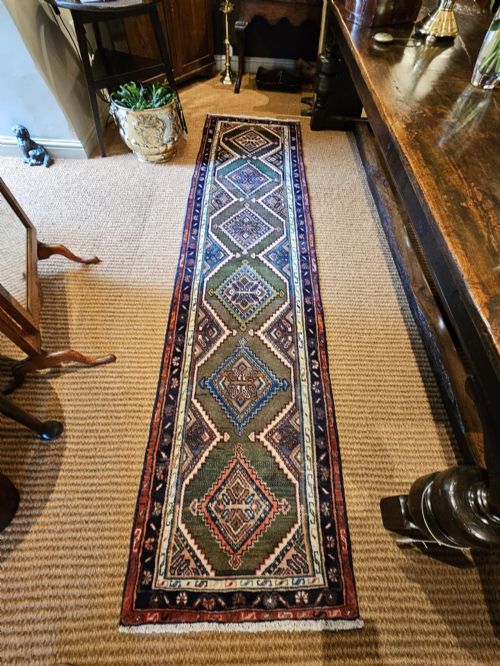
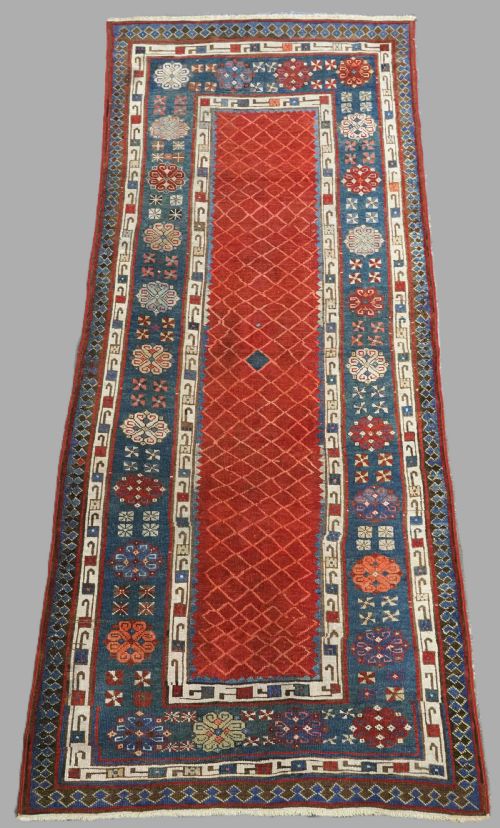
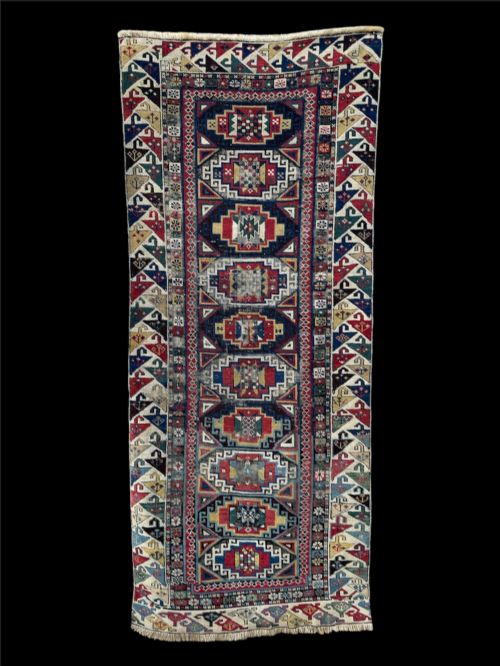
A wool passage rug takes the form of long, narrow runner rugs, hallway runners, and gallery carpets designed specifically for corridors and staircases. These pieces originate predominantly from Persian and Caucasian weaving traditions, spanning periods from the nineteenth century through the early decades of the twentieth century.
The selections available here showcase distinct regional styles such as Heriz, Kurdish, Shirvan, Talish, and Ferahan. Buyers encounter narrow proportions built for utilitarian spaces, executed with traditional tribal and village designs.
How these rugs were made
The construction relies fundamentally on wool pile tied onto cotton foundations, yielding dense and resilient surfaces suited for heavy foot traffic. Weavers utilised natural dyes to achieve deep blue, ivory, and olive green grounds patterned with lattice, shrub, and boteh motifs.
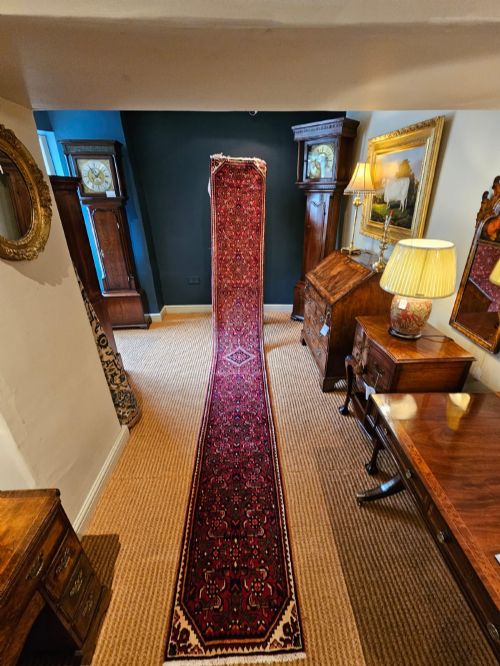
Meticulous hand-knotting creates the characteristic durability of these runners, allowing elongated formats like the very narrow Ferahan or Sarouk examples to maintain structural integrity across centuries.
The listings span from the nineteenth century through the 1930s, featuring wool pile on cotton foundations across Persian and Caucasian styles.
What varies in quality
Quality rests in the precision of the knotting and the integrity of the pile, distinguishing robust examples from those showing heavy wear. Finer pieces maintain deep, saturated wool pile and crisp geometric or floral drawing across the length of the runner.
The harmony and saturation of the natural dyes further separate standard village output from superior workshop pieces. Proportions also dictate desirability, particularly exceptionally long and narrow formats intended for grand hallways.
The Wool Passage Rug Glossary
- Runner
- A long, narrow carpet format traditionally utilised in hallways, corridors, and on staircases. These rectangular pieces measure significantly longer than their width.
- Pile
- The upright yarn loops or tufts forming the surface of a carpet. Dense wool pile provides the primary wear layer for antique floor coverings.
- Boteh
- A traditional Persian motif resembling a almond, gourd, or paisley shape. This symbol appears frequently in village and tribal textile designs.
- Foundation
- The underlying structural grid of warp and weft threads that supports the knotted wool pile. Cotton serves as the standard foundation material in these regional pieces.
Wool Passage Rug: Frequently Asked Questions
Where should I place a passage runner?
These narrow formats suit hallways, corridors, landings, and staircases where foot traffic demands a durable floor covering.
Their elongated proportions bridge larger rooms while protecting high-wear wooden or tiled flooring.
How do I care for antique wool runners?
Regular gentle vacuuming without a rotating brush roll prevents dust accumulation within the wool pile.
Professional cleaning preserves the natural lanolin in the wool and protects the traditional dyes.
What defines a Caucasian runner?
Caucasian pieces typically display geometric medallions, stark lattice work, and rich, contrasting primary colours.
Weavers in regions such as Shirvan, Talish, and Karabagh favoured these bold, rectilinear motifs.
How do Persian and Caucasian styles differ?
Persian weaving frequently incorporates curvilinear floral arrangements, shrub patterns, and intricate medallion layouts.
Caucasian traditions lean towards strict geometry, diagonal stripes, and crisp tribal symbolism.