




Wool Paisley Pattern Rug
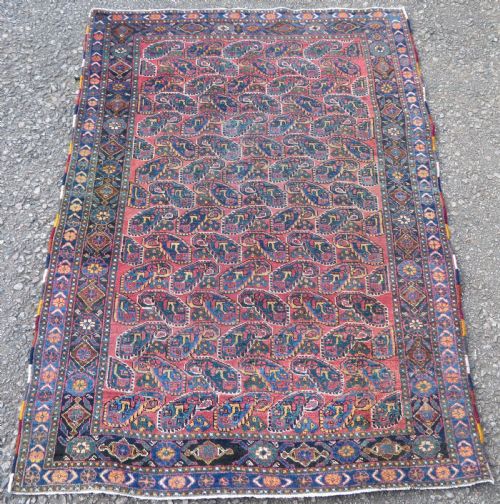
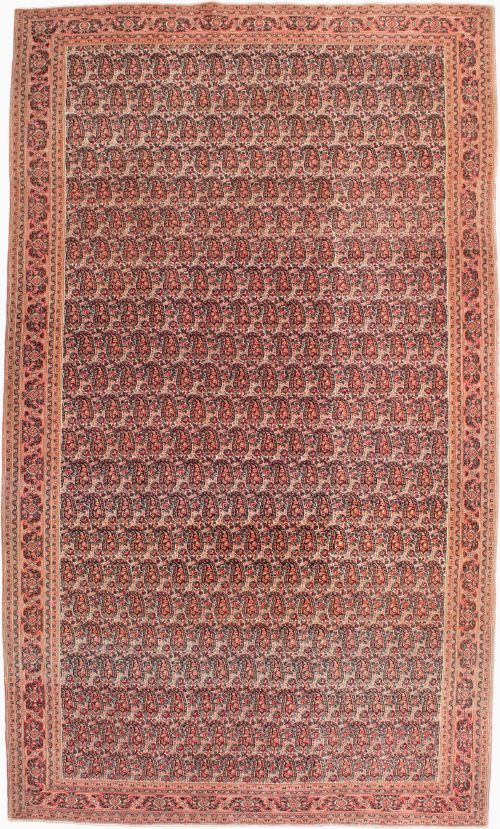
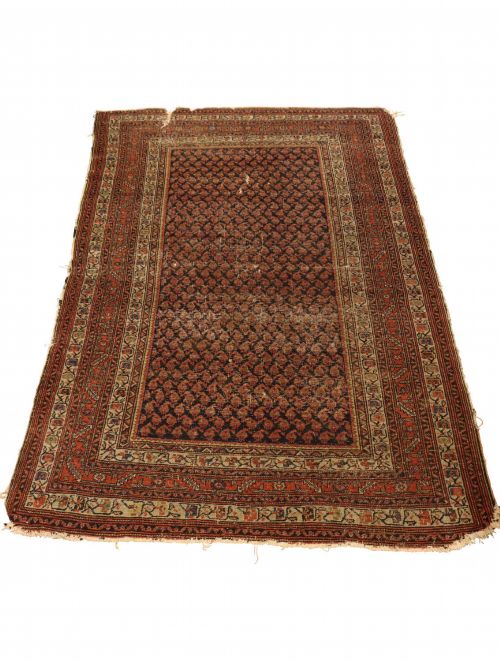
A wool paisley pattern rug brings the rich texture and historic boteh motif of Persian and Caucasian weaving directly into your floor space.
Wool Paisley Pattern Rug
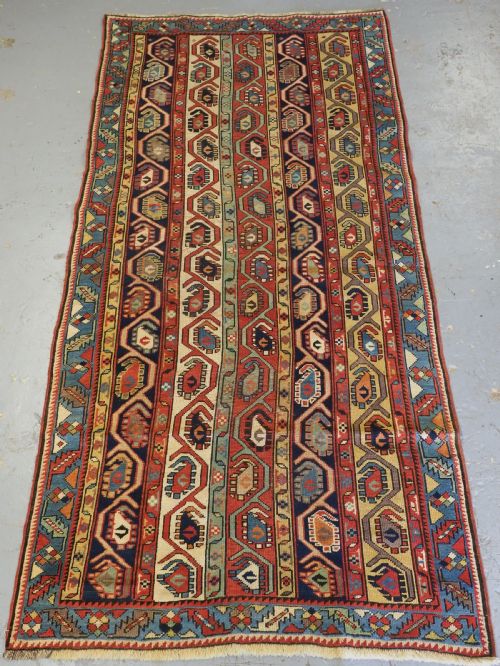
The selections available here span traditional Persian and Caucasian origins, including specific regional weaves such as Serapi, Tabriz, Karabagh, and Afshar. Buyers encounter both room-sized carpets and elongated formats suited to corridors and hallways.
How they were made
Weavers constructed these pieces predominantly from wool, frequently utilising cotton for foundations and occasionally incorporating silk highlights into the pile. Hand-knotting techniques predominated across workshops and tribal regions, securing the fibres to create durable floor coverings.
Dyers employed natural colourants to achieve the deep tones seen in these textiles, building complex patterns through traditional knotting methods passed down across generations.
Several pieces on this page feature the distinctive 'flaming boteh', where the traditional motif flickers upward like a tongue of fire.
What varies in quality
The finesse of the knotting and the density of the weave dictate the definition of the boteh motifs across the surface. Finer examples display crisp outlines and intricate secondary border details.
Colour saturation and the complexity of the regional design layout distinguish standard production from exceptional pieces. Superior specimens maintain balanced palettes and harmonious composition throughout the field.
The Wool Paisley Pattern Rug Glossary
- Boteh
- A traditional teardrop-shaped motif with a curved upper end, frequently called a paisley pattern in Western terminology. It appears as a repeating element across many Persian and Caucasian carpets.
- Serapi
- A distinctive style of large-scale geometric rug originating from the Heris region of Persia. These pieces often feature bold central medallions and strong architectural lines.
- Runner
- An elongated narrow carpet format designed specifically for hallways, corridors, and staircases. They typically display repeating regional motifs along their extended length.
- Kelleh
- A large format rectangular runner traditionally used alongside larger room carpets in Persian interiors. They share the dense patterning and hand-knotted construction of main carpets.
- Hand-knotted
- A manufacturing method where individual yarn threads are tied manually onto a warp and weft foundation. This technique produces durable textiles with distinct patterns visible on both sides.
Wool Paisley Pattern Rug: Frequently Asked Questions
How do I clean a wool paisley pattern rug?
Regular gentle vacuuming without a beater bar removes loose dirt from the wool pile safely.
Professional specialist cleaning is recommended for deep maintenance to preserve the integrity of the natural fibres.
Where should I place a runner rug?
Runners suit hallways, entryways, and narrow corridors where linear floor space benefits from textile warmth.
They also function effectively alongside beds or in galley kitchens to soften high-traffic areas.
What is the difference between Persian and Caucasian rugs?
Persian pieces typically exhibit intricate floral curves and balanced overall compositions from urban centres or tribal groups.
Caucasian examples tend towards bolder geometric interpretations and striking linear boundaries.
How can I tell the age of a woven carpet?
Inspectors examine the natural dyes, wool quality, knot structure, and wear patterns across the foundation.
Regional weaving characteristics and structural materials provide reliable indicators of production era.