
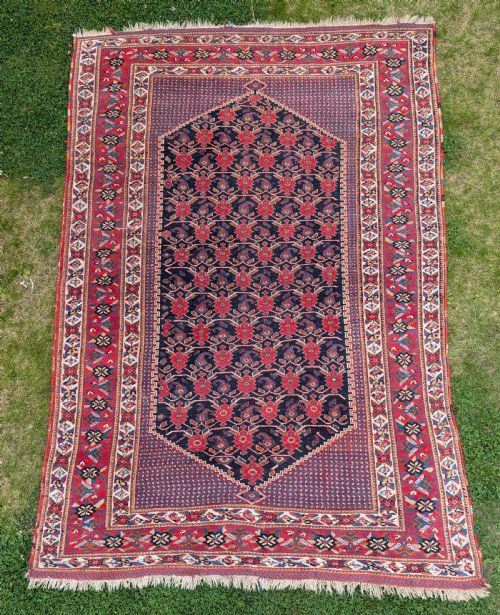
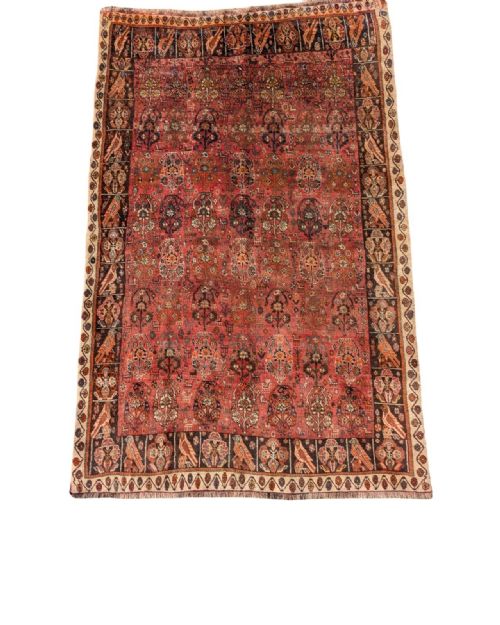
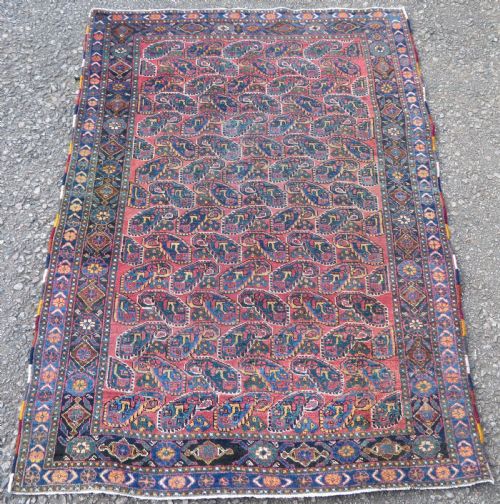
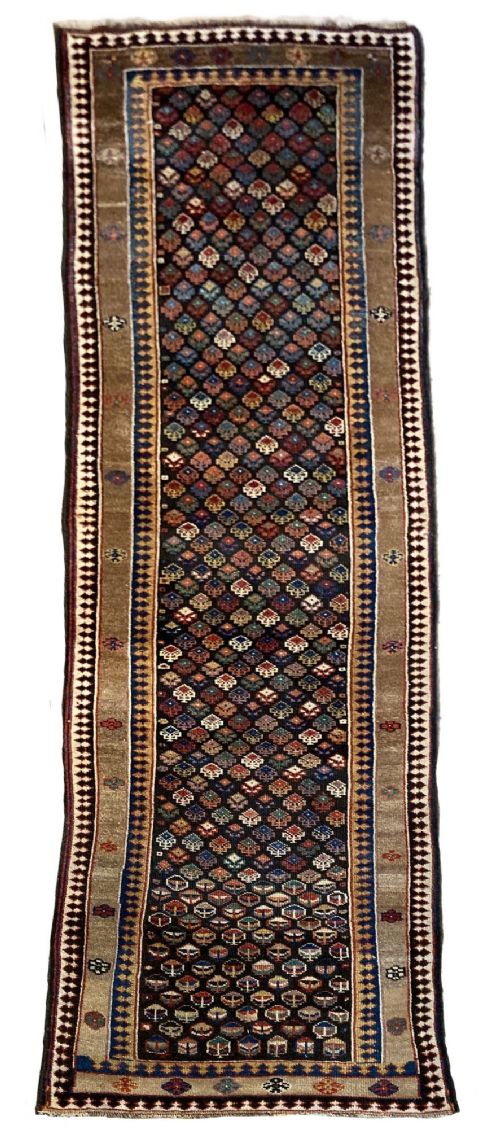
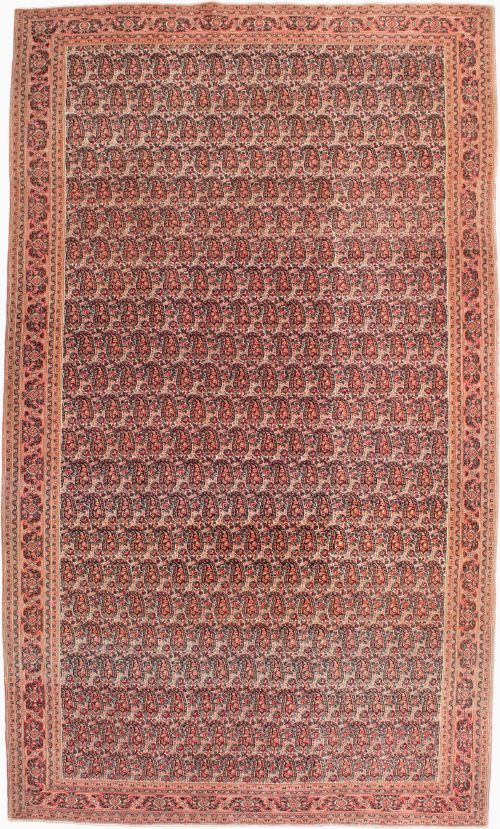
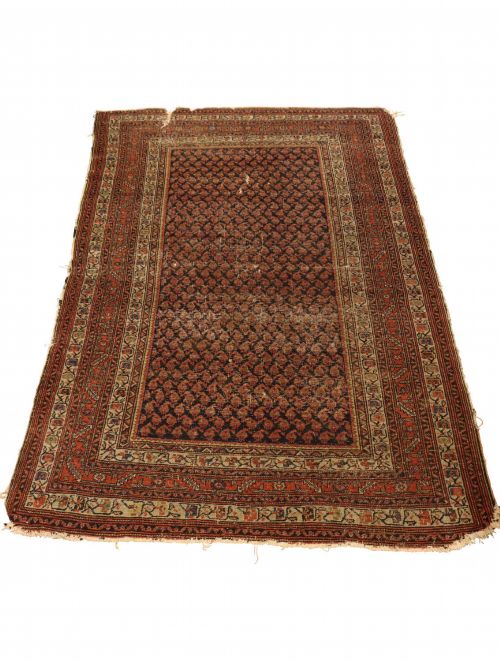


Vintage Boteh Pattern Rug
A vintage boteh pattern rug brings centuries of woven symbolism into a room through repeated almond-shaped motifs.
Vintage Boteh Pattern Rug
A vintage boteh pattern rug centres on the ancient Persian motif that evolved into the modern paisley, taking the form of a bent floral or leaf shape. These floor coverings appear across multiple regional traditions, including Persian tribal, Caucasian, and Central Asian styles.
Buyers meet variations ranging from compact area rugs and long runners to large gallery carpets. The pieces originate primarily from the late nineteenth century through to the nineteen-thirties, reflecting distinct weaving practices of specific tribal and village groups.
Materials and Construction
Weavers constructed these textiles primarily using wool, cotton, and occasionally silk foundations and piles. Hand-knotting techniques predominated, securing dense piles that provided durability for heavy domestic use over generations.
Certain flatwoven examples utilise tapestry techniques without a pile, such as kilims, while embroidered pieces incorporate detailed needlework on textile surfaces. Natural dyes supplied the deep colour palettes recorded in the regional workshop and tribal traditions.
Some nomadic weavers included tiny intentional imperfections in their repeating boteh rows to ward off the evil eye.
Assessing Quality and Execution
Knot density and structural tightness dictate the fineness of the weave, separating village productions from master workshop carpets. Finer knots permit crisper rendering of intricate boteh layouts and geometric borders.
The choice and saturation of dye materials heavily influence visual depth, as natural colour combinations retain greater nuance than later chemical equivalents. Overall proportion and the precision of the repeating motifs distinguish accomplished regional weaving from standard output.
Afshar·Kashgai·Kurdish·Qum·Senneh
The Vintage Boteh Pattern Rug Glossary
- Boteh
- A stylised curved floral motif resembling a seed, almond, or pine cone. It remains one of the oldest decorative elements in Near Eastern textiles.
- Kilim
- A flatwoven textile produced by tightly interweaving warp and weft strands without creating a pile. These pieces offer lighter weights and distinct geometric patterns.
- Runner
- A long, narrow carpet format designed for hallways, corridors, or alongside beds. They often feature repeating medallion or boteh sequences.
- Knot density
- The measurement of individual knots per square unit on the reverse of a rug. Higher counts typically indicate greater labour and finer detail.
- Warp
- The stationary vertical threads stretched onto a loom that form the structural foundation of the rug. Wefts are passed across them horizontally.
Vintage Boteh Pattern Rug: Frequently Asked Questions
What is a boteh pattern?
A boteh is a traditional motif shaped like a bent almond, leaf, or cypress shoot. It appears frequently in Middle Eastern and South Asian textiles.
In weaving, the motif symbolises life and eternity, rendered either as a single dominant element or repeated across the entire field.
Where were these rugs made?
These textiles originate from various regions including Persia, the Caucasus, and Central Asia. Specific groups such as tribal weavers and village workshops produced them.
Each region employed distinct colour palettes and knotting structures that distinguish an Afshar piece from a Caucasian or Qum creation.
How do I care for a vintage rug?
Regular gentle vacuuming without a rotating brush roll prevents dust accumulation within the wool or cotton pile. Professional cleaning suited to antique textiles preserves the natural fibres.
Positioning the rug out of direct strong sunlight protects the natural dyes from fading over years of placement in a room.
How are different periods identified?
Dating relies on structural analysis, material composition, and stylistic markers specific to regional weaving traditions. Earlier examples often display more saturated natural dye variations.
Documentation within specific decades, such as the eighteen-eighties or nineteen-thirties, corresponds to documented shifts in village and workshop production.