


Wool Kirman Rug
A wool kirman rug is a woven Persian floor covering designed for durability and intricate floral detail, bringing traditional artistry into a room.
Wool Kirman Rug
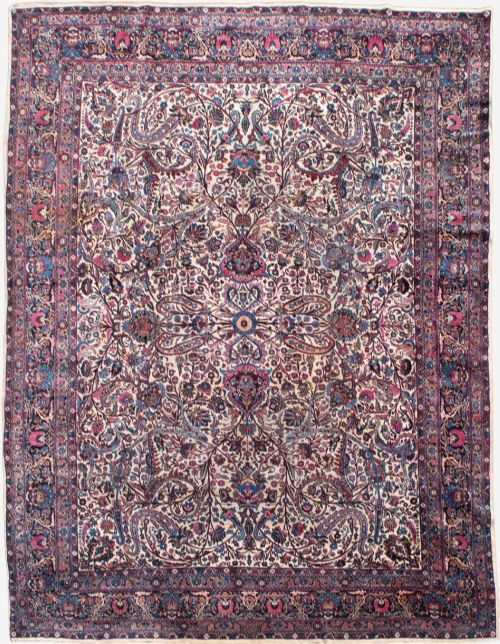
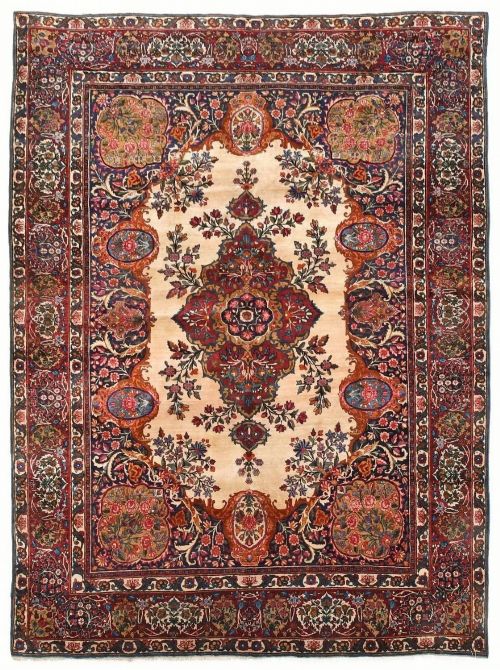
When you search for a wool kirman rug, you are looking at Persian floor coverings originating from south Persia. These textiles range from small mats and narrow runners to large room-sized carpets and oversized pieces.
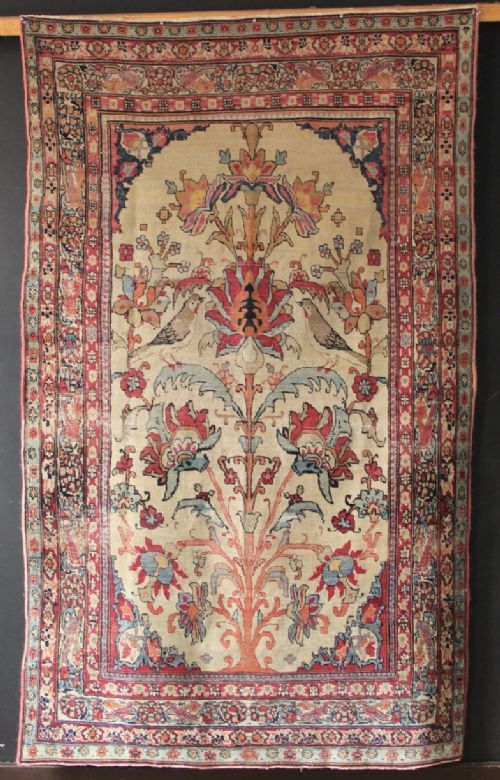
The versions most commonly met on this page date from the nineteenth century through to the early decades of the twentieth century. They appear in traditional Persian styles, including specific subgroups such as Lavar Kirman and Millefleurs prayer rugs.
Makers produced these floor coverings in various dimensions, from compact pieces measuring under a metre to expansive carpets exceeding five metres in length. Their formats serve different interior spaces, operating equally well as central room anchors or smaller accent floor coverings.
What varies in quality
Knot density and fineness of weave separate the standard examples from exceptionally fine ones. Higher knot counts permit greater precision in rendering intricate floral designs and delicate botanical patterns.
The condition of the wool pile and the foundation structure influences the integrity of each piece. Surviving examples exhibit varying degrees of wear, with uniform pile preservation distinguishing better-preserved specimens from distressed items.
The listings span production dates from eighteen-seventy through to nineteen-forty, entirely utilising wool and cotton materials within traditional Persian styles.
The Wool Kirman Rug Glossary
- Lavar Kirman
- A specific finer variety of Kirman rug, often associated with a softer wool texture and exceptionally detailed floral compositions. These pieces derive from the specific village traditions within the Kirman district.
- Millefleurs
- A decorative style characterised by a dense background field filled with thousands of tiny flowers. This pattern appears frequently in traditional prayer rugs from south Persia.
- Boteh
- An almond-shaped or pine-cone motif with a curved upper end, commonly used in repeat patterns across Persian carpets. It represents a traditional Persian design element of great antiquity.
- Prayer rug
- A smaller format rug featuring a mihrab or niche design, historically used for individual devotion. These pieces often display specific architectural motifs in their upper registers.
- Runner
- A long, narrow carpet format designed primarily for hallways, corridors or alongside large pieces of furniture. Their proportions require specialised weaving techniques to maintain straight edges over extended lengths.
Wool Kirman Rug: Frequently Asked Questions
Where were these rugs made?
These floor coverings originate from Kirman in south Persia, a historic centre for carpet production known for skilled weavers and distinct design traditions.
The regional workshops utilised local materials and time-honoured techniques to create carpets intended for both domestic use and export.
How do I clean a wool kirman rug?
Maintenance requires gentle care appropriate for antique textiles, avoiding harsh chemical treatments and excessive water immersion.
Regular light vacuuming without a rotating brush helps remove embedded dust while preserving the delicate wool pile.
Are these rugs suitable for high-traffic areas?
Traditional construction using wool and cotton provides natural durability suitable for moderate foot traffic in domestic spaces.
However, older or distressed examples benefit from placement in lower-traffic rooms to protect the surviving foundation and pile.
How can I tell the age of a Kirman rug?
Dating relies on stylistic indicators, structural characteristics, dye types, and historical production periods spanning the nineteenth and early twentieth centuries.
Comparing the weave density, motif complexity, and material wear against documented examples helps narrow down the approximate decade of origin.
What is a room-size carpet?
A room-size classification indicates larger dimensions designed to anchor the furniture arrangement within a standard domestic living space.
These pieces typically measure over three metres in length, requiring substantial floor area to display their complete pattern.