





Wool Kilim Saddlebag
These wool kilim saddlebag pieces are tribal textiles woven for nomadic life, offering bold geometric patterns that bring authentic warmth to modern interiors.
Wool Kilim Saddlebag
When you search for a wool kilim saddlebag, you encounter flatwoven tribal textiles that originally served as utilitarian pack animals storage. The examples on this page primarily span the late nineteenth century and around nineteen hundred, originating from Persian, Anatolian, and Central Asian tribal groups.
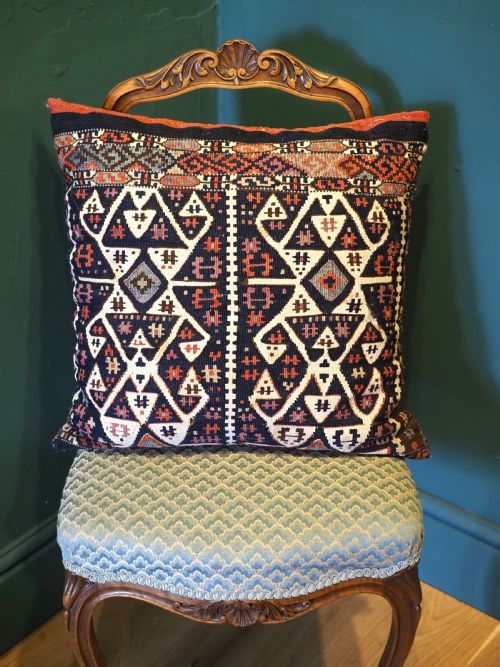
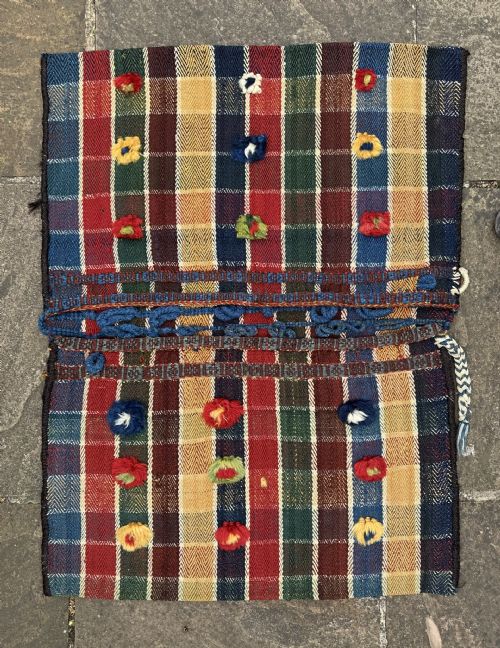
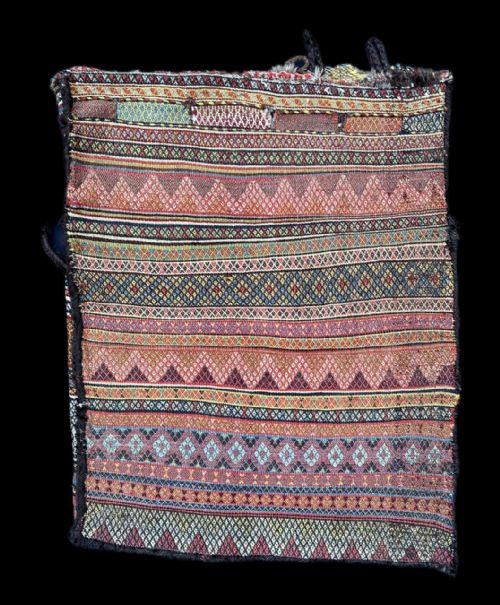
You will find various configurations here, ranging from complete pairs and single saddlebag faces to adaptations transformed into cushions. These textiles showcase distinct regional aesthetics through traditional flatweave techniques.
Tribal makers from regions such as Azerbaijan, Anatolia, and Fars Province produced these bags for daily nomadic existence. Today, collectors and interior designers prize them for their rich history and robust flatweave structure.
How They Were Made
Weavers constructed these textiles using hand-spun wool for the main flatwoven body, often incorporating cotton and metal elements for structural reinforcement and detail. Natural dyes provided the deep, enduring colour palette seen across the pieces.
The construction relies on traditional slit-tapisserie flatweaving, where pattern changes create small vertical slits in the fabric. Artisans frequently added leather finishes and sturdy plain weave backs to withstand the rigours of transport.
Nomadic groups utilised banded weft work and supplementary weft techniques to build complex geometric motifs. Each piece reflects the specific technical vocabulary of its particular tribe, whether Shahsavan, Qashqa'i, or Kurdish.
Wool Kilim Saddlebag Retail Price Guide 2026
Typical asking prices for wool kilim saddlebag among the pieces listed under this phrase on Sellingantiques today, from the lower quarter to the upper quarter. They describe what is for sale here now, not the wider market.
Current listings feature nineteenth-century wool, cotton, and natural dye textiles created by Kurdish, Qashqa'i, and Shahsavan tribal makers.
What Varies in Quality
The distinction between ordinary and exceptional pieces rests upon the crispness of the tribal design and the purity of the natural dyes. Superior examples exhibit tightly packed wefts and harmonious colour transitions that have aged with grace.
Completeness alters the character of the object, as surviving pairs or intact saddlebag faces retain a greater sense of their original function than isolated fragments. The finesse of the hand-spun wool and the complexity of the tribal iconography further elevate the standing of a textile.
The Wool Kilim Saddlebag Glossary
- Kilim
- A flatwoven textile produced without a pile by tightly interlacing warp and weft strands. This technique creates a lightweight, durable fabric with a smooth surface.
- Weft
- The horizontal threads passed back and forth through the vertical warp threads during weaving. In these items, coloured wefts form the characteristic geometric patterns.
- Warp
- The stationary vertical threads stretched onto a loom to form the structural foundation of the textile. The visible ends often terminate in decorative fringing.
- Natural Dyes
- Colourants derived from plants, insects, and minerals rather than synthetic compounds. They yield complex, rich tones that mellow sympathetically over time.
- Flatweave
- A general term for textiles woven without knotted pile, resulting in a thin, tapestry-like structure. Saddlebags and floor coverings utilise this method for practical strength.
Wool Kilim Saddlebag: Frequently Asked Questions
How were saddlebags used originally?
Nomadic communities hung these bags in pairs across the backs of horses, camels, or donkeys to transport household goods during migration. They stored everything from grain to personal belongings.
The sturdy construction and leather elements protected the contents from harsh weather and constant movement.
How do I care for a textile?
Gentle vacuuming with a low suction setting helps remove surface dust without catching the weave. Professional textile cleaning is advisable for deeper maintenance.
Keeping the piece away from direct, harsh sunlight preserves the natural dye colours for years to come.
How can I tell different tribes apart?
Tribal attribution relies on specific geometric motifs, border arrangements, and colour combinations characteristic of regions like Anatolia or South-West Persia. Shahsavan and Qashqa'i weavers, for instance, employed distinct design repertoires.
Comparing structural details and weave types helps identify the likely origin of an unknown piece.