


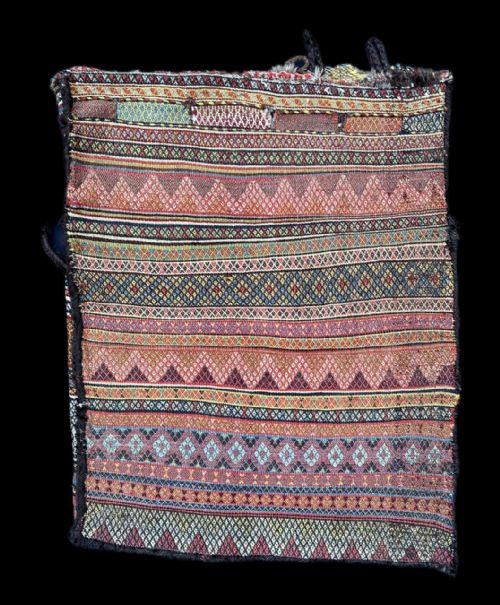


Persian Kilim Cushion Cover
A persian kilim cushion cover brings rich tribal texture into a room, formed from authentic woven bag faces and nomadic textiles.
Persian Kilim Cushion Cover
When you search for a persian kilim cushion cover, you encounter repurposed vintage textiles originating from nomadic and tribal groups across Persia. These pieces typically take the form of antique bag faces, storage bags, and saddlebags transformed into soft furnishings.
The versions most commonly met on this page date from the nineteenth and early twentieth centuries, spanning periods from eighteen fifty up to nineteen twenty. They showcase distinct regional styles including Qashqa'i, Bakhtiari, Shahsavan, and general tribal nomadic aesthetics.
Constructed from authentic flatwoven textiles, these covers preserve the geometric patterns and utility of original tribal weaving. They offer a direct connection to traditional nomadic craftsmanship while serving a decorative purpose in modern interiors.
How they were made
The creation of these textiles relies on hand-spun wool and natural dyes, occasionally supplemented by goat hair and cotton for structural integrity. Weavers utilised traditional flatweaving techniques without a pile, producing durable surfaces with crisp geometric motifs.
Nomadic makers sourced local materials, spinning wool by hand to achieve varied texture and density within the weave. Natural dye stuffs provided rich palettes that mellowed gracefully over decades of use.
Persian Kilim Cushion Cover Retail Price Guide 2026
Typical asking prices for persian kilim cushion cover among the pieces listed under this phrase on Sellingantiques today, from the lower quarter to the upper quarter. They describe what is for sale here now, not the wider market.
Discarded saddlebags once strapped across travelling animals now spend their retirement softened inside modern living rooms.
What varies in quality
Quality in these woven pieces lies in the tightness of the weave, the clarity of the tribal motifs, and the depth of the natural dye palette. Superior examples display meticulous execution and balanced proportions that reflect skilled regional weaving traditions.
The integrity of the original bag face or saddlebag determines the character of the finished cushion. Finer specimens retain vibrant, stable wool and complex geometric arrangements that demonstrate superior nomadic craftsmanship.
The Persian Kilim Cushion Cover Glossary
- Kilim
- A flatwoven textile produced by tightly interweaving warp and weft strands to create a smooth surface without pile.
- Bag face
- The decorative front panel of a utilitarian nomadic storage bag, frequently repurposed into a cushion cover.
- Saddlebag
- A paired utility bag woven for transport on animals, often separated over time to supply individual textile panels.
- Warp
- The stationary vertical threads stretched on a loom that form the structural foundation of the textile.
- Weft
- The horizontal threads passed through the warp to build up the pattern and colour of the weave.
Persian Kilim Cushion Cover: Frequently Asked Questions
What is a kilim cushion?
A kilim cushion is a soft furnishing made by repurposing authentic flatwoven tribal textiles, such as vintage bag faces or storage sacks.
These pieces transform nomadic utilitarian objects into decorative items suitable for contemporary seating.
How old are these covers?
The pieces available range primarily from the mid-nineteenth century up to the early twentieth century, spanning decades such as eighteen fifty and nineteen twenty.
Each item originates from historical nomadic production periods in Persian regions.
Are they made from real wool?
These textiles utilise hand-spun wool and natural dyes as their primary materials, occasionally incorporating cotton or goat hair for strength.
Traditional nomadic makers relied on these local animal fibres to construct durable utility bags.
How do I care for antique wool?
Gentle maintenance is essential to preserve the natural fibres and dye colours of antique flatweaves.
Professional specialist cleaning helps protect the structural integrity of historical wool and cotton components.
What is a bag face?
A bag face is the ornamented front panel of a nomadic storage container designed for household or transport use.
Weavers decorated these panels with distinct tribal geometric designs that now distinguish individual cushion covers.