




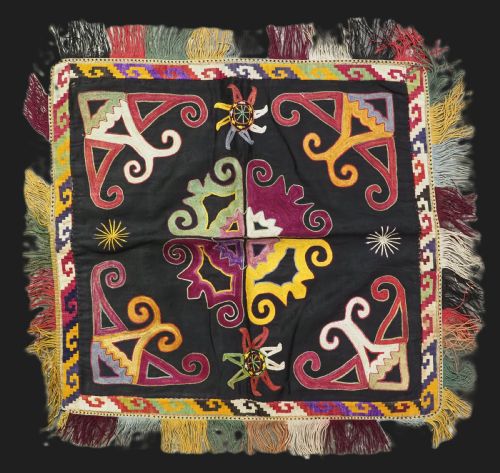

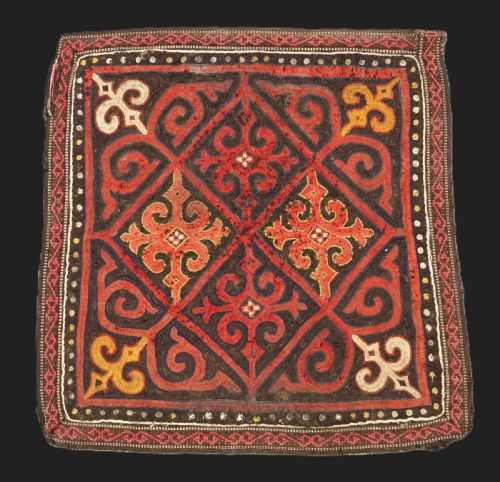
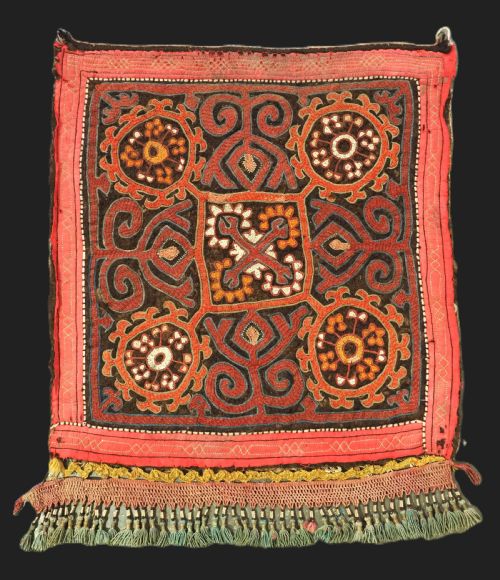

Wool Embroidered Central Asian Rug
A wool embroidered central asian rug brings tactile nomadic heritage into a room through dense hand-stitched silk and wool.
Wool Embroidered Central Asian Rug
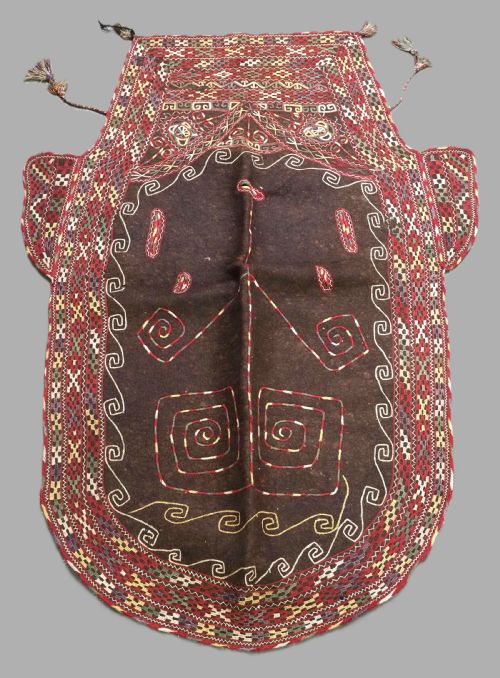
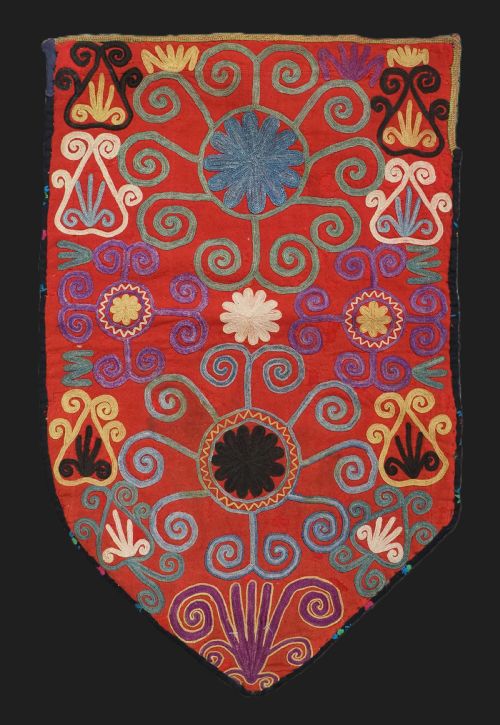
When searching for a wool embroidered central asian rug, collectors encounter tribal domestic furnishings, ceremonial textiles, and wall hangings created across nomadic communities from the late nineteenth century into the early decades of the twentieth century. These textile works range from dowry embroideries and yurt wall panels to saddle covers and horse blankets.
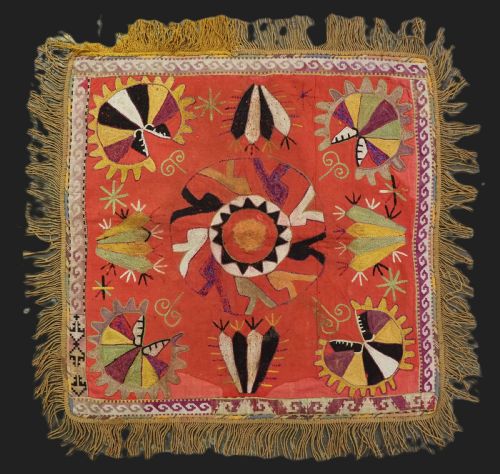
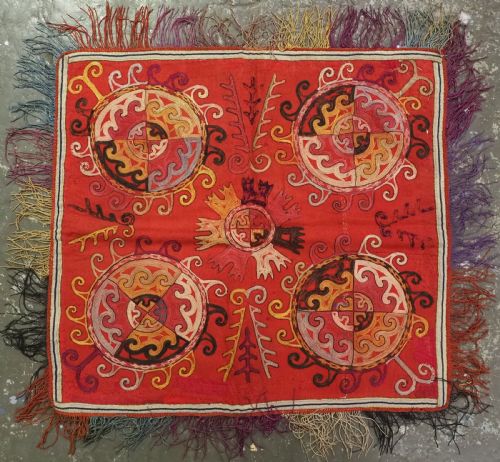
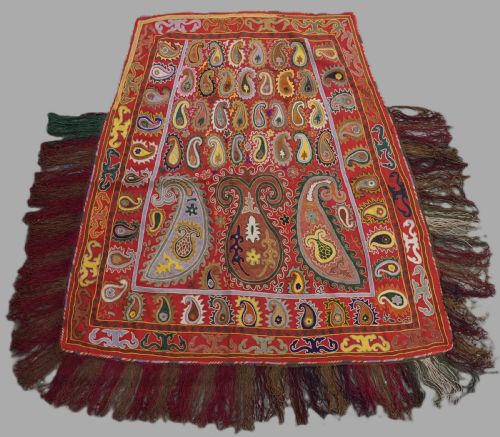
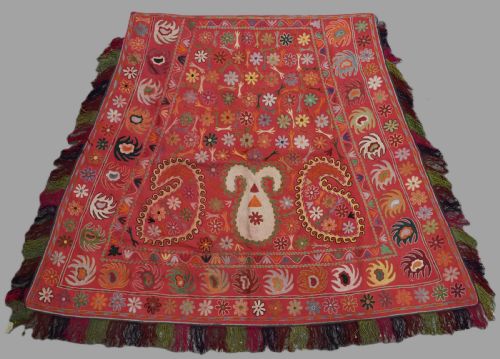
The most common examples on this page are pieces originating from the Uzbek Lakai tribe, alongside Turkmen, Kirghiz, and Afghan pieces. They frequently take the form of an ilgich, uut kap, torba, or tush kyiz, reflecting the utilitarian and ceremonial needs of nomadic life.
Dated specimens span the period from the eighteen-eighties to the nineteen-thirties, showing the persistence of tribal motifs executed in traditional wool, cotton, and felt grounds.
How They Were Made
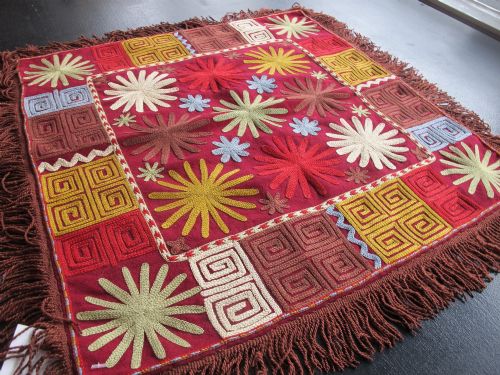
Maker communities built these pieces upon robust foundation materials, utilising heavy wool, felted wool, camel hair, and cotton grounds that could withstand the rigours of nomadic existence. Artisans then applied dense needlework using silk thread, cotton thread, and wool yarn to build up graphic geometric and figurative motifs.
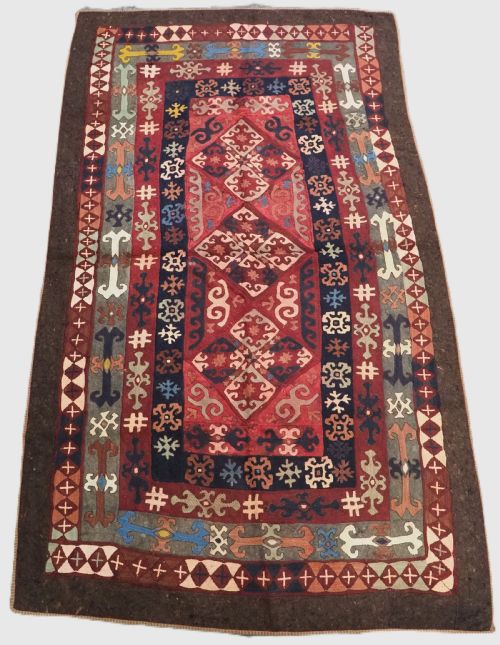
Techniques combine foundational flatweave structures, such as kilims, with intricate surface embroidery and applied fringe or felted panels. Silk highlights frequently contrast against red wool or deep felt grounds, providing the characteristic visual depth seen in these tribal works.
Wool Embroidered Central Asian Rug Retail Price Guide 2026
Typical asking prices for wool embroidered central asian rug among the pieces listed under this phrase on Sellingantiques today, from the lower quarter to the upper quarter. They describe what is for sale here now, not the wider market.
Nomadic makers stitched ceremonial horse blankets to ensure travel-ready livestock stayed properly attired for weddings.
What Varies in Quality
The calibre of a piece depends heavily on the crispness of the needlework and the vitality of the composition, where confident, dynamic layouts separate standard domestic items from superior tribal expressions. The handling of colour and the integration of silk highlights against the wool or felt ground dictate the visual rhythm of the surface.
Survival of the original ground material, whether woven wool, felt, or camel hair, alongside the integrity of the applied borders and fringes, determines how successfully the textile retains its historical character.
The Wool Embroidered Central Asian Rug Glossary
- Ilgich
- A Central Asian embroidered wall hanging or dowry piece, traditionally produced by Uzbek and Lakai makers. These panels display dense needlework intended to adorn the interior of the yurt.
- Uut Kap
- A small storage bag or trapping used within nomadic tents, frequently decorated with bold embroidery on a wool or felt ground. They served both practical storage and decorative functions.
- Tush Kyiz
- Large, elaborately embroidered Kyrgyz wall hangings traditionally created by women to commemorate the marriage of a son or daughter. They feature symbolic motifs representing family and nomadic life.
- Torba
- A small Turkmen wall hanging or storage bag placed on the interior tent walls. These pieces often incorporate rich silk highlights and geometric tribal patterning.
Wool Embroidered Central Asian Rug: Frequently Asked Questions
How were these rugs used originally?
Nomadic communities utilised these textiles as functional interior furnishings within yurts, including storage bags, wall panels, and ceremonial hangings for dowries or weddings.
Others served as protective horse blankets, saddle covers, and tent door decorations, combining practical durability with tribal identity.
How do I care for an embroidered wool textile?
Keep these historic textiles out of direct sunlight to prevent the natural dyes and silk highlights from fading over time. Gentle vacuuming through a protective mesh screen helps remove dust without disturbing delicate wool or felt grounds.
How do I distinguish Lakai pieces from other styles?
Lakai tribal embroideries often feature exuberant, asymmetrical geometric motifs and hooked designs stitched in vibrant silk threads onto red wool or felt grounds.
Their works frequently take the form of small wall hangings or horse trappings that display a distinctively spontaneous approach to traditional patterns.
What periods do these pieces represent?
The available selection primarily encompasses works produced between the eighteen-eighties and the nineteen-thirties. This era captures the late nomadic period before widespread settlement altered traditional textile production methods.
Exact dating relies on stylistic analysis, material wear, and structural characteristics recorded across the surviving pieces.