



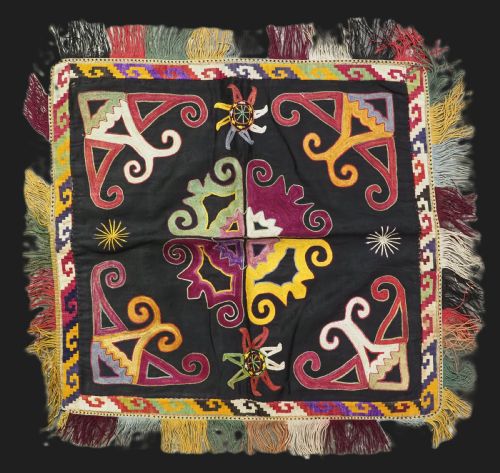

Lakai Embroidered Textile
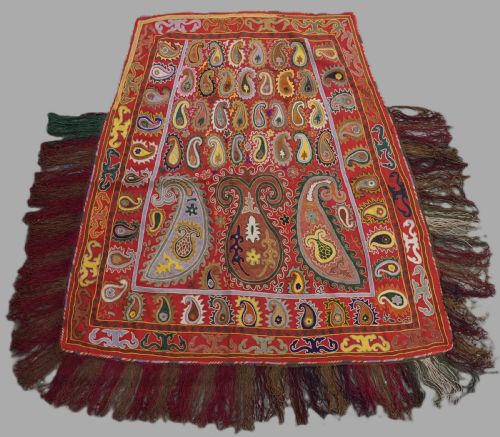
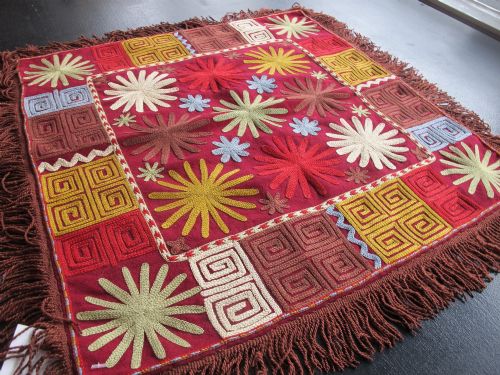
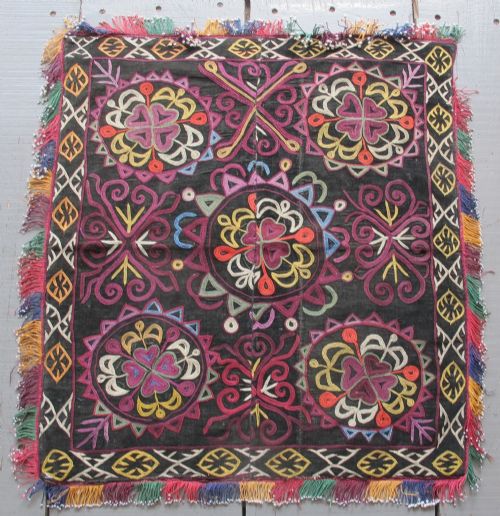
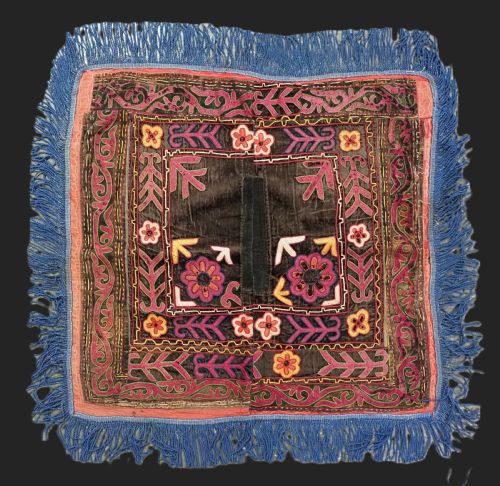
Lakai embroidered textile pieces are Central Asian tribal works created for domestic and ceremonial use.
Lakai Embroidered Textile
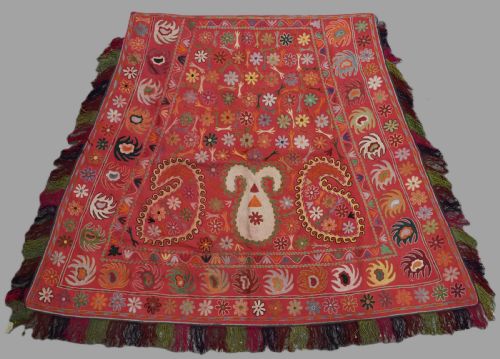
A lakai embroidered textile originates from Uzbek tribal groups in Central Asia, spanning periods from the late nineteenth century into the early twentieth century. Buyers encounter forms such as wall hangings, dowry embroideries, and ceremonial horse covers.
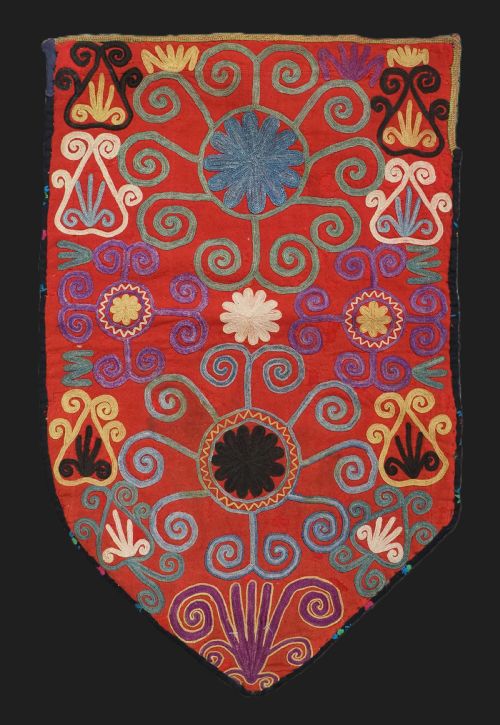
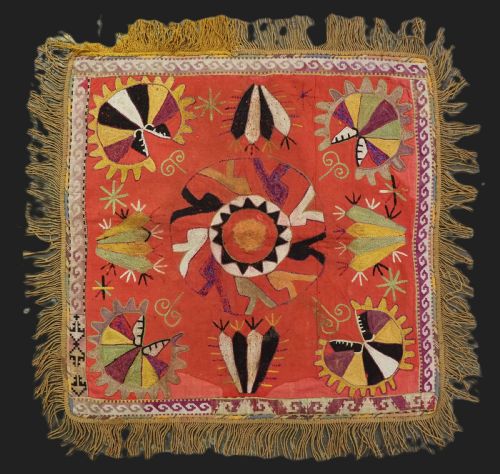
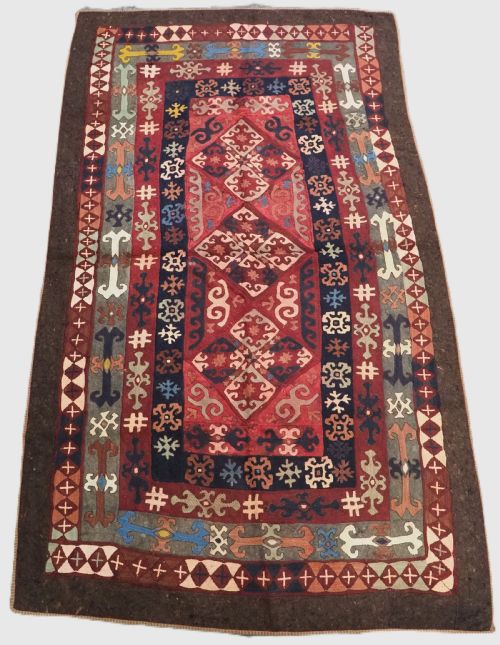
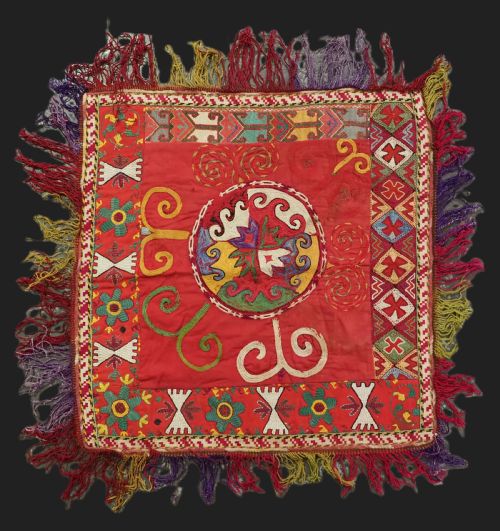
The common varieties on this page include the ilgich, a dowry embroidery used for wall hanging, alongside saddle covers, rugs, and mirror covers. These objects reflect traditional Uzbek folk art and tribal craftsmanship.
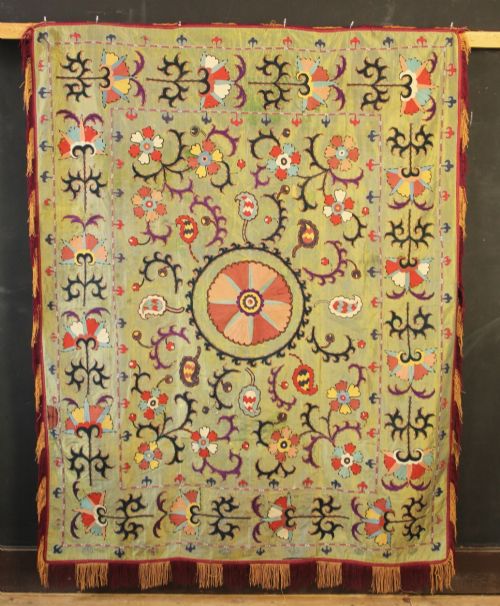
Pieces frequently trace back to regions like Shakrisabz in Uzbekistan, showing distinct Central Asian tribal characteristics. The selection includes smaller amulet panels and larger nim suzani textiles.
Materials and Construction
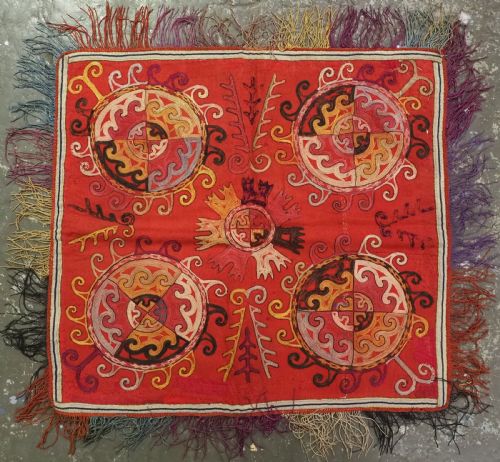
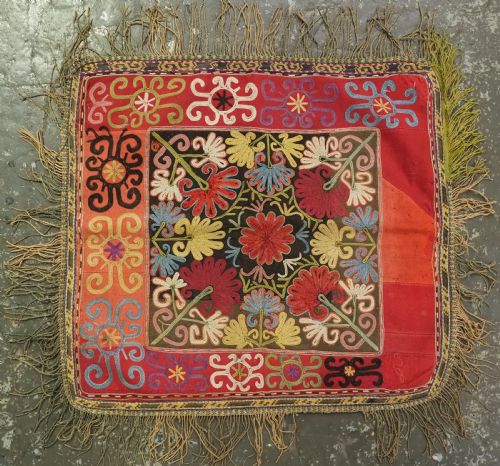
Makers utilised silk thread to work intricate designs onto grounds of cotton, wool, or felt, sometimes adding velvet and glass beads for texture and detail. Silk embroidery on a red wool ground or a green silk base forms a prominent technique in these pieces.
Stitching was applied to woven fabrics and heavy felts, producing dense surface patterns seen in items like the double-faced uut kap ilgich. Wool fringe and backing materials provide structural framing for many of the wall hangings and saddle rugs.
Lakai Embroidered Textile Retail Price Guide 2026
Typical asking prices for lakai embroidered textile among the pieces listed under this phrase on Sellingantiques today, from the lower quarter to the upper quarter. They describe what is for sale here now, not the wider market.
Several horse covers on offer suggest that equine fashion in Central Asia demanded finer embroidery than most human waistcoats.
Assessing Quality in Lakai Works
Quality depends upon the density and precision of the silk embroidery work, alongside the complexity of the tribal motifs. Intricate needlework on substantial grounds such as felt or heavy wool indicates superior craftsmanship.
The integrity of the base material, whether cotton, wool, or silk, influences the overall durability and visual impact of the piece. Preserved edges, intact fringe, and well-maintained glass bead accents distinguish the finest examples.
The Lakai Embroidered Textile Glossary
- Ilgich
- A Central Asian embroidered wall hanging or dowry piece created by Uzbek tribal groups. These items were traditionally prepared for domestic settings.
- Suzani
- An embroidered textile panel originating from Central Asia, often worked in silk on a cotton or wool ground. Smaller versions are frequently referred to as nim suzani.
- Uut kap
- A storage bag or hanging associated with nomadic yurt interiors, often heavily embroidered by Lakai makers. They served practical and decorative functions within the dwelling.
- At torba
- A decorative horse cover or bag used in ceremonial contexts by Central Asian tribes. These textiles display specialised tribal designs and robust construction.
Lakai Embroidered Textile: Frequently Asked Questions
What is a lakai embroidered textile used for?
Many of these pieces functioned as dowry items, wall hangings, or domestic decorations within traditional households. Others served as ceremonial horse covers and saddle rugs during tribal gatherings.
Smaller examples include amulet covers and mirror covers designed for personal use or intimate domestic spaces. Their versatility made them integral to both nomadic and settled Uzbek life.
How do I hang a textile safely?
Wall hangings require even weight distribution to prevent distortion of the fabric ground and silk embroidery threads. Using a cotton sleeve stitched to the reverse allows a padded rod to support the piece.
Direct sunlight should be avoided to protect silk threads and dyed wool or cotton grounds from fading. Professional framing with UV-filtering glass offers an alternative method for smaller panels and mirror covers.
How are periods identified?
Dating relies on stylistic markers, colour palettes, and the specific types of base materials employed by tribal makers. Pieces from the late nineteenth century often feature distinct natural dye palettes and heavier wool or felt foundations.
Early twentieth-century works may incorporate different silk weights and specific regional motifs associated with Uzbek folk art. Comparing stitch structures and textile formats helps establish the likely period of creation.
Are these pieces cleaned easily?
Traditional embroidery requires specialised textile conservation methods rather than standard domestic cleaning. Water and chemical detergents can damage delicate silk threads, wool grounds, and glass bead embellishments.
Surface dust should be removed gently using low-suction vacuum techniques through a protective mesh screen. Professional textile conservators should handle any deeper cleaning requirements.