

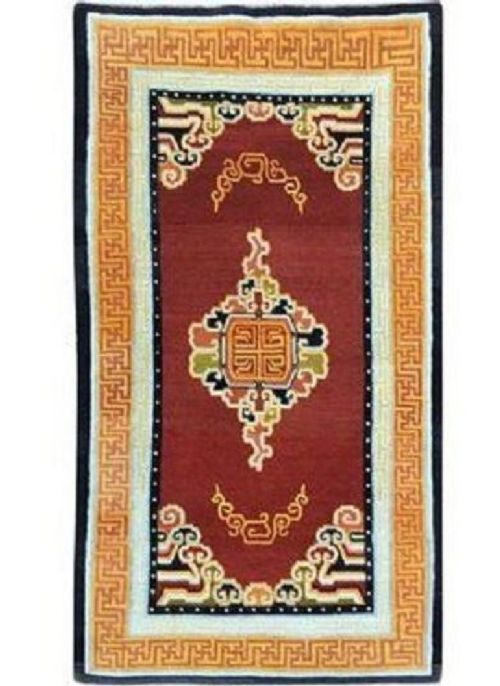
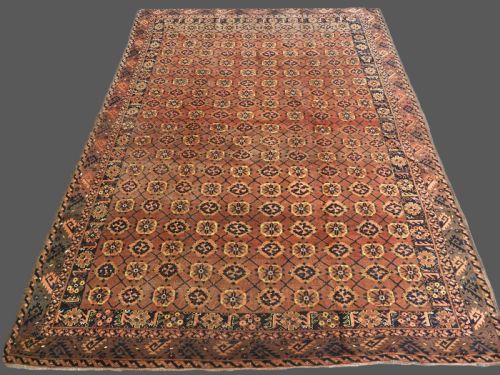
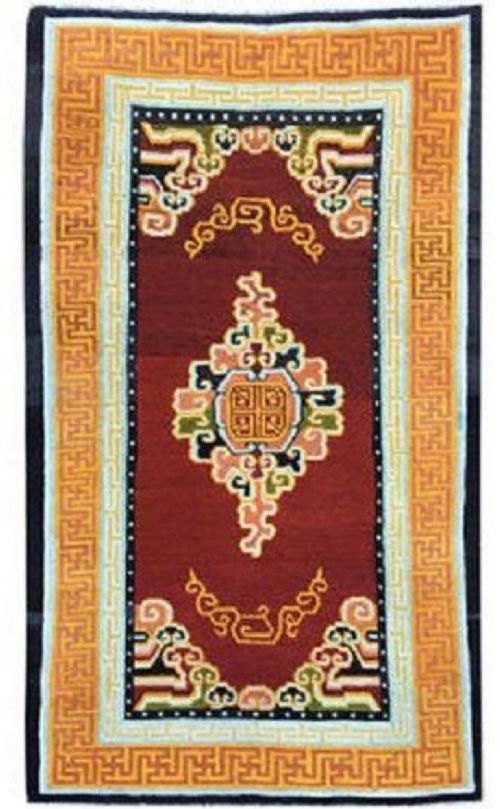
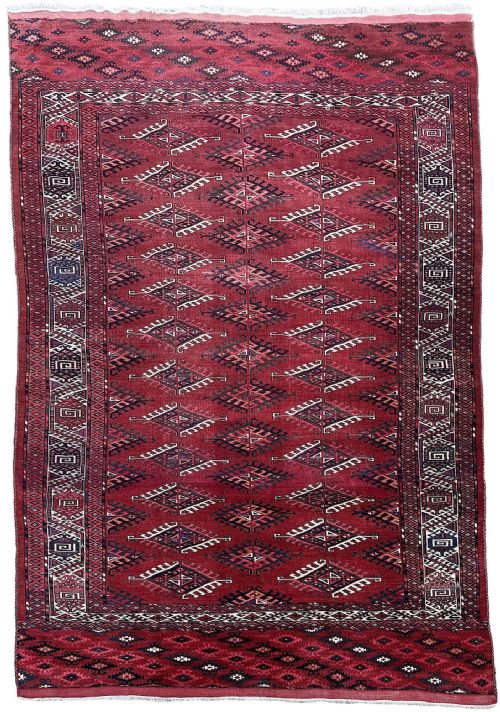
Central Asian Geometric Rug
A central asian geometric rug brings linear tribal history and saturated natural dyes directly to the floor from nomadic workshops.
Central Asian Geometric Rug
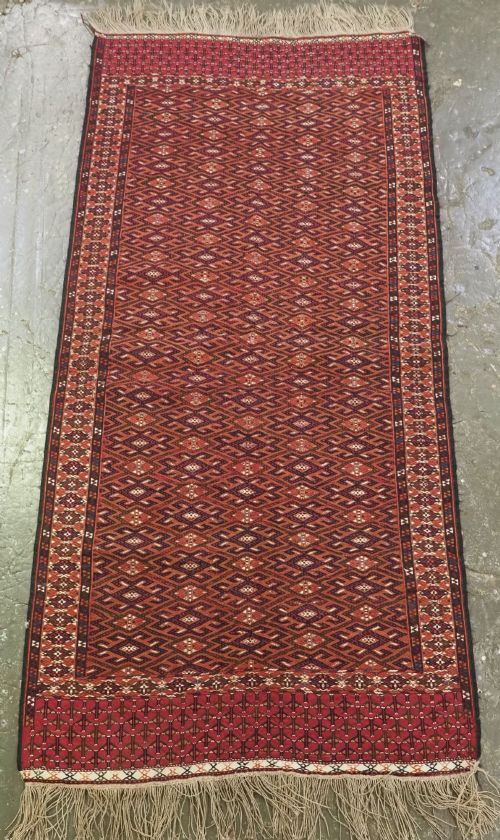
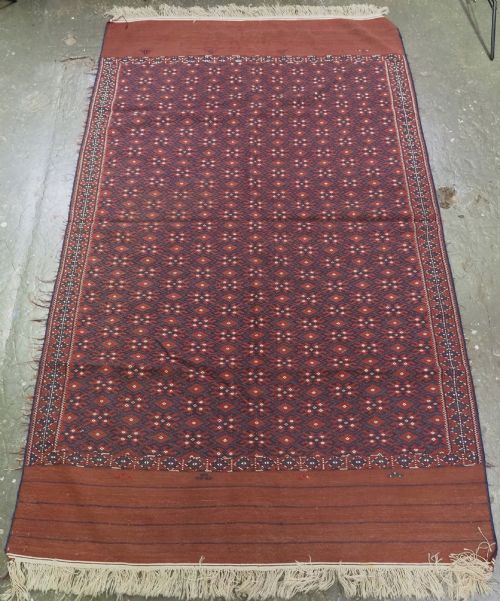
A central asian geometric rug encompasses tribal weavings originating from nomadic and village groups across Turkmenistan, Uzbekistan, and Afghanistan, dating from the late nineteenth century into the early decades of the twentieth century.
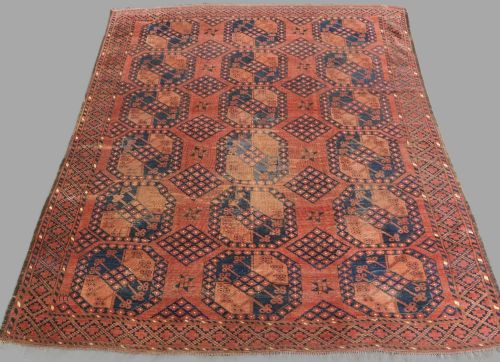
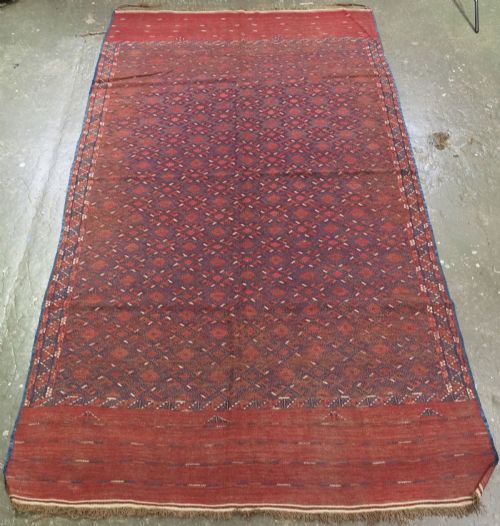
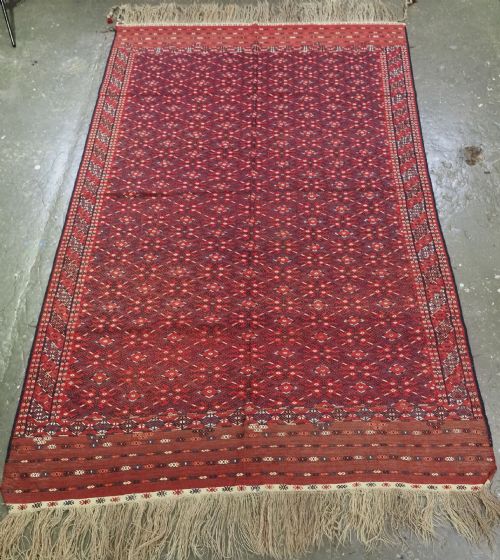
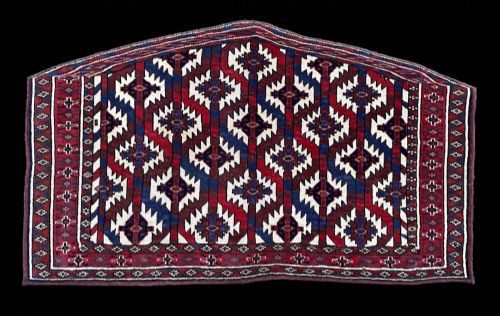
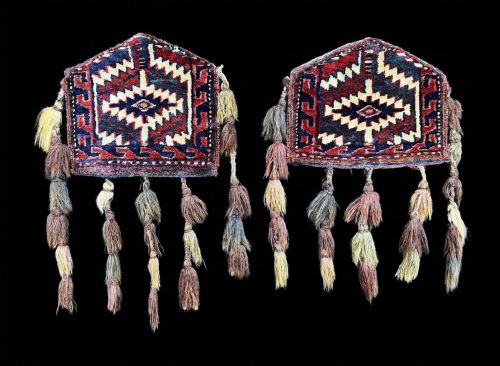
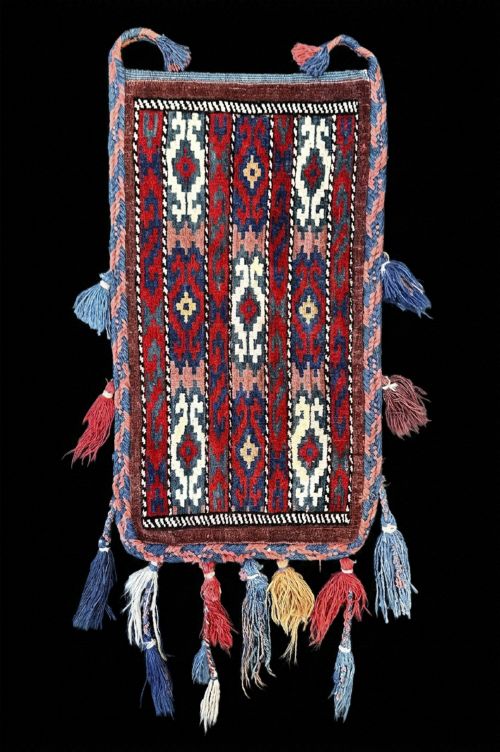
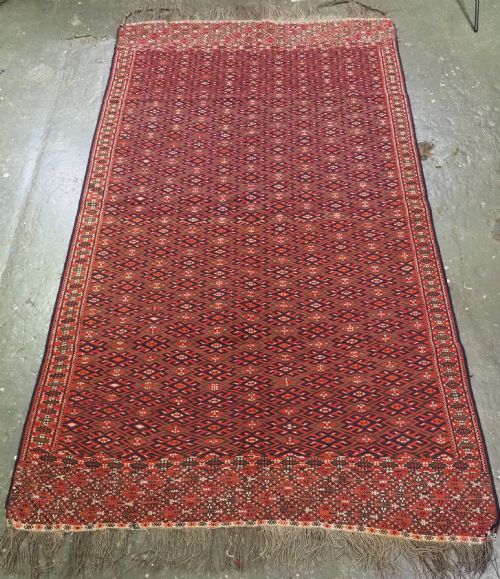
Most examples encountered on this page belong to specific tribal traditions such as the Yomut, Ersari, and Tekke, manifesting as floor carpets, tent door hangings, saddle covers, and small torba cushion faces.
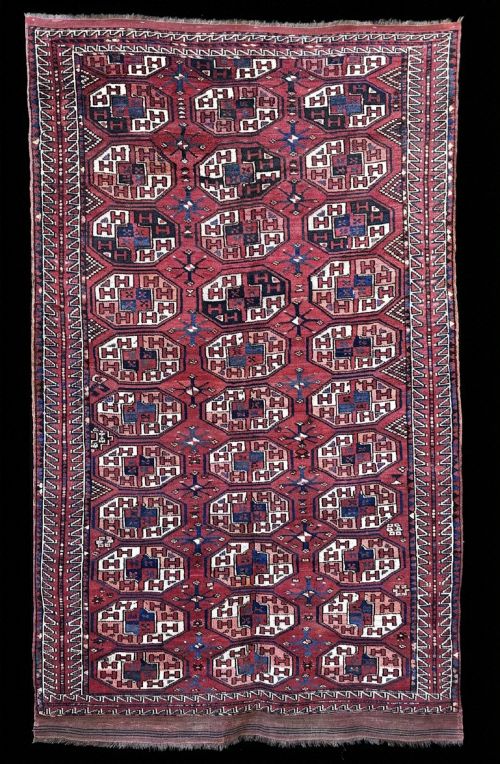
The aesthetic is defined by repeating lattice structures, hooked motifs, and dominant gul medallions executed in formats ranging from small prayer rugs to large country house carpets.
Materials and construction methods
Makers relied on locally sourced hand-spun wool and cotton foundations, often dyed using traditional natural dyes that yield deep madder reds, browns, and ivory grounds.
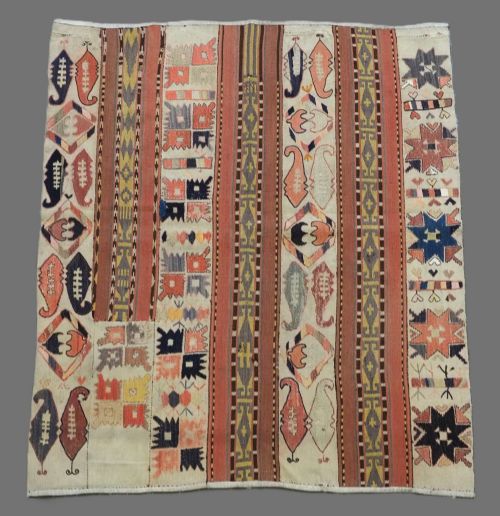
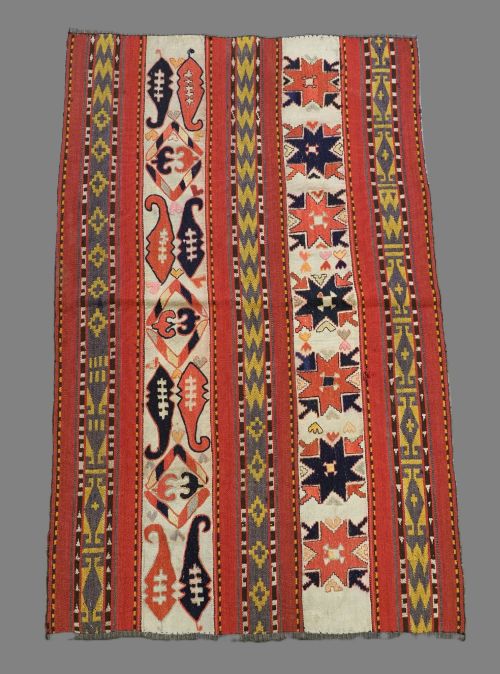
Weaving techniques include standard pile knots alongside flat-weave kilim structures and embroidered felt constructions seen in specific Uzbek Lakai examples.
Central Asian Geometric Rug Retail Price Guide 2026
Typical asking prices for central asian geometric rug among the pieces listed under this phrase on Sellingantiques today, from the lower quarter to the upper quarter. They describe what is for sale here now, not the wider market.
Periods represented span the nineteenth century through to the 1930s.
Judging the range of craftsmanship
Quality rests in the precision of the knotting and the complexity of the repeat lattice or turreted gul design, where tighter weaves delineate sharper geometric angles.
The integrity of the natural dyes and the survival of original details such as kilim skirts and wool tassels distinguish superior tribal work from standard utility pieces.
Yomut Tribe·Ersari Tribe·Teke Tribes·Kizyl Ayak Tribe·Sariq Tribe·Uzbek Lakai
The Central Asian Geometric Rug Glossary
- Gul
- A primary octagonal medallion motif repeated across Turkmen and Central Asian carpets. Each tribe utilised distinct variations to signify ancestry and regional identity.
- Torba
- A small wall-hanging bag or storage face produced by nomadic tribes. These pieces typically feature compressed formats with detailed border designs.
- Asmalyk
- A large pentagonal trapping historically mounted on the flanks of a wedding camel. They display elaborate geometric arrangements unique to Yomut weavers.
- Kilim
- A flat-weave textile produced without a pile. These panels rely on tightly packed warp and weft threads to form sharp graphic patterns.
Central Asian Geometric Rug: Frequently Asked Questions
What is a gul?
A gul is a repeating octagonal medallion that forms the central motif of many Central Asian tribal weavings. These geometric emblems often identified specific tribes and clans.
Weavers arranged them in structured rows across the field to create balanced, symmetrical compositions that anchored the visual weight of the rug.
How were these rugs used?
Nomadic families utilised these textiles for practical daily life inside felt tents, employing larger formats as floor carpets and smaller pieces for storage or transport.
Specialised forms like asmalyks and torbas served ceremonial functions during weddings, while engsis acted as protective tent door hangings.
How do I identify a Yomut rug?
Yomut weavings are typically recognised by their distinct palette of deep madder reds paired with ivory, dark brown, and sometimes rich blue tones.
Their geometric vocabulary frequently includes diamond lattice patterns, hook motifs, and distinctive hooked guls arranged across a structured wool pile.
Are these pieces made with natural dyes?
Many rugs from the nineteenth and early twentieth centuries rely on traditional vegetable and insect dyes extracted locally. These colourants age gracefully over decades.
Subtle tonal variations, known as abrash, often occur naturally within the wool as dye batches shift during the hand-spinning process.