






Woodland Landscape Oil Painting
A woodland landscape oil painting captures the depth and filtered light of trees, offering a quiet window into natural scenery.
Woodland Landscape Oil Painting
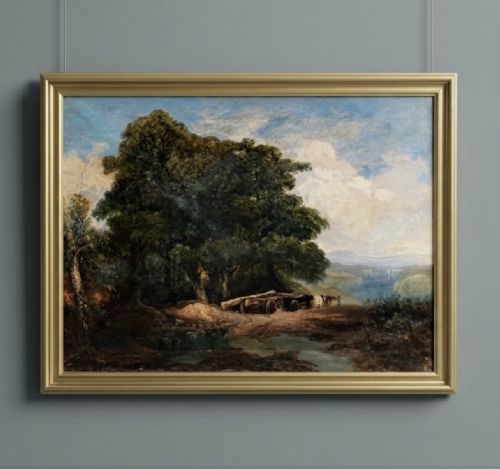
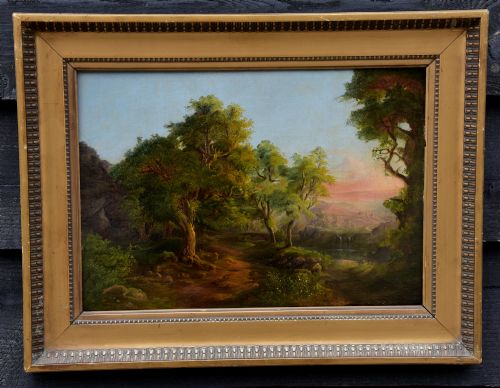
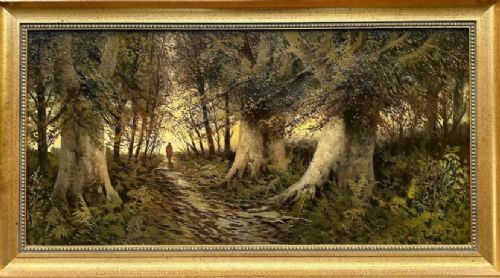
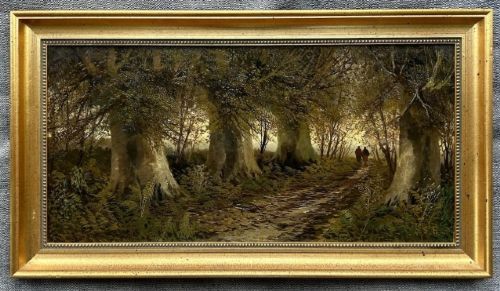
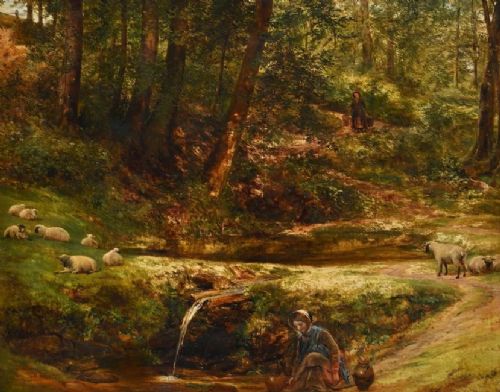
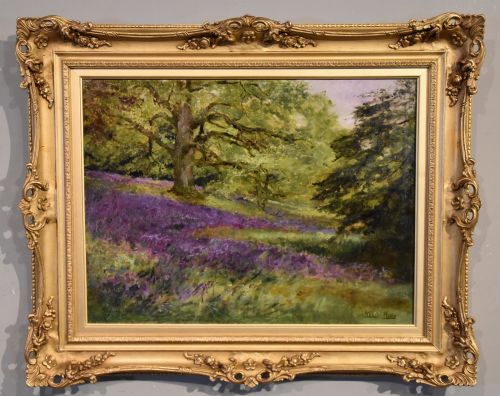
A woodland landscape oil painting brings the atmosphere of forests, glades and shaded paths directly onto canvas or board. These works range from expansive Victorian canvases depicting cattle and figures among ancient timber to smaller post-war studies of rural English and European countryside.
Most examples originate from the nineteenth and early twentieth centuries, reflecting shifting movements like British Impressionism and the Barbizon School. Painters captured specific local topography, from Yorkshire valleys to New Forest streams, often framing the trees around a quiet river, path or cottage.
How they were made
Artists painted primarily with oil paint applied to stretched canvas, wooden panels or card, building up layers of pigment to achieve rich textures and deep shadows. Canvas laid on board or panel surfaces provided a stable rigid support for detailed outdoor observations.
Several woodland scenes quietly hide stray terriers, resting sheep or gypsies tending fires among the ancient trees.
What varies in quality
The strength of a woodland landscape oil painting depends upon the artist's handling of light filtering through branches and the convincing depth achieved within the glade or path. Works by named painters associated with established regional schools or academies display superior draftsmanship in rendering foliage, water and figures.
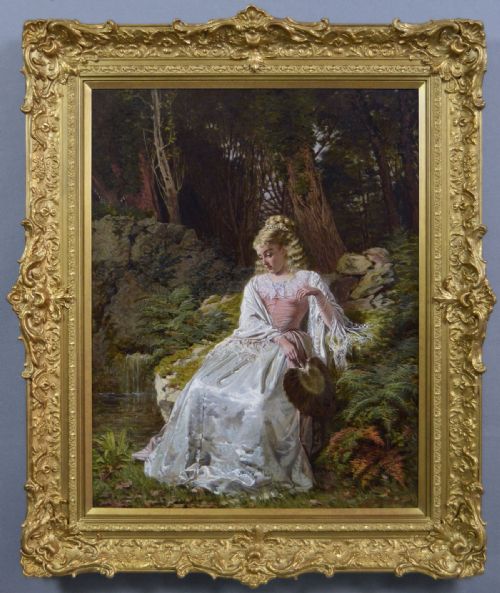
Original period framing contributes to the integrity of the piece, where decorative giltwood or gesso mouldings match the age and character of the canvas they enclose.
Richard Sebastian Bond·William H Myers·Thomas W Lascelles·Richard Redgrave·Paul Désiré Trouillebert·Henry Yeen King·Arthur Herbert Rigg·Thomas Bromley Blacklock·Thomas Edward Roberts·James Mallard Bromley·Owen Bowen·Clarence Henry Roe·David Watts·William Mellor·James Proudfoot·John Wright Oakes·Abraham Hulk Jnr·Thomas Hollingsworth·Ernest Higgins Rigg·Frederick Golden Short·Edward H Holder·George F Wetherbee·J McIntyre·A Wood·Herbert Royle
The Woodland Landscape Oil Painting Glossary
- Oil paint
- A slow-drying paint made of pigment particles suspended in a drying oil, typically linseed oil. This medium allows for rich blending and deep transparent glazes.
- Canvas
- A heavy woven fabric stretched across a wooden frame to form the primary surface for painting. It provides a slightly yielding texture beneath the brush.
- Gesso
- A plaster-like mixture used as a smooth base coat on wood panels or picture frames before gilding or painting. It creates a solid foundation for decorative details.
- Giltwood
- Wood carved and coated with a thin layer of gold leaf or metallic powder. It provides a bright, reflective border to traditional frames.
- Barbizon School
- A mid-nineteenth-century French art movement dedicated to tonal realism and painting directly from nature. Practitioners focused on forests, fields and rural workers.
Woodland Landscape Oil Painting: Frequently Asked Questions
What subjects appear in these paintings?
These works depict trees, woodland paths, rivers, and forest floors, frequently accompanied by figures, cattle, or cottages.
Artists often recorded specific regional spots across Britain and France during different seasons.
How should I hang an oil painting?
Hang the artwork away from direct sunlight and damp walls to protect the canvas and the original giltwood frame.
Ensure sturdy wall fixings support the weight of the wooden stretcher and decorative plaster moulding.
Are these paintings signed by the artist?
Many examples bear the signature or monogram of the painter, either directly on the front canvas or recorded on the reverse.
Others remain attributed to specific regional schools based on their style and technique.
How do I identify the period of a frame?
Period frames often use hand-moulded gesso on a wooden base, showing minor age cracks and wear consistent with the canvas.
Ornate Victorian and Edwardian giltwood frames match the specific aesthetic of the painting era.