




Wooden Writing Slope Key
These wooden writing slope key options secure folding portable desks from the Regency, Victorian, and Edwardian eras.
Wooden Writing Slope Key
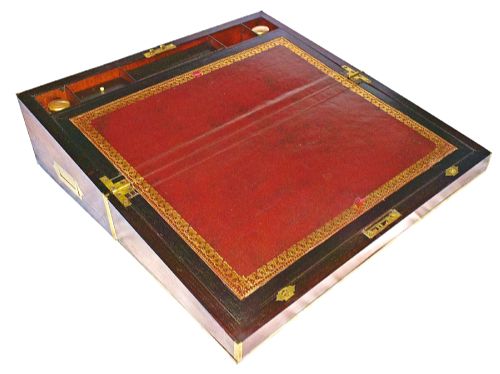
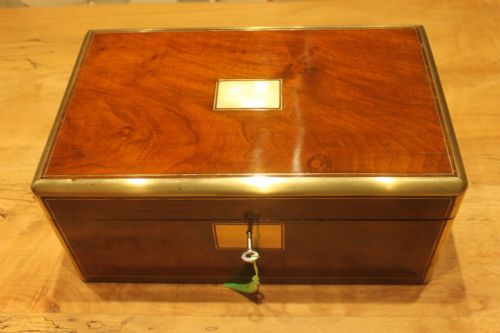
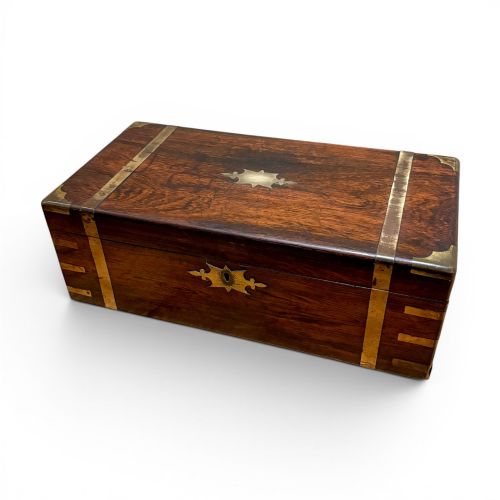
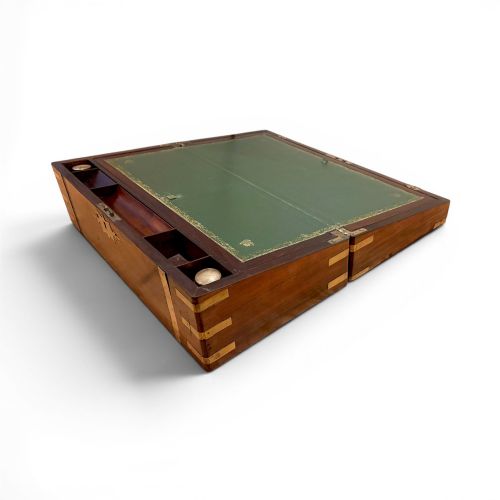
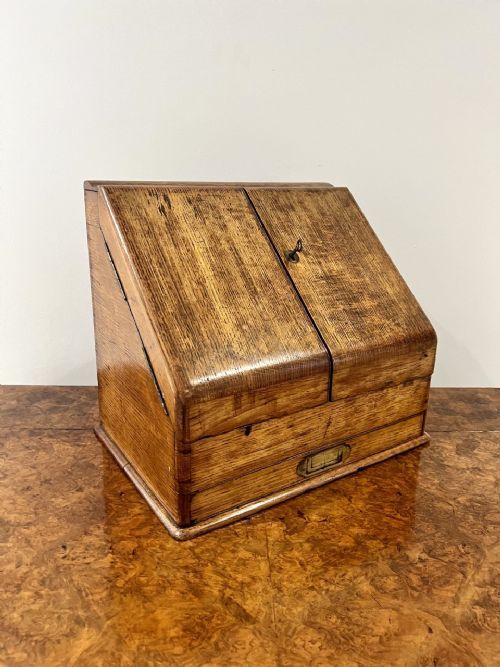
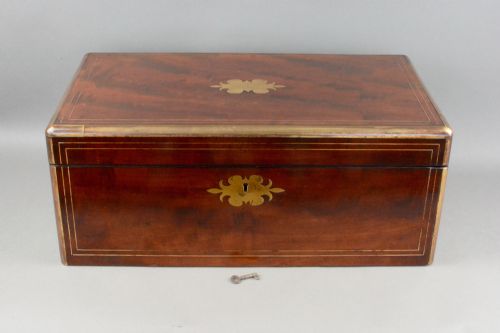
A wooden writing slope key opens portable writing boxes, stationery boxes, and compact desks that fold open to create a sloping writing surface. These pieces span from the Regency period through Victorian and Edwardian times, taking the form of campaign boxes, stationery boxes, and bureaus.
How they were made
Cabinet makers utilised dense hardwoods such as mahogany, walnut, rosewood, oak, satinwood, and camphor to construct the carcasses of these boxes and desks. These woods were often selected for rich grain figures, such as figured walnut, and reinforced with brass banding for durability during travel.
Interiors were fitted with compartments, baize or leather writing surfaces, and secret drawers concealed behind false panels. High-security mechanisms like Bramah locks were integrated to protect correspondence.
Listings feature woods including walnut, mahogany, rosewood, oak, satinwood, and camphor, alongside brass and leather.
What varies in quality
Quality in a wooden writing slope lies in the selection of timbers and the precision of the brass work and internal fitments. Superior pieces utilise solid figured hardwoods or fine veneers, incorporating complex secret drawer arrangements and high-grade locks rather than basic latches.
The sophistication of the internal stationery fittings and the inclusion of original working keys or specialist lock systems distinguish finer examples from standard utilitarian boxes.
Maple & Co
The Wooden Writing Slope Key Glossary
- Writing slope
- A portable box with a hinged lid that opens to form an angled writing surface. These boxes typically contain compartments for inkwells, pens, and paper.
- Campaign
- A style of furniture designed to be easily dismantled and transported for military or travel use. These pieces often feature recessed brass handles and corner brackets.
- Bramah lock
- A patented high-security cylindrical lock invented by Joseph Bramah in the late eighteenth century. It was frequently fitted to quality nineteenth-century boxes and desks.
- Secret drawer
- A concealed compartment built into a desk or writing slope, often accessed by removing another drawer or pressing a hidden spring catch.
- Baize
- A coarse woolen material resembling felt, traditionally used to line the writing surfaces of desks and slope boxes.
Wooden Writing Slope Key: Frequently Asked Questions
What is a wooden writing slope?
A wooden writing slope is a portable box that hinges open to provide an angled surface for writing letters. They typically contain internal compartments for stationery and ink.
These pieces were essential for correspondence before the widespread availability of fitted desks, allowing users to pack up their writing materials securely.
How do secret drawers work?
Secret drawers are hidden compartments built behind visible stationery fittings or structural dividers within a box or desk. They are usually released by sliding a panel or pressing a concealed wooden spring.
Cabinet makers added these compartments to allow owners to secure private documents, money, or valuables.
What woods were used?
Makers utilised durable timbers such as mahogany, walnut, rosewood, and oak for the main body of the boxes. Exotic woods and fine veneers like satinwood and camphor were also employed for decorative effect.
Hardwoods provided the necessary strength for portable boxes that endured frequent travel.
What is a Bramah lock?
A Bramah lock is a precision security lock known for its cylindrical key and high resistance to picking. They were often fitted to better quality nineteenth-century writing slopes.
Finding a working key for a Bramah lock requires specialist attention if the original is lost.