

Wooden Writing Desk Box
A wooden writing desk box offers a portable workspace, combining practical stationery storage with the rich grain of mahogany, oak, or walnut.
Wooden Writing Desk Box
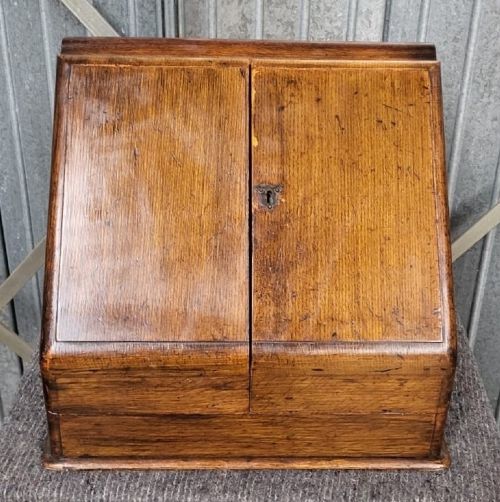
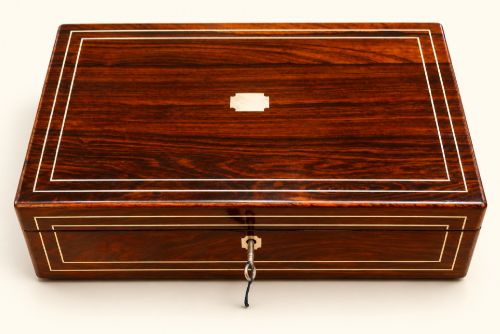
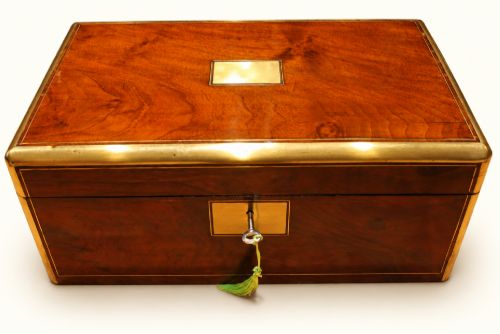
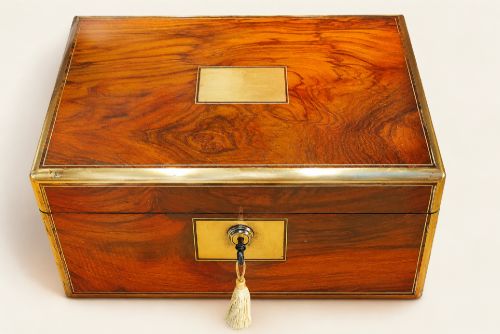
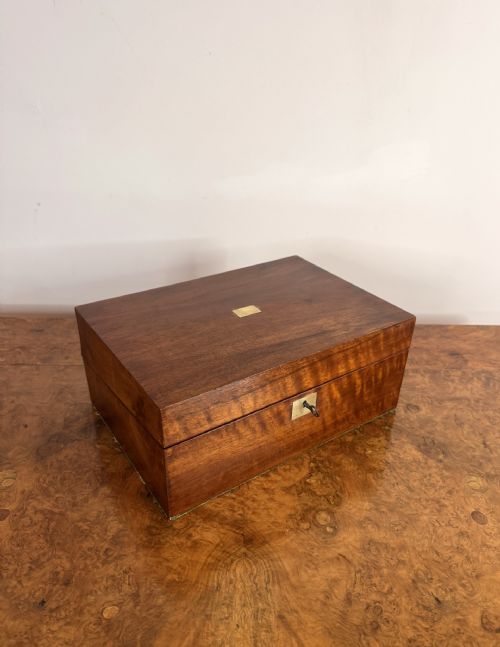
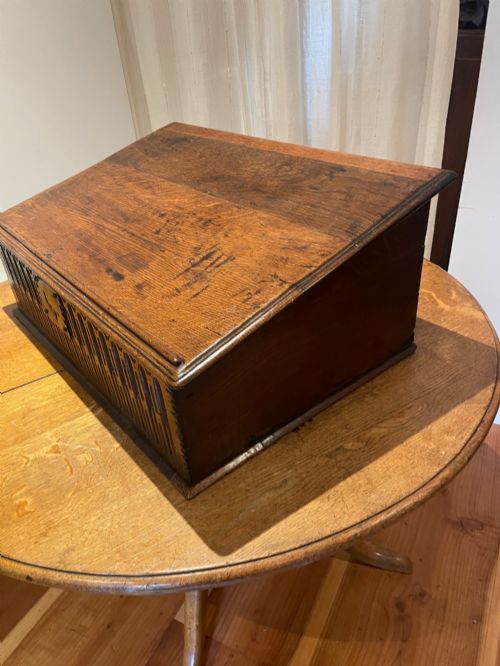
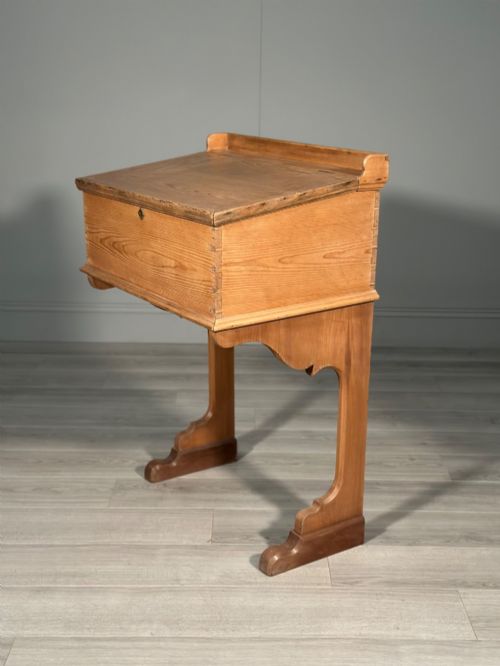
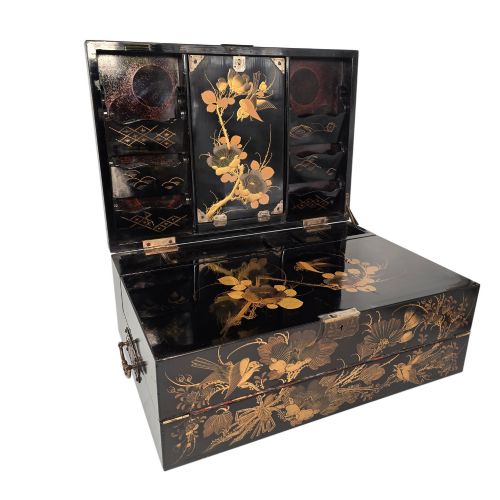
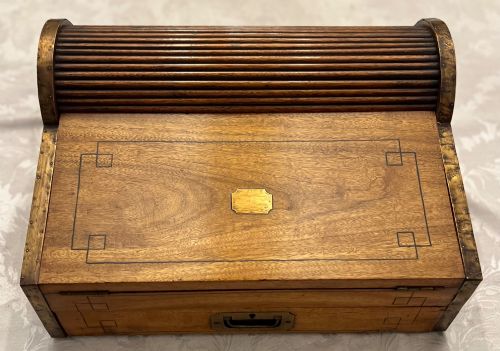
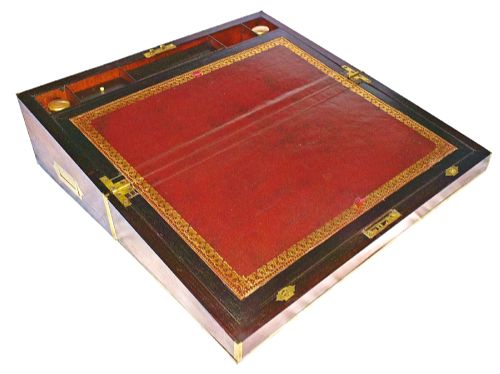
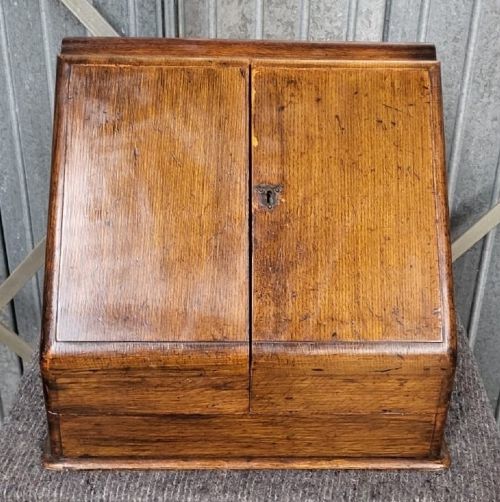
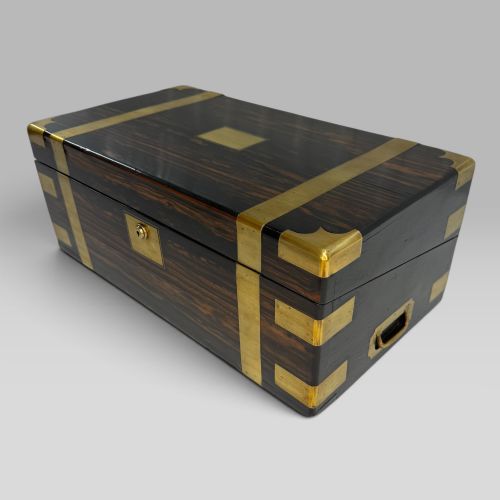
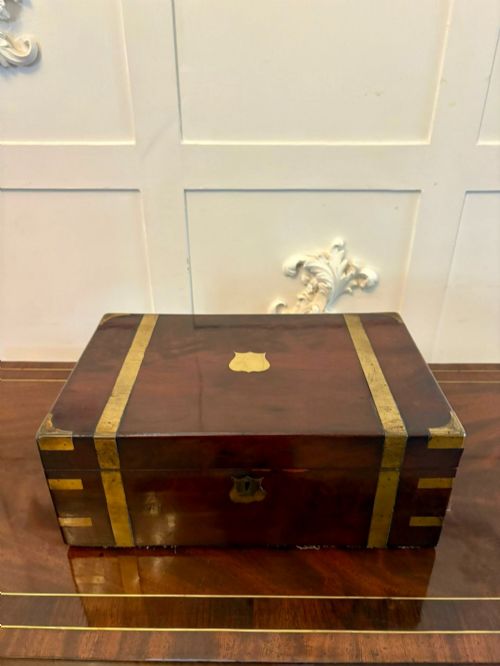
A wooden writing desk box takes many forms across this selection, ranging from simple 17th century oak Bible boxes to elaborate Victorian campaign slopes. You will most frequently encounter 19th century mahogany and walnut writing slopes designed for folding flat to form a sloping writing surface.
The category also encompasses stationery cabinets, document boxes, and correspondence cases spanning the Georgian, Regency, and Victorian periods. These pieces were built to house papers, ink, and writing instruments in domestic studies or during travel.
How they were made
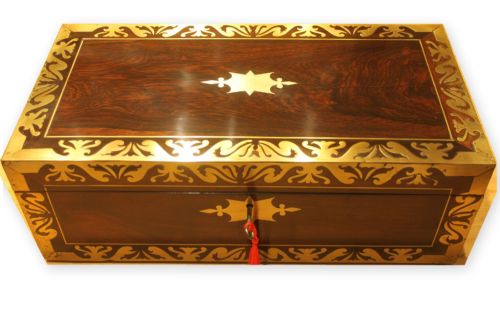
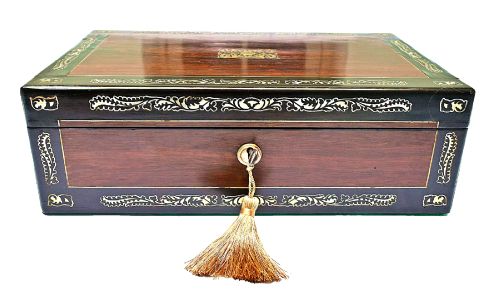
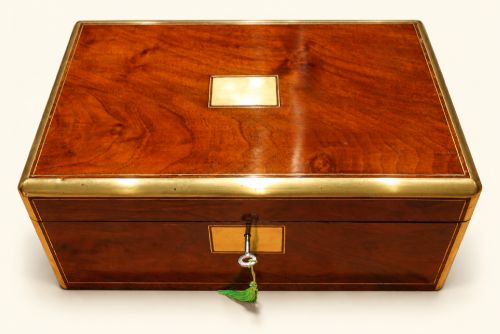
Cabinet makers utilised dense hardwoods such as mahogany, oak, walnut, and rosewood, often accentuating the surfaces with burr walnut veneers or decorative Tunbridge ware inlay. Many pieces incorporate solid brass corner mounts, escutcheons, and bound edges to withstand rigorous travel.
Internal construction involved precise joinery to create secret drawers, pen trays, and slots for stationery. Leather panels frequently insert into the folding lids of writing slopes to provide a smooth writing surface.
Wooden Writing Desk Box Retail Price Guide 2026
Typical asking prices for wooden writing desk box among the pieces listed under this phrase on Sellingantiques today, from the lower quarter to the upper quarter. They describe what is for sale here now, not the wider market.
Many writing boxes hide tiny secret drawers beneath pen trays, meant for smuggling love letters or spare nibs.
What varies in quality
Quality rests upon the selection of timber and the precision of the brass work and joinery. Finer examples display carefully matched flame mahogany or burr walnut veneers alongside robust internal secret compartments that operate smoothly.
Substantial brass binding and original working locks distinguish high-grade campaign boxes from simpler domestic receptacles. The crispness of the carving on earlier oak Bible boxes also separates superior pieces from standard workshop output.
William Austin
The Wooden Writing Desk Box Glossary
- Writing slope
- A portable box with a hinged lid that opens to form an angled surface for writing. They typically house internal compartments for inkwells and pens.
- Campaign box
- A piece of furniture built for military travel, distinguished by recessed brass handles and corner brackets designed to protect the wood during transit.
- Tunbridge ware
- A type of decorative woodwork characterised by intricate mosaics made from tiny pieces of naturally coloured wood to form geometric or floral patterns.
Wooden Writing Desk Box: Frequently Asked Questions
What is a wooden writing desk box?
A wooden writing desk box is a portable chest designed to store writing materials, letters, and documents. These pieces often feature folding lids or internal compartments tailored for ink and paper.
Originating in various forms from the seventeenth century onwards, they served both stationary domestic use and travel.
How do you use a writing slope?
A writing slope opens outward to create an inclined wooden platform covered in leather or velvet. This angled surface provides an ergonomic space for writing with a pen and ink.
Inside, dedicated partitions hold stationery, stamps, and small personal valuables securely during transport.
What is a campaign writing box?
A campaign writing box is a sturdy portable desk reinforced with brass corners and flush handles for military officers on the move. These boxes are built to endure harsh conditions while maintaining internal organisation.
They frequently include secret drawers and robust locks to protect sensitive correspondence.
How do I date an antique wooden box?
Dating relies on timber choices, construction techniques, and hardware styles associated with specific eras like the Georgian or Victorian periods. Earlier pieces utilise solid oak with hand-cut joinery, while later examples often feature mahogany or walnut veneers with machine-made brass fittings.
Matching the object type to historical records helps narrow the decade of production.