
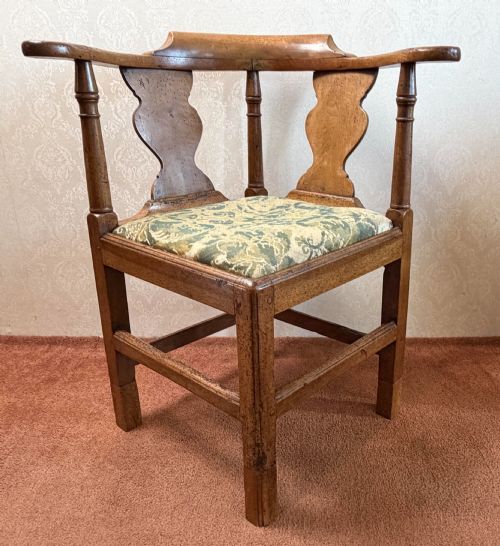


Wooden Writing Armchair
A wooden writing armchair offers a solid seat for correspondence, bringing centuries of timber craftsmanship straight to the desk.
Wooden Writing Armchair
A wooden writing armchair is a sturdy seat designed for sitting at a desk or table to handle correspondence. These pieces span the eighteenth and nineteenth centuries, taking the form of corner chairs, desk chairs, and slat-back variants.
The versions most frequently met on this page are eighteenth-century corner chairs and Georgian country pieces. They combine broad wooden arms with supportive backs built for prolonged writing tasks.
Makers fashioned them from regional and imported hardwoods, often dropping in fabric, leather, or tapestry pads for comfort. Their forms range from vernacular elm and fruitwood frames to polished mahogany and walnut models.
How they were made
Cabinet makers utilised dense hardwoods such as oak, mahogany, walnut, elm, and fruitwood to build enduring frames. Carpenters joined these timbers with traditional joinery, occasionally adding carved details or brass fittings.
Upholsterers finished the seats with drop-in pads covered in leather, fabric, or tapestry. These materials provided a practical writing surface and durable support for daily use.
Country makers occasionally used local fruitwood when mahogany was scarce, giving humble writing chairs a uniquely speckled charm.
What varies in quality
The refinement of the timber and the crispness of the carving separate standard workshop pieces from superior examples. Selected mahogany and walnut display richer grain patterns than common fruitwood or elm.
Structural integrity and untouched original surfaces determine the standing of each piece. Well-preserved timber framing without excessive replacement parts holds greater appeal for collectors.
The Wooden Writing Armchair Glossary
- Corner chair
- A seat designed to fit into the corner of a room, featuring a curved backrest supported by multiple upright spindles and a central leg at the front. This form became popular during the eighteenth century for writing and social gathering.
- Desk chair
- A sturdy seat built for use at a writing table, often featuring a revolving mechanism or a wide wooden arm for resting the arm while writing. These chairs prioritise functional support during long periods of work.
- Fruitwood
- A dense timber harvested from fruit-bearing trees such as pear or apple, utilised by country cabinet makers. It yields a smooth, warm grain that polishes well.
- Tapestry
- A heavy, hand-woven textile featuring pictorial or geometric designs, frequently employed as upholstery on antique seat pads. It adds texture and colour to wooden frames.
Wooden Writing Armchair: Frequently Asked Questions
What is a wooden writing armchair?
A wooden writing armchair is a sturdy seat designed for desks and writing tables, featuring supportive wooden arms and backs.
These pieces date from the eighteenth and nineteenth centuries, utilising timbers like mahogany, oak, elm, and fruitwood.
How do I date a wooden writing armchair?
Dating relies on identifying the timber species, joinery techniques, and stylistic traits like Georgian cabriole legs or Victorian turning.
Earlier eighteenth-century pieces often employ fruitwood or oak, while later nineteenth-century examples display distinct revival styles.
Where were these chairs used?
These chairs served primarily in studies, libraries, and parlours where writing and correspondence took place.
Corner designs allowed them to tuck neatly into room angles or sit comfortably beside bureau desks.
How do I care for antique wood?
Maintain antique timber by keeping it away from direct heat sources and sudden changes in humidity.
Apply natural beeswax occasionally to nourish the grain and preserve the historic finish without harsh chemicals.