


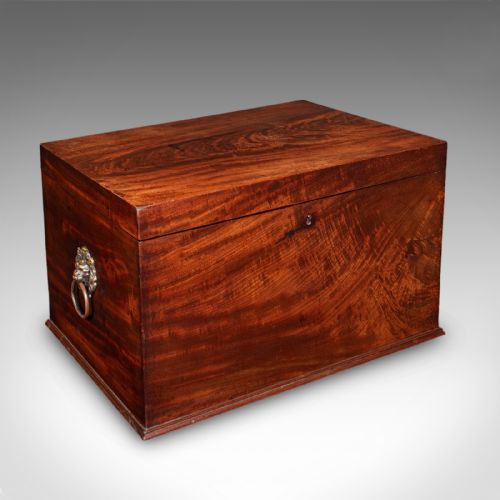
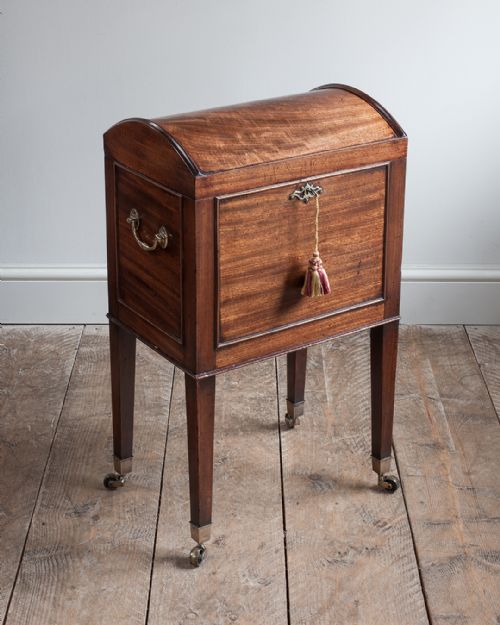


Wooden Wine Cabinet
A wooden wine cabinet provides secure storage for bottles and glassware, combining period craftsmanship with practical utility for entertaining.
Wooden Wine Cabinet
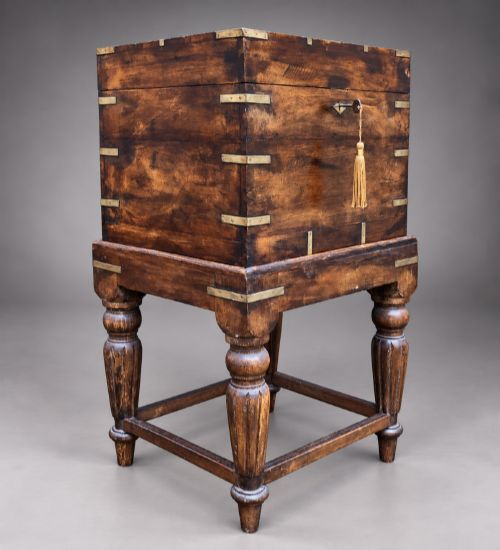
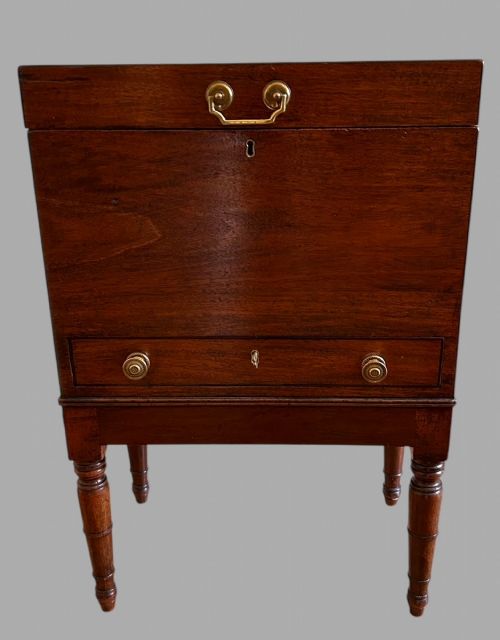
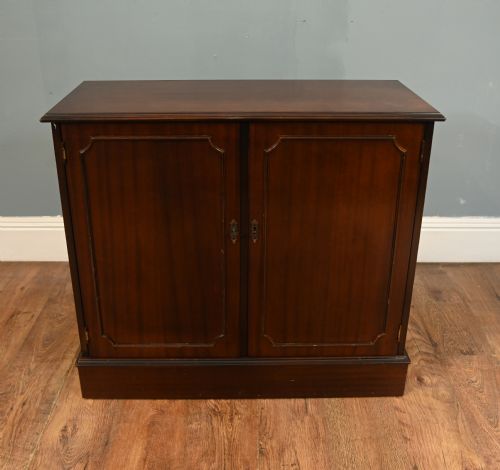
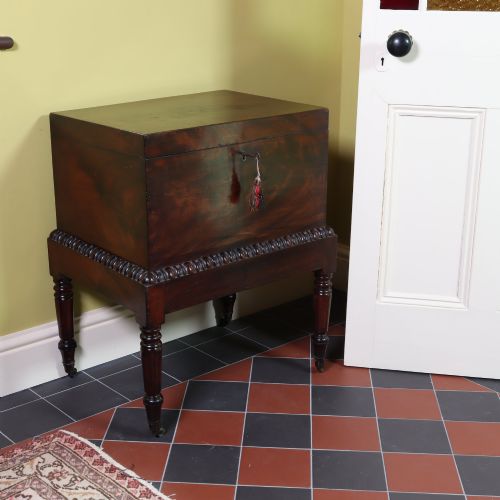
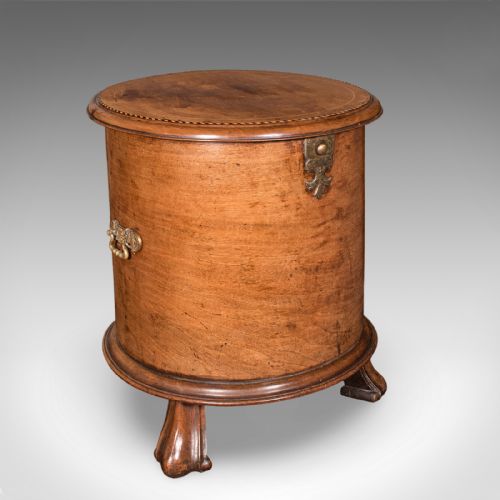
A wooden wine cabinet encompasses a variety of antique forms designed to store and cool bottles, most frequently appearing as cellarettes, wine coolers, and drinks chests. These pieces span periods from the eighteenth century through the Edwardian era and the nineteen-thirties.
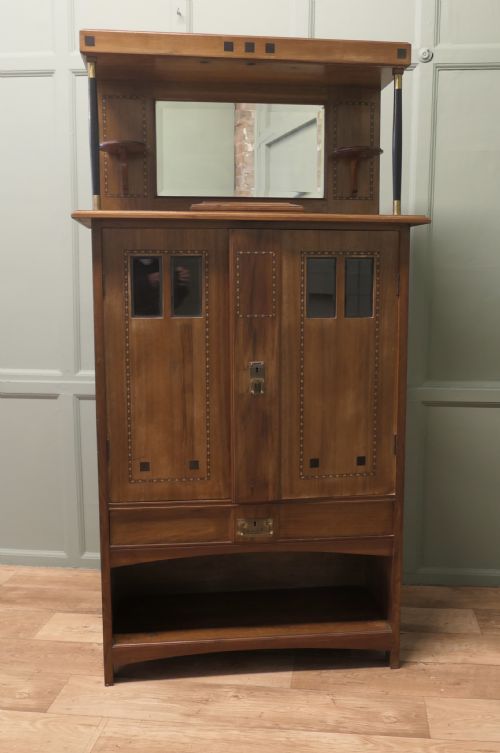
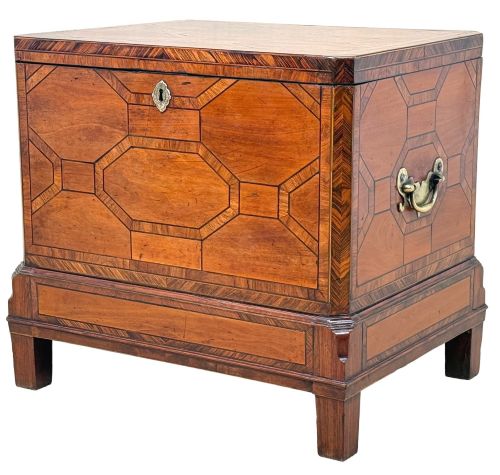
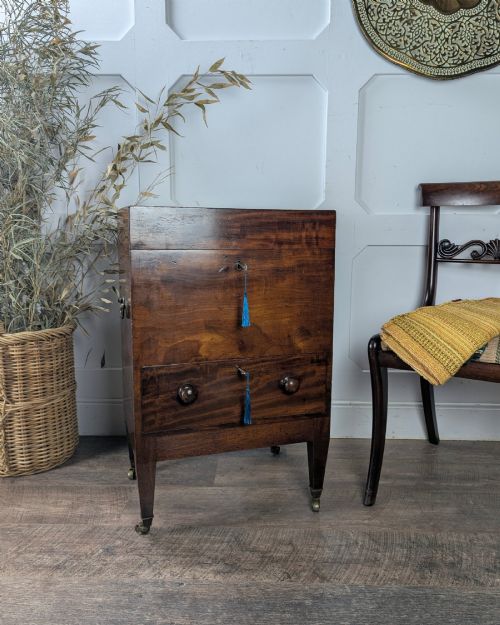
The selection on this page relies heavily on Georgian and Regency examples, alongside Edwardian and Secessionist interpretations. Buyers encounter compact box cellarettes on stands, sarcophagus-shaped coolers, and metamorphic side tables intended for domestic service.
How they were made
Cabinet makers utilised dense hardwoods such as mahogany, flame mahogany, walnut, and satinwood, often accentuating the grain with boxwood inlay and brass mounts. Structural integrity relied on traditional joinery techniques suited to heavy bottle storage.
Many specimens feature brass binding or ormolu mounts to reinforce corners and edges. Interiors frequently incorporated fitted compartments designed to hold individual bottles securely during storage or transport.
Materials span mahogany, walnut, satinwood, oak, and pine, frequently enhanced with boxwood inlay and brass hardware.
What varies in quality
The distinction between standard domestic pieces and exhibition examples rests on the selection of timber veneers and the intricacy of decorative inlays. Superior items demonstrate precise matching of flame mahogany or satinwood across visible surfaces.
Hardware quality also dictates grade, with heavy cast brass carrying handles and robust internal fittings marking out better workshops. Attribution to known makers adds another layer of distinction to surviving specimens.
Gillows of Lancaster and London·Maples and Co·Whytock and Reid·Gillingtons·Incorporall
The Wooden Wine Cabinet Glossary
- Cellarette
- A lockable container or cabinet designed specifically for holding bottles of wine and spirits. They often sat on the floor beneath a sideboard or stood upon dedicated legs.
- Sarcophagus
- A monumental cabinet shape characterised by a rounded or domed lid, popular during the Regency period for wine coolers. This classical form often stood on carved paw feet.
- Ormolu
- Gilded bronze mounts applied to furniture for decorative effect. Makers used these metal accents to highlight corners and keyhole escutcheons on high-status cabinets.
- Satinwood
- A durable exotic timber yielding a lustrous golden-yellow finish. Cabinet makers utilised it extensively for contrasting stringing and decorative banded borders.
Wooden Wine Cabinet: Frequently Asked Questions
What is a cellarette?
A cellarette is a specialised storage chest designed to hold wine bottles securely in a dining room. They emerged in various forms to keep bottles close to the dining table during formal meals.
Most examples date from the Georgian and Regency periods, constructed from solid timber with fitted internal compartments to prevent bottles from rolling.
How do I date a wine cabinet?
Dating relies on observing the primary timber, secondary woods, and decorative motifs such as inlay or brass mounts. Georgian pieces often display straight-grained or flame mahogany, while later Edwardian versions incorporate lighter satinwoodbanding.
Construction methods inside the storage compartments also offer clues, as hand-cut dovetails and original brass hardware point towards earlier nineteenth-century manufacturing techniques.
Can I use an antique cabinet for modern wine?
Antique cabinets accommodate standard modern wine bottles depending on the internal dimensions of the original wooden dividers. Many historical cellarettes were built for older bottle shapes, which varied from current standards.
Reviewing the internal configuration helps determine whether standard seventy-five-centilitre bottles fit comfortably within the historical compartments or drawer systems.
Where should I place a wine cabinet?
These cabinets suit dining rooms, living spaces, or studies where their timber finishes complement existing antique furniture. Placing them away from direct heat sources protects the old wood from drying and cracking.
Freestanding models on stands require stable flooring, while heavier sarcophagus-shaped coolers sit directly on the floor as statement pieces.