

Wooden Umbrella Holder Stand
A wooden umbrella holder stand keeps hallways orderly while bringing period timber and iron into everyday use.
Wooden Umbrella Holder Stand
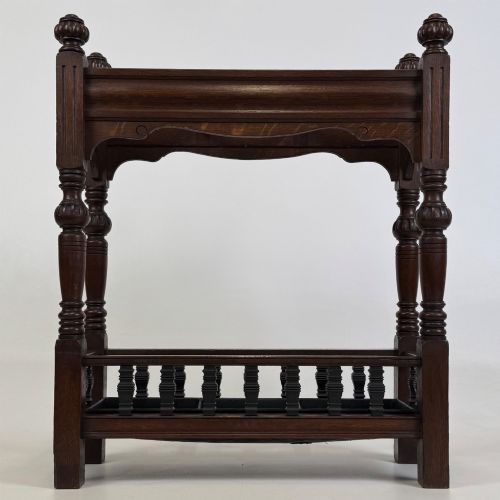
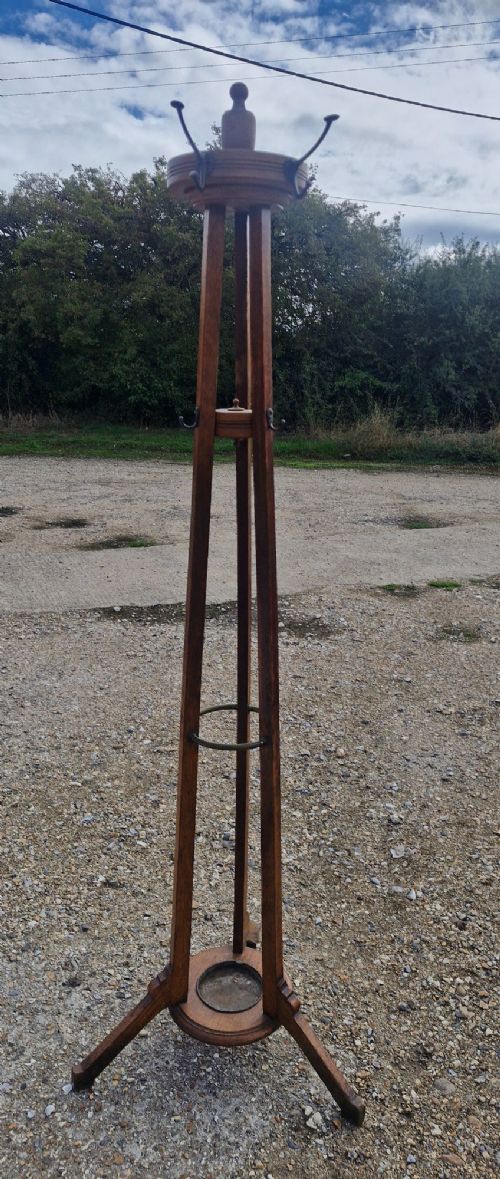
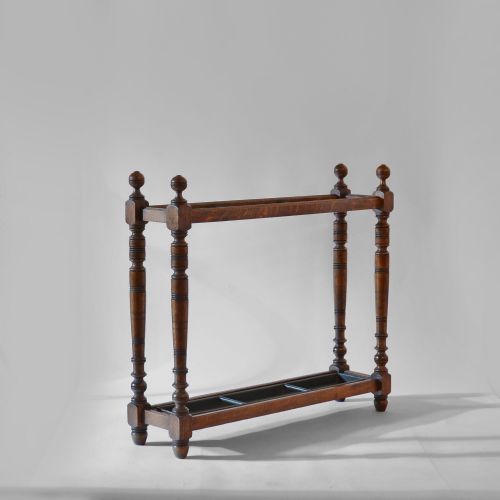
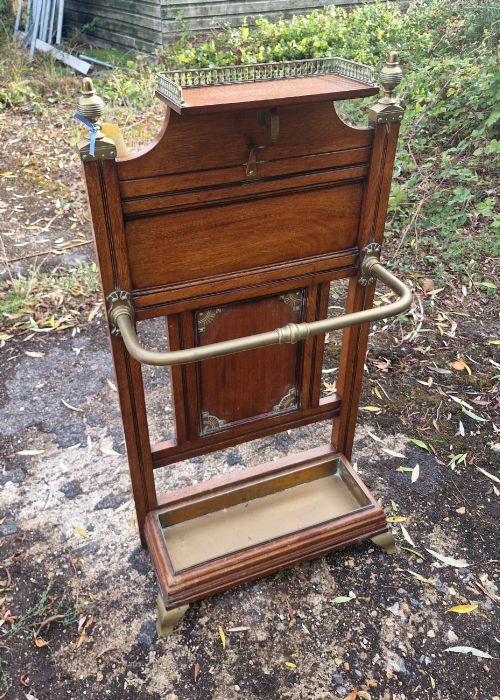
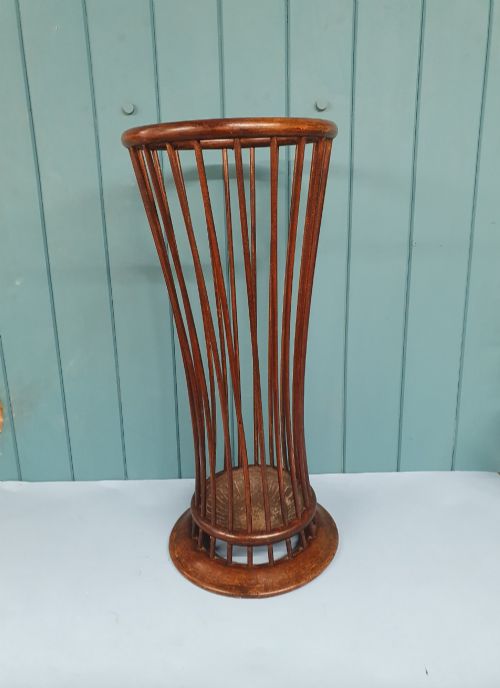
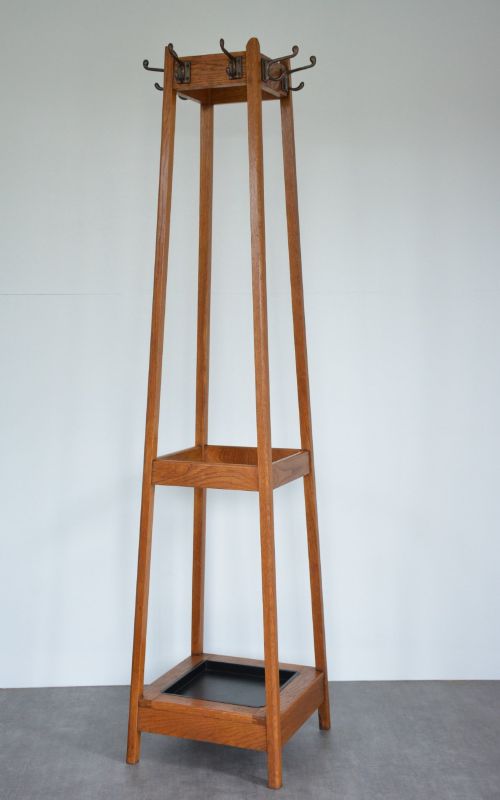
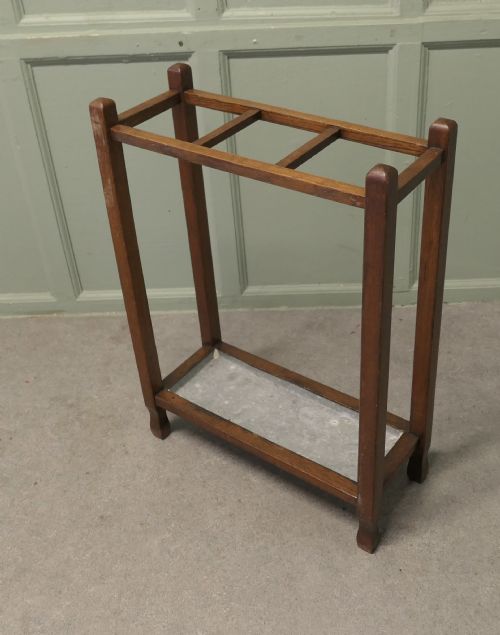
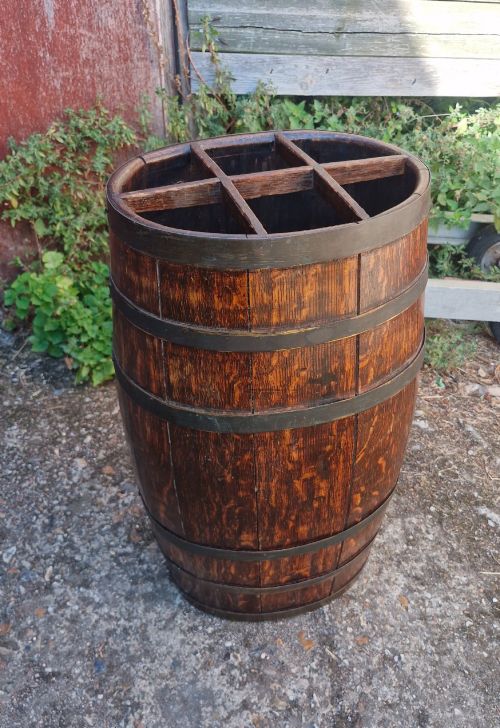
A wooden umbrella holder stand is a practical piece of hall furniture designed to corral walking sticks, umbrellas and coats. When browsing this selection, you will frequently encounter oak and mahogany pieces dating from the Victorian and Edwardian eras. These range from simple barrel forms to substantial hall stands fitted with coat hooks and mirrors.
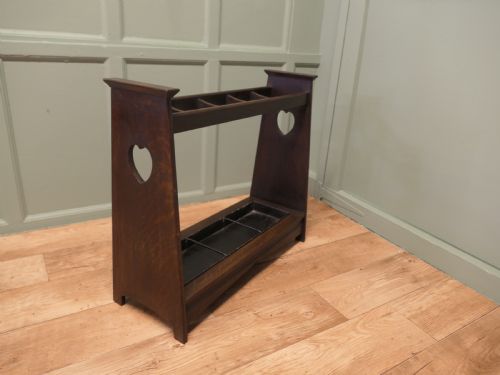
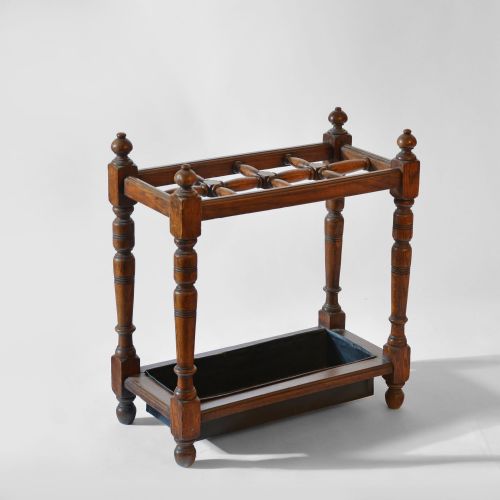
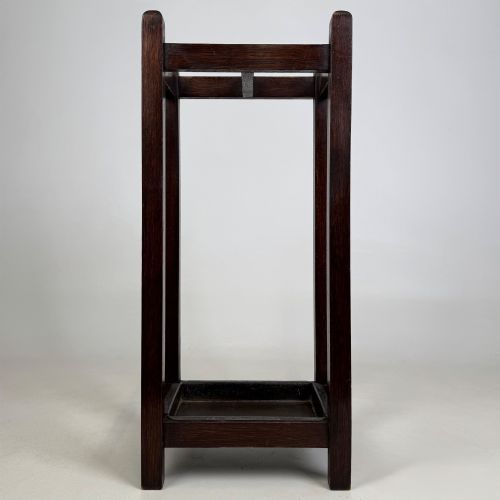
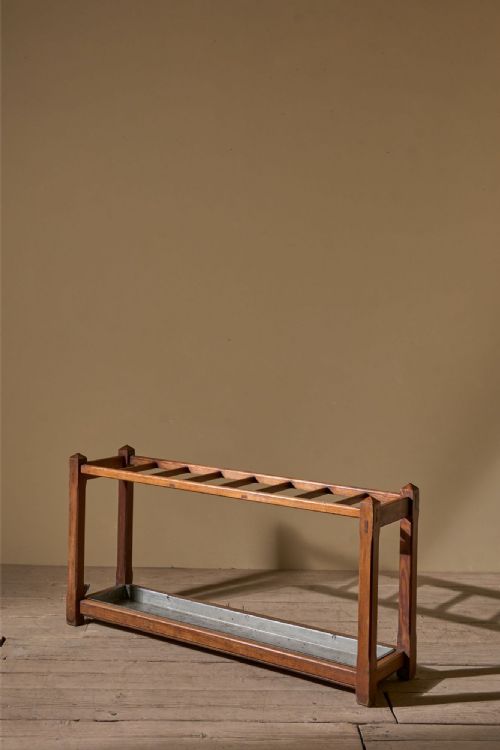
The inventory leans heavily towards English country house styles, Arts and Crafts designs, and Black Forest carvings. Many combine timber frames with metal or zinc drip trays to catch rainwater from wet shafts.
How they were made
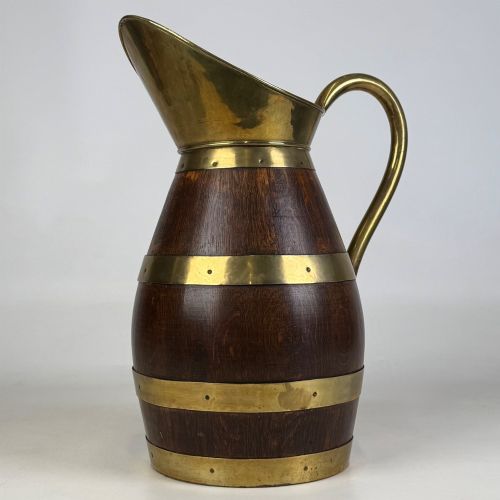
Joiners and cabinet makers utilised solid hardwoods such as oak, mahogany, walnut, and pitch pine, often joining staves in a coopered barrel construction. Metal bands, brass fittings, and cast iron reinforcements provided structural strength and protected the timber bases from moisture.
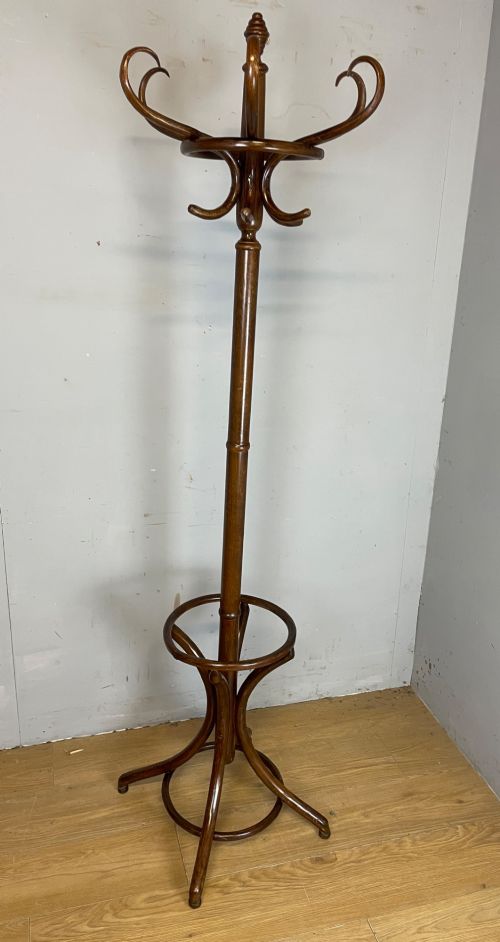
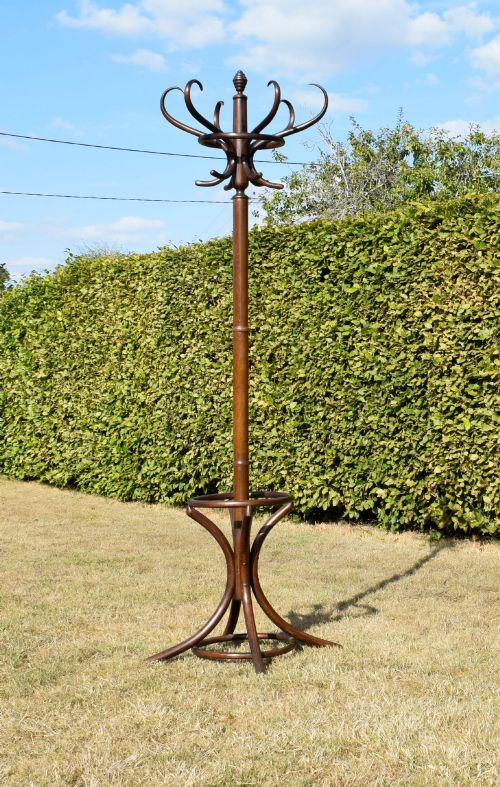
Bentwood techniques shaped softened beech into curved framework, while hand carving defined the ornamentation on Black Forest and Gothic Revival examples. Original metal drip trays, zinc liners, and brass braces completed the assembly.
Carved Black Forest bears hold out their paws to serve as permanent umbrella valets in the hallway.
What varies in quality
The distinction between standard utility items and finer examples lies in the selection of timber grain, the weight of the brass or iron hardware, and the ambition of the design. Pieces bearing workshop attributions or integrated mirror and coat hook assemblies generally exhibit superior cabinet work.
Originality defines the upper tier of the range. Retaining the original zinc or metal drip tray and matching brass braces elevates a stand above those altered or re-fitted with modern replacements.
Thonet·Heals of London·Liberty Design
The Wooden Umbrella Holder Stand Glossary
- Coopered
- Constructed from curved wooden staves bound together with metal hoops, much like a traditional barrel. This method is common in oak umbrella stands.
- Drip tray
- A removable metal or zinc pan placed at the base to catch water from wet umbrellas. Original trays are prized by collectors.
- Bentwood
- Wood heated and bent into curved shapes using steam and pressure. This technique produced lightweight hall and umbrella stands.
- Hall stand
- A multi-functional piece combining an umbrella holder with coat hooks, a hat rack, and frequently a central mirror.
- Black Forest
- Carved wooden pieces originating from the European region, noted for realistic animal figures such as bears holding stick stands.
Wooden Umbrella Holder Stand: Frequently Asked Questions
What woods were used for umbrella stands?
Makers relied heavily on sturdy hardwoods, most notably oak, mahogany, walnut, and pitch pine. Beech also appears frequently in steam-bent designs.
Metal components such as brass braces, iron hoops, and zinc liners were integrated to protect the timber from wet umbrella shafts.
How do I care for a wooden stand?
Keep the piece away from direct heat sources and sudden temperature fluctuations to prevent the timber from splitting or warping. Ensure that any metal drip tray is emptied and dried regularly to avoid moisture damage.
Apply a traditional beeswax polish occasionally to nourish the wood grain and maintain the surface sheen.
Are drip trays usually original?
Many surviving stands retain their original metal or zinc drip trays, though some have been fitted with later replacements over the decades. Checking for consistent patination between the tray and the frame helps determine originality.
Original trays often feature bespoke dimensions and fixing points tailored to the specific maker's design.
What is a coopered barrel stand?
A coopered barrel stand is constructed using curved wooden staves locked together by metal bands or brass hoops. This technique mirrors traditional barrel-making to create a sturdy cylindrical holder.
These pieces frequently appear in Victorian country house interiors and oak-furnished hallways.