


19th Century Hall Tree
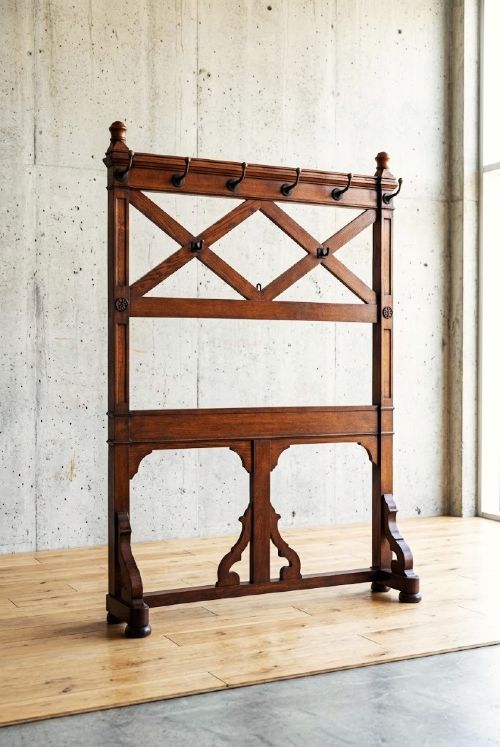
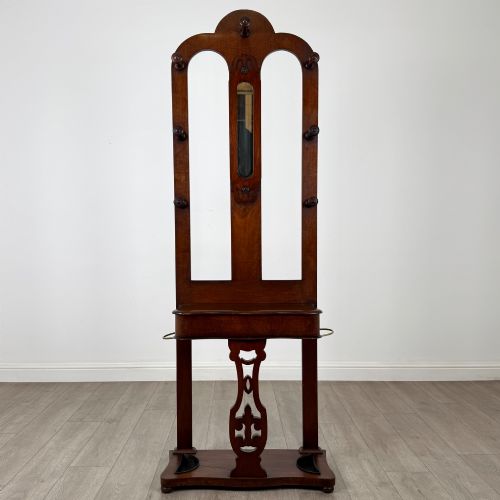
A 19th century hall tree commands an entranceway with practical storage for coats, hats and umbrellas.
19th Century Hall Tree
A 19th century hall tree provides essential entryway furniture designed for hanging garments and storing walking sticks or umbrellas. Buyers search for these pieces to anchor a hallway with period character and functional utility.
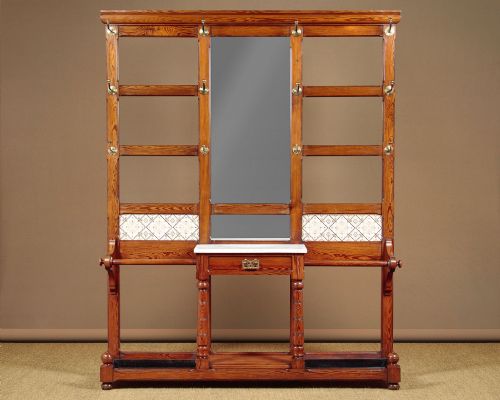
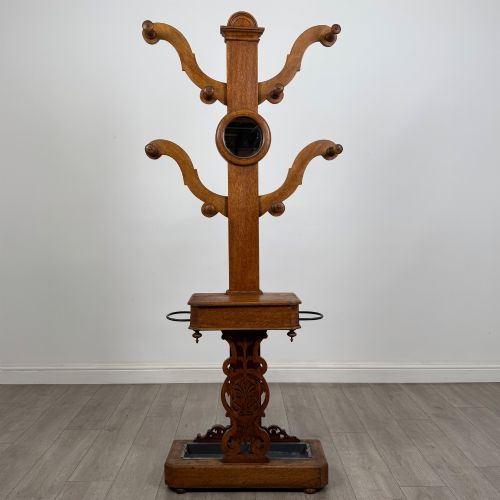
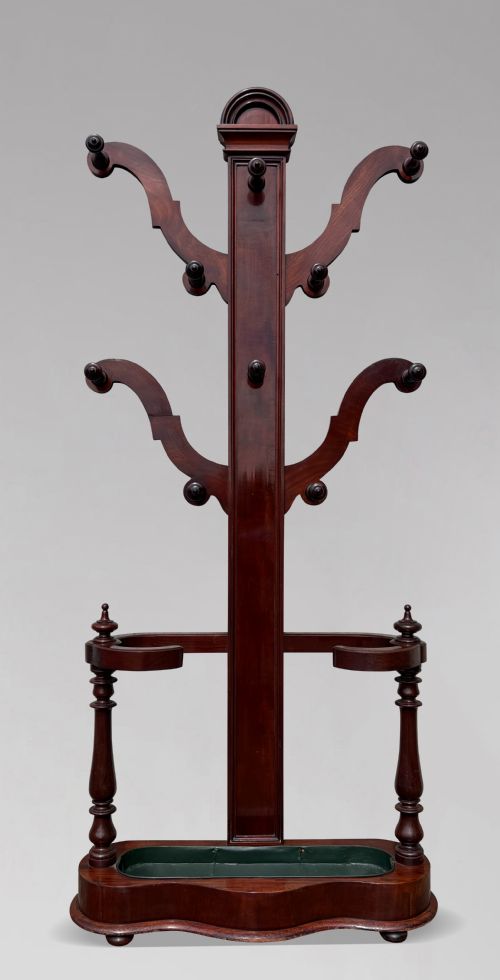
The selections on this page span the 19th century into the Edwardian era, encompassing Victorian designs alongside specialised styles. Mahogany and oak examples dominate the offerings, frequently incorporating mirrors and marble shelves.
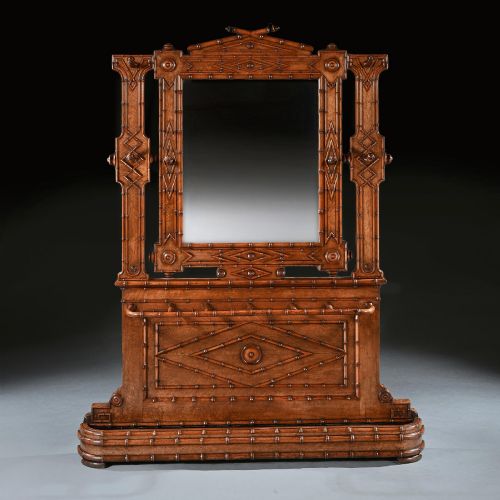
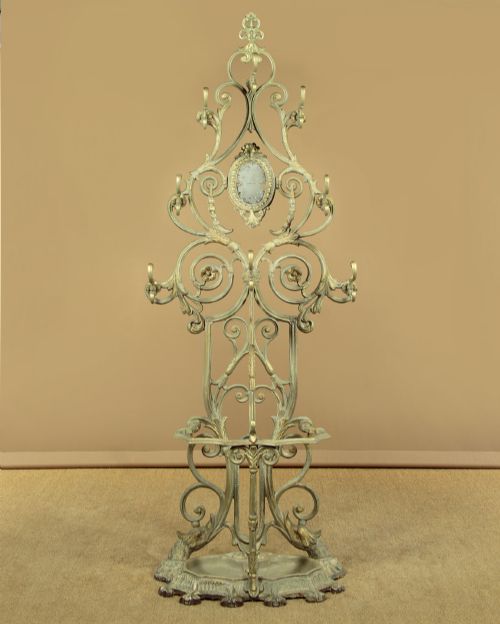
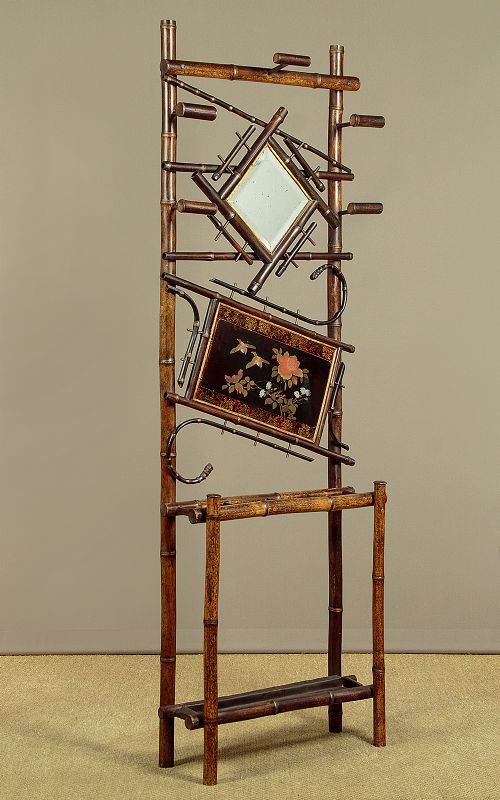
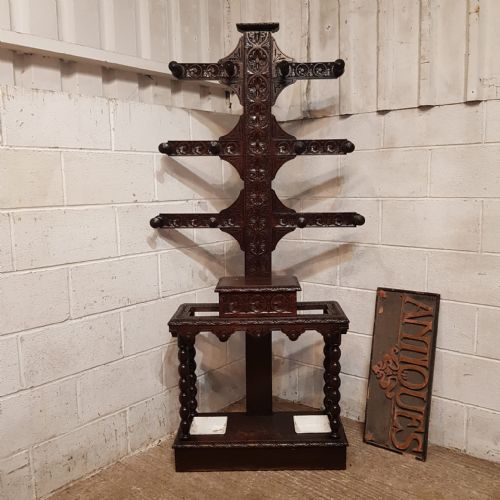
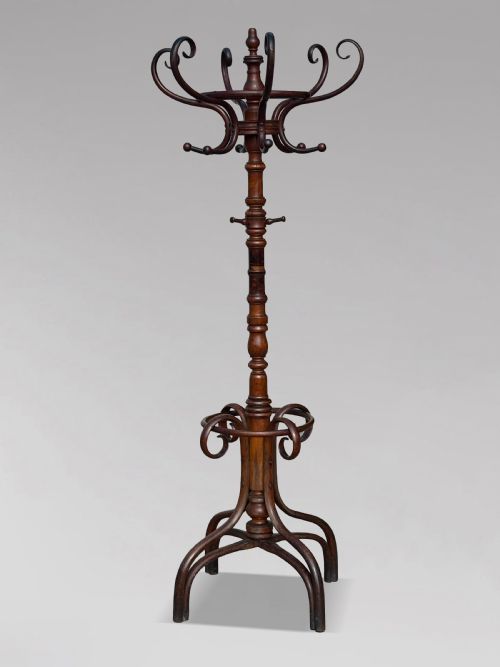
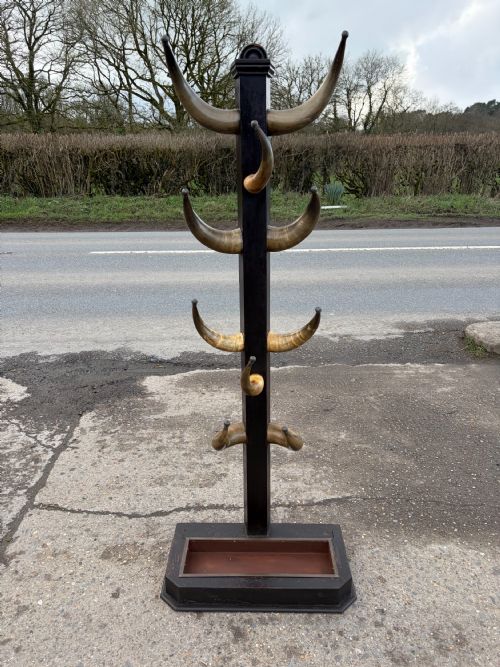
Makers utilised diverse materials ranging from cast iron and brass to horn, glass and bamboo. Forms vary widely from architectural Gothic Revival pieces to elaborate Black Forest carvings and lightweight bentwood structures.
Materials and construction methods
Cabinetmakers constructed sturdy frames using dense hardwoods like mahogany and oak, employing carved details and applied mouldings to achieve distinctive Victorian and Gothic Revival aesthetics. Iron founders cast robust metal frames and drip trays designed to withstand heavy daily use.
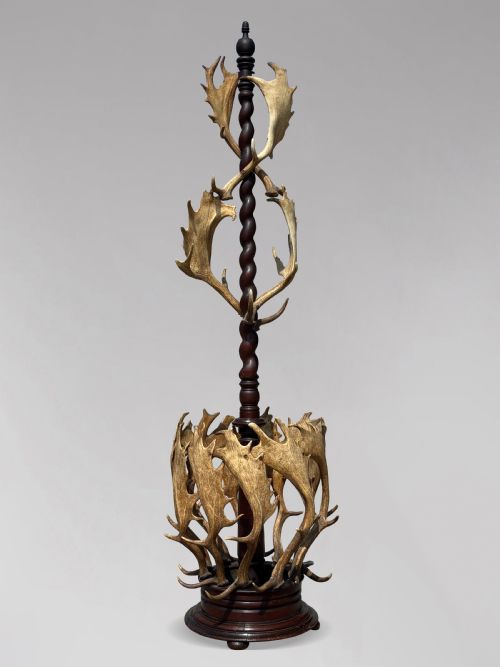
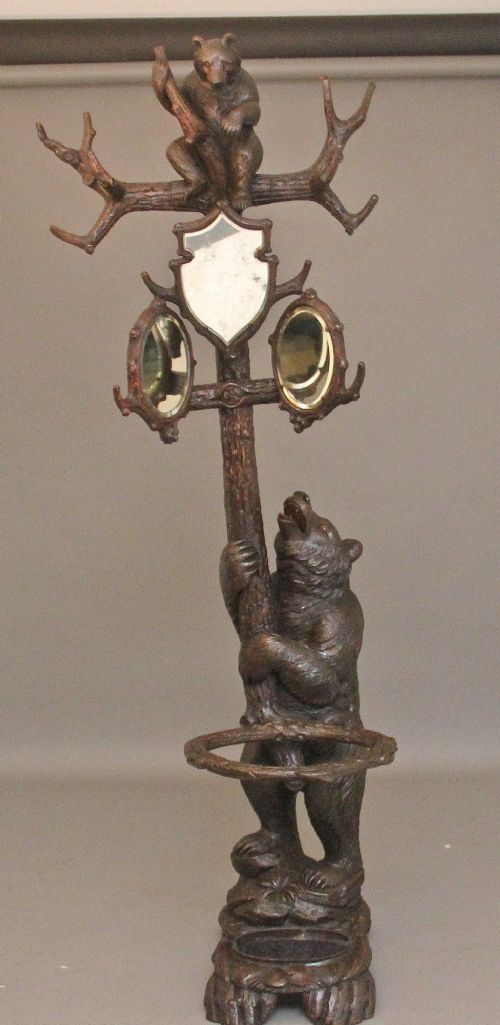
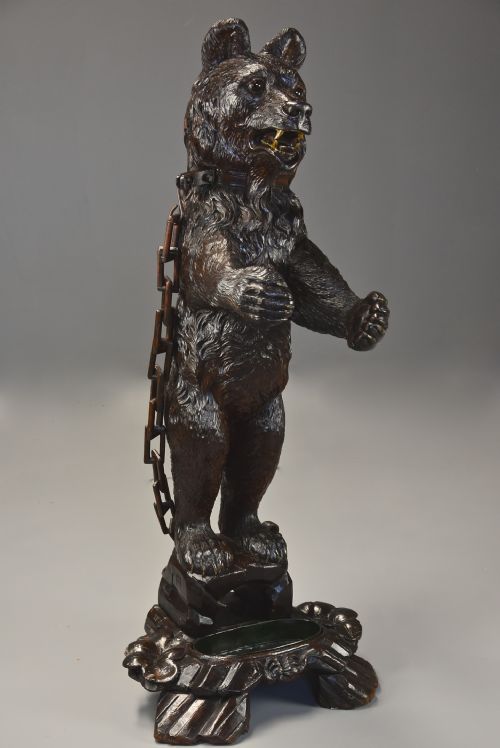
Specialised workshops shaped flexible materials such as bamboo, bentwood and cow horn into lighter coat and hat stands. Artisans in the Black Forest carved linden wood into elaborate figural forms depicting bears, integrating natural antlers and horns into the structural design.
19th Century Hall Tree Retail Price Guide 2026
Typical asking prices for 19th century hall tree among the pieces listed under this phrase on Sellingantiques today, from the lower quarter to the upper quarter. They describe what is for sale here now, not the wider market.
Bears keep watch over muddy boots, eternally guarding hats in carved linden wood.
Distinctions in quality
Excellence in a 19th century hall tree reveals itself in the depth and precision of the carving, particularly on figural Black Forest pieces and Gothic Revival oak frameworks. Superior examples exhibit substantial scale and exhibition-quality execution, contrasting with simpler utility stands.
The integration of secondary materials defines the tier of craftsmanship, such as flawless bevelled mirror plates, heavy white marble shelves and solid brass or cast iron hooks. Original drip trays and stable structural joints elevate the standing of individual pieces.
J. Parker of Woodstock·Fischel·Falkirk Foundry
The 19th Century Hall Tree Glossary
- Gothic Revival
- A design movement inspired by medieval architecture, characterised by pointed arches, trefoils and heavy carved oak. This style dominated mid 19th century interior furnishings.
- Black Forest
- A style of wood carving originating from the mountainous region of Central Europe, typically featuring realistic animals such as bears combined with natural foliage.
- Bentwood
- Wood softened by steam and bent into curved shapes under pressure, commonly utilised in late 19th century coat and hat stands.
- Japonisme
- The influence of Japanese art and design on Western decorative arts, seen here in faux bamboo and botanical motifs during the aesthetic period.
- Drip tray
- A metal or ceramic pan positioned at the base of a hall stand to catch water from wet umbrellas and walking sticks.
19th Century Hall Tree: Frequently Asked Questions
What is a 19th century hall tree used for?
These pieces served as the primary storage station in a Victorian entrance hall for coats, hats, scarves and walking sticks. They allowed family members and visitors to deposit outdoor garments immediately upon entering the house.
Many incorporated mirrors for a final check of attire before stepping out, alongside trays at the base to catch water from umbrellas.
How do I care for a wooden hall stand?
Maintain the wood by applying appropriate natural wax polish periodically to nourish the surface and preserve the finish. Avoid placing the piece in direct sunlight or near heat sources to prevent timber splitting.
Check the stability of the coat hooks regularly, as heavy winter garments place sustained strain on the original fixings.
Are these stands suitable for modern hallways?
Their vertical orientation makes them remarkably space efficient for contemporary entranceways without requiring a deep footprint. They provide immediate hanging space while introducing authentic historical character to a hallway.
Narrow variations fit restricted spaces, though ceiling height should be measured to accommodate taller architectural models.
What is the difference between an oak and a mahogany stand?
Oak stands frequently align with Gothic Revival or Arts and Crafts movements, displaying pronounced grain patterns and architectural proportions. They offer a robust, heavier aesthetic suited to substantial country houses.
Mahogany stands tend to reflect formal Victorian taste, featuring smooth polished surfaces, rich dark tones and decorative elements like mirror backs and marble shelves.