
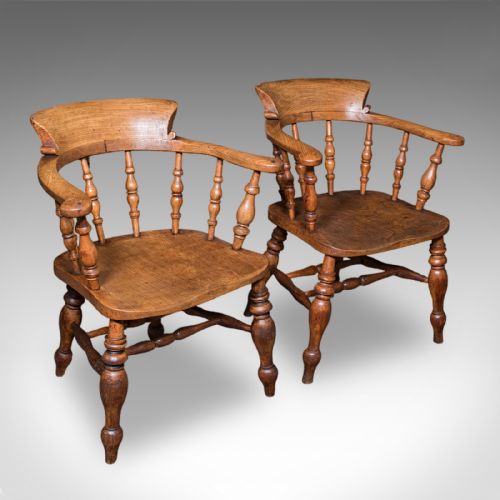


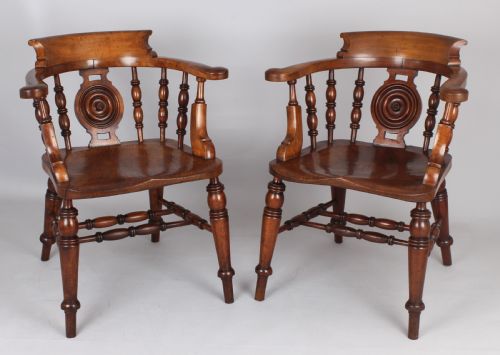

Wooden Tub Chairs Pair
Wooden tub chairs pair finds focus on matched seating from the nineteenth and early twentieth centuries, offering matching proportions and period charm.
Wooden Tub Chairs Pair
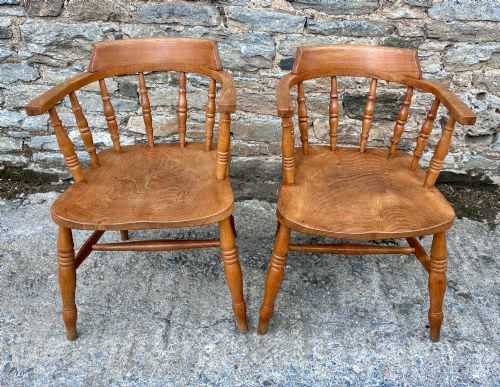
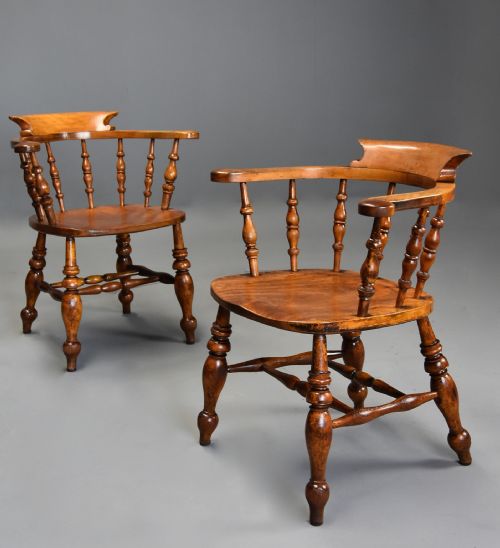
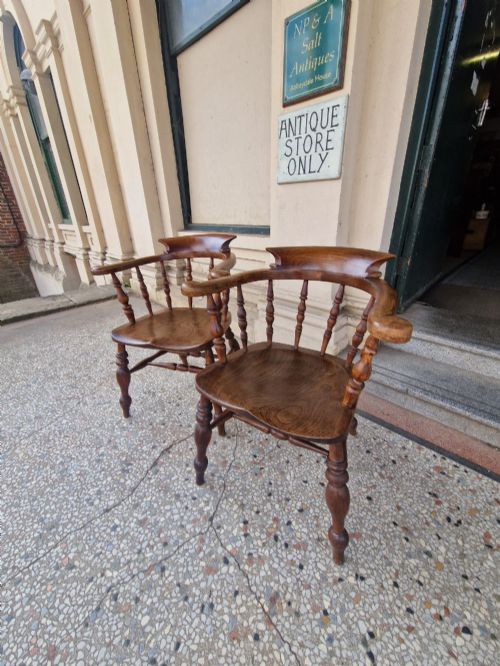
A wooden tub chairs pair brings matched seating to a room, drawing on Victorian and Edwardian forms from across England, France, and Scandinavia. Buyers encounter varied iterations including Captain's chairs, smokers' bows, bergere armchairs, and occasional chairs.
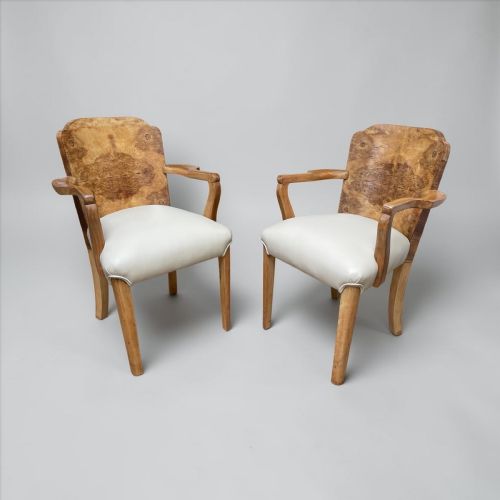
The selection ranges from country house elm and ash designs to painted French Louis XV style frames and inlaid Syrian pieces. These examples span the nineteenth century into the 1920s and 1930s Art Deco period, providing symmetrical seating options for libraries, drawing rooms, and studies.
Materials and construction
Carpenters utilised timbers such as walnut, mahogany, oak, elm, beech, birch, ash, and yew to build these frames, frequently combining solid woods with woven cane panels. Selected pieces incorporate paint finishes, satinwood or exotic wood inlay, and upholstered elements finished in velvet.
Joinery methods reflect traditional cabinet-making appropriate to each stylistic era, from sturdy country workshop construction to refined revival framing. Surface treatments range from natural waxed patinas to painted and detailed Moorish woodwork.
Listings feature woods including walnut, mahogany, oak, elm, beech, birch, ash, and yew across Victorian, Edwardian, and Art Deco periods.
Evaluating craftsmanship and condition
Quality rests in the integrity of the timber selection, the crispness of turned or carved details, and the survival of original surfaces such as polished patinas and paint. Superior examples exhibit robust structural framing coupled with finely preserved canework or upholstery.
Differences appear in the subtlety of proportions and the precision of decorative elements, whether dealing with country Windsor forms or ornate continental revival styles. Matching pairs demand consistent timber grain and uniform wear across both pieces.
The Wooden Tub Chairs Pair Glossary
- Bergere
- An enclosed upholstered armchair with exposed wooden framing and cane or upholstered sides. This form gained popularity in eighteenth-century France and reappeared in various revival styles.
- Smoker's bow
- A low-backed Windsor-style armchair featuring a continuous curved arm rail supported by turned spindles. These chairs typically utilise robust timbers like elm and ash.
- Patina
- The surface sheen and coloration developed by wood through age, handling, and regular waxing. A rich patina indicates long-term care and original finish integrity.
- Inlay
- A decorative technique where contrasting woods, metals, or mother-of-pearl are set flush into the wooden surface. Syrian and Moorish pieces frequently employ intricate geometric inlay work.
Wooden Tub Chairs Pair: Frequently Asked Questions
What defines a wooden tub chairs pair?
A wooden tub chairs pair consists of two matching seated items sharing curved enclosed backs, constructed from various periods spanning the Victorian and Edwardian eras.
Buyers select these matched sets to create visual symmetry in a room while acquiring functional seating with distinct historical character.
How were these chairs used historically?
These chairs served multiple domestic functions, from reading seats in libraries to occasional seating in reception rooms and country houses.
Their robust construction in elm, mahogany, or walnut allowed for daily use, while refined styles suited formal drawing room settings.
How do I care for antique wooden chairs?
Preservation involves maintaining stable indoor humidity levels and applying occasional beeswax to nourish exposed wooden surfaces.
Cane panels and upholstered sections require gentle cleaning to protect natural fibres from drying out over time.
How are different periods identified?
Dating relies on observable construction techniques, timber choices, stylistic markers, and tool marks left by period craftsmen.
Victorian and Edwardian examples display distinct decorative vocabularies, ranging from heavy turned spindles to delicate inlaid motifs.