




Wooden Trunk on Legs
These wooden trunk on legs pieces combine storage and elevation, bringing practical utility and period character to any room.
Wooden Trunk on Legs
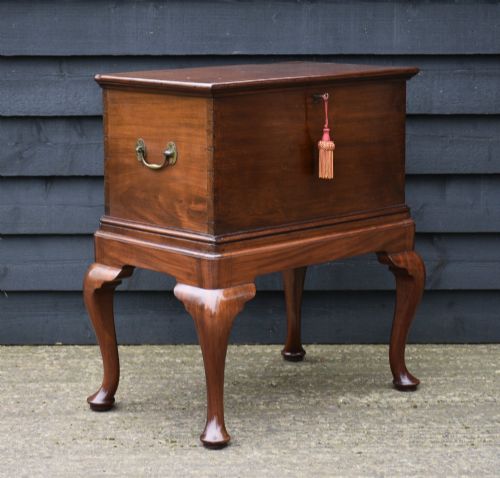
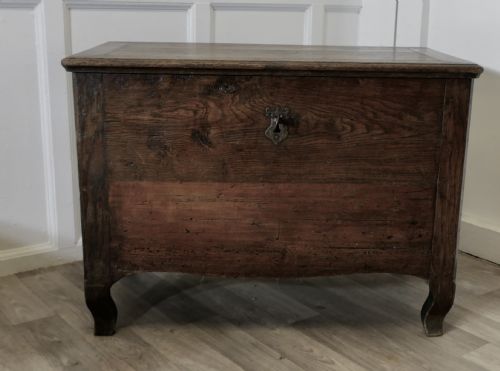
When searching for a wooden trunk on legs, you encounter a practical fusion of raised furniture and lidded storage, spanning utility forms like luggage stands and traditional coffers. These pieces serve multiple domestic functions, functioning equally well as linen storage, side tables, or occasional benches in period interiors.
The selection on this page draws primarily from the nineteenth and eighteenth centuries, incorporating styles ranging from rustic vernacular and French provincial to Anglo-Indian colonial. Mahogany, oak, and walnut dominate the structural forms, occasionally accompanied by decorative elements such as bone inlay or brass fittings.
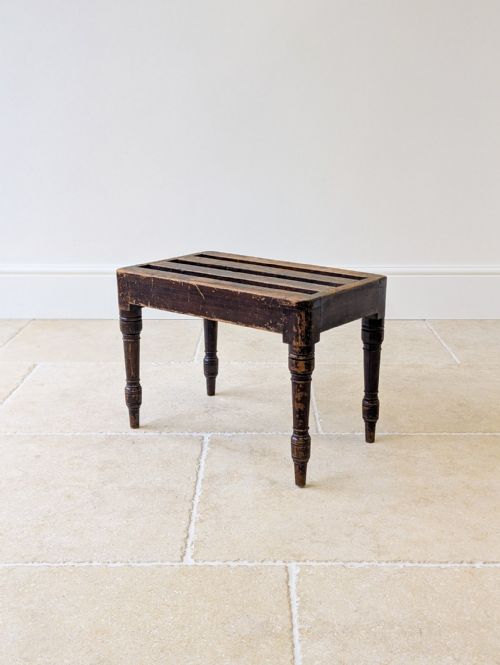
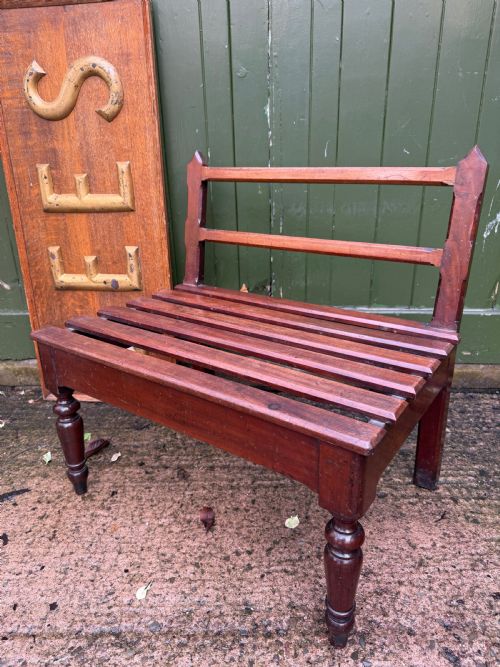
Luggage stands and raised boxes represent the most frequent iterations of the wooden trunk on legs configuration. These utilitarian objects bridge the gap between heavy floor chests and elevated furniture, offering accessible storage paired with distinct period craftsmanship.
Materials and construction
Makers utilised dense hardwoods such as mahogany, oak, walnut, and teak to build durable frames and lids capable of enduring heavy daily use. Construction techniques frequently involved traditional joinery adapted to support the weight of the chest above its legs.
Carving and turning define the decorative aspects of these pieces, from the fluted legs of hall benches to the intricate relief work found on Anglo-Indian tables and coffers. Regional workshops employed local timbers alongside exotic woods like satinwood and ebony depending on trade routes and period availability.
Listings feature oak, mahogany, walnut, and teak, spanning the eighteenth, nineteenth, and early twentieth centuries.
Assessing quality and proportion
Quality reveals itself in the harmony of proportion between the upper storage box and its supporting legs, where superior pieces maintain structural balance without appearing top-heavy. The integration of the stand with the chest demonstrates the maker's competence in weight distribution and joint stability.
Material selection and surface preservation separate standard utilitarian items from finer examples, particularly where decorative carving, secondary timbers like ebony, or original brass hardware remain intact. Grain selection in timbers such as mahogany and walnut further distinguishes workshop output.
Brown and Lamont
The Wooden Trunk on Legs Glossary
- Cofer
- A large strong box with a hinged lid used for storing valuables and household goods. These sturdy containers often formed the basis for later elevated furniture designs.
- Luggage stand
- A raised wooden frame designed to hold travelling trunks or suitcases at a convenient height. Mid-nineteenth-century examples frequently incorporate raked rear supports.
- Ceylonese satinwood
- A dense, yellowish timber sourced from Sri Lanka and prized for its lustrous grain. It appears on regional export pieces alongside contrasting dark woods like ebony.
- Anglo-Indian
- A style of furniture produced in the Indian subcontinent under British colonial rule, often featuring dense carving and indigenous hardwoods. These pieces frequently incorporate motifs such as elephant heads.
- Vernacular
- Everyday furniture made by local craftsmen for regional use rather than high-style metropolitan workshops. These pieces prioritise robust construction and simple utility over academic ornament.
Wooden Trunk on Legs: Frequently Asked Questions
What were luggage stands used for?
Luggage stands provided an elevated surface for guests to place their travel trunks without bending down to the floor. They sat in guest bedrooms of country houses and hotels.
Over time, these versatile pieces transitioned into general domestic use as occasional tables or auxiliary surfaces. Their sturdy frames allowed them to support heavy loads of luggage repeatedly.
How do I date a wooden trunk?
Dating relies on examining the timber species, joinery methods, and hardware style associated with specific historical periods. Eighteenth-century examples often display hand-cut dovetails and native oaks.
Later Victorian pieces introduce machine-sawn elements and exotic hardwoods from colonial trade networks. Comparing the leg turnings and structural proportions to known period pieces confirms the era of manufacture.
Where should I place a chest on stand?
These pieces suit entrance halls, bedrooms, and living spaces where both surface display and concealed storage prove useful. Their elevated legs keep the main body clear of floor drafts.
Positioning them against a wall allows the lid to open fully without obstruction. They function well as hallway benches when fitted with appropriate upholstery.
What is an Anglo-Indian table?
Anglo-Indian tables represent nineteenth-century furniture produced in India for British colonial residents and export markets. They combine traditional local carving techniques with European furniture forms.
Craftsmen utilised regional timbers such as teak and satinwood, frequently incorporating elaborate figural motifs. These items reflect the cross-cultural exchange of the colonial period.