


Wooden Toilet Mirror Drawers
These wooden toilet mirror drawers combine practical dressing glass with compact storage, offering period craftsmanship from walnut and mahogany.
Wooden Toilet Mirror Drawers
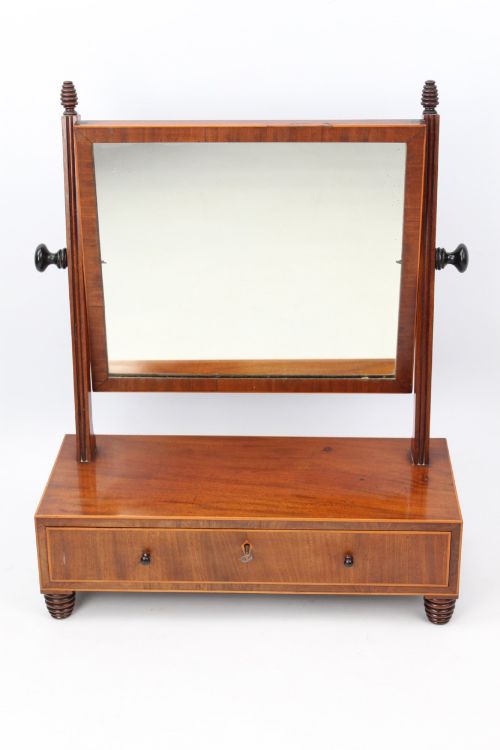
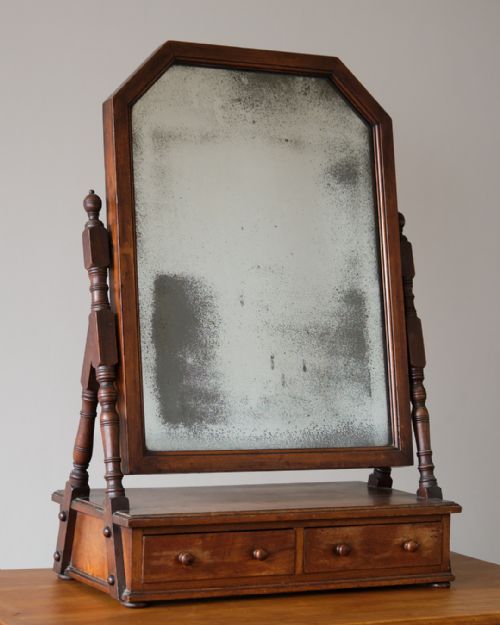
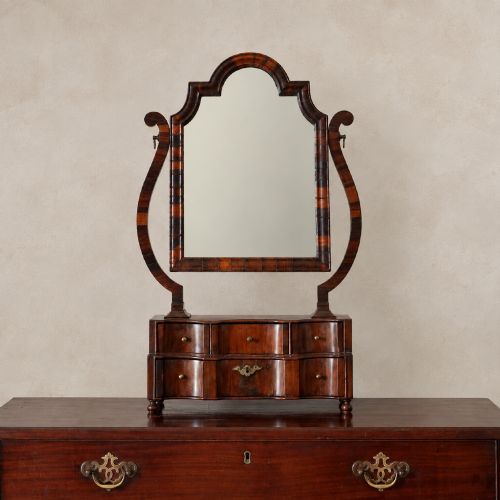
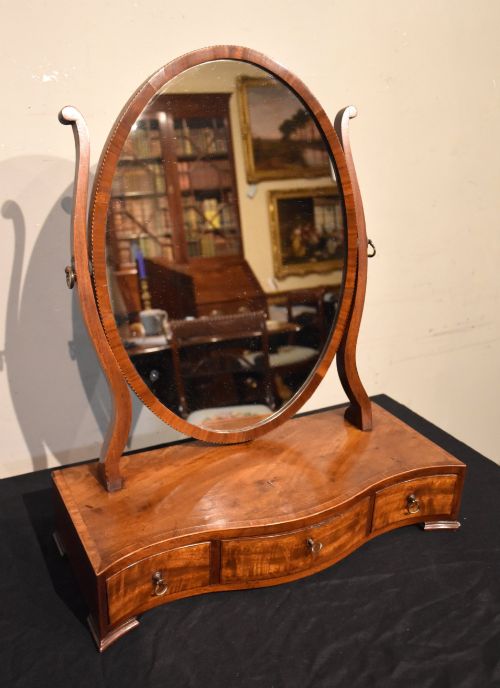
Wooden toilet mirror drawers are traditional vanity furnishings designed to sit atop a table, combining an adjustable swing mirror with small storage compartments in the base. When searching for wooden toilet mirror drawers, buyers encounter pieces spanning the eighteenth, nineteenth and early twentieth centuries, with Georgian and Victorian examples appearing most frequently.
The objects take several forms, including serpentine fronts, box mirrors and bureau mirrors, often incorporating small drawers beneath the glass. Walnut and mahogany dominate the construction, accompanied by occasional marquetry and inlay details across various regional British and continental workshops.
How they were made
Cabinet makers utilised dense hardwoods such as mahogany and walnut, frequently constructing carcases with dovetailed joints for the drawer boxes. Swing frames were mounted on brass pivots, allowing the glass to tilt.
Surface decoration involved boxwood inlay, bone details, and intricate Dutch marquetry patterns applied to the timber panels. Mirror glass was set into rebated wooden frames, sometimes backed with protective panels.
Listings feature walnut and mahogany predominantly, alongside decorative accents of boxwood inlay, laburnum, and bone across eighteenth and nineteenth-century forms.
What varies in quality
The finesse of the timber selection dictates much of the visual distinction, with figured mahogany and patterned walnut setting apart finer examples. The precision of the drawer joinery and the subtlety of the serpentine shaping reveal the maker's hand.
Original hardware, including brass fittings and bone escutcheons, elevates a piece compared to later replacements. The balance of proportions between the mirror frame and the drawer base determines the overall visual harmony.
Heal And Sons
The Wooden Toilet Mirror Drawers Glossary
- Serpentine
- A front contour that curves inward centrally and outward at the sides in an undulating line. This shape demands high woodworking skill to execute cleanly on small drawer fronts.
- Swing mirror
- A glass plate mounted on vertical pivots within a movable frame. This mechanism allows the user to adjust the viewing angle.
- Box mirror
- A compact dressing glass resting upon a shallow box base fitted with drawers. It represents one of the earlier and more portable formats.
- Marquetry
- Inlaid patterns of wood veneers applied to a carcase structure. Continental pieces frequently employ floral and geometric motifs in contrasting timbers.
- Bureau mirror
- A specialised form incorporating a small sloping writing flap or pigeonholes alongside the drawer compartments. It bridges the function of a desk and a dressing glass.
Wooden Toilet Mirror Drawers: Frequently Asked Questions
Where did people place these mirrors?
These mirrors rested on top of chests of drawers, side tables, or dedicated dressing tables within bedchambers. Their compact footprint allowed them to be positioned wherever adequate light permitted grooming.
Because they were portable, owners moved them around the house to follow daylight or suit different rooms.
What were the small drawers used for?
The integrated drawers held small personal items such as cosmetics, pins, rings, and trinkets. They kept everyday accessories organised close to the mirror.
Depeer compartments occasionally secured letters or small valuables belonging to the owner.
How do I date a wooden toilet mirror?
Dating relies on observing timber choices, construction methods like dovetailing, and the prevailing style of the period. Georgian pieces often show simpler mahogany or walnut framing, while Victorian examples introduce heavier carving and larger proportions.
Secondary woods inside the drawers also offer clues regarding the geographical origin and workshop era.
Are the mirror glasses original?
Many surviving pieces retain either their original silvered glass or period replacements showing light foxing. Original plates often display minor imperfections and thinness characteristic of early manufacturing techniques.
Later mirror plates typically present a clearer reflection and lack the subtle distortions found in eighteenth-century glass.
How do I care for antique wood and glass?
Maintain the timber by applying traditional wax sparingly to nourish the grain without building up heavy residues. Avoid placing the mirror in direct sunlight or near heat sources to prevent timber shrinkage.
Clean the glass gently using a soft cloth, keeping moisture away from the wooden rebate edges.