
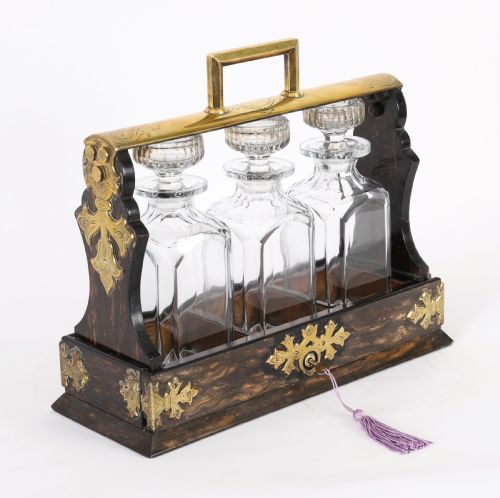

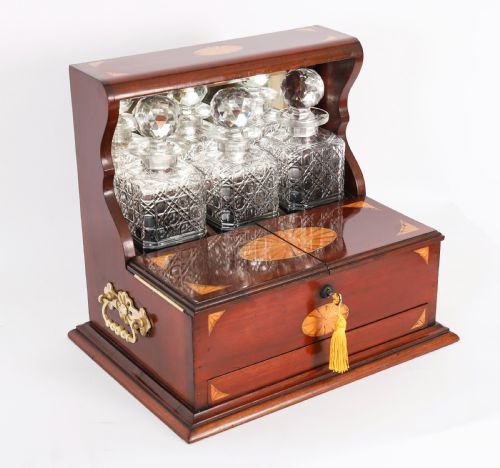


Wooden Tantalus Decanter
A wooden tantalus decanter secures precious spirits behind a clever locking mechanism while displaying cut crystal for the evening.

Wooden Tantalus Decanter
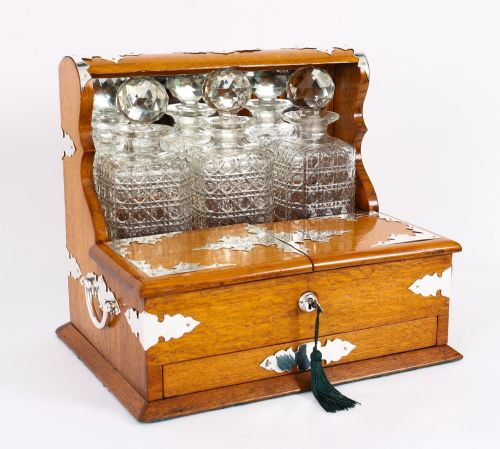
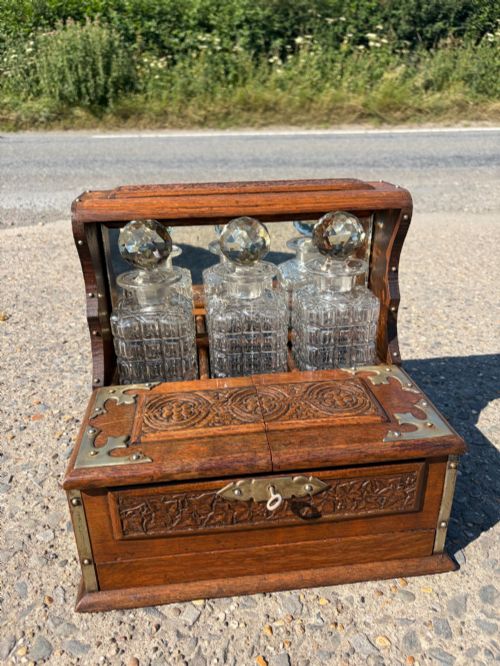
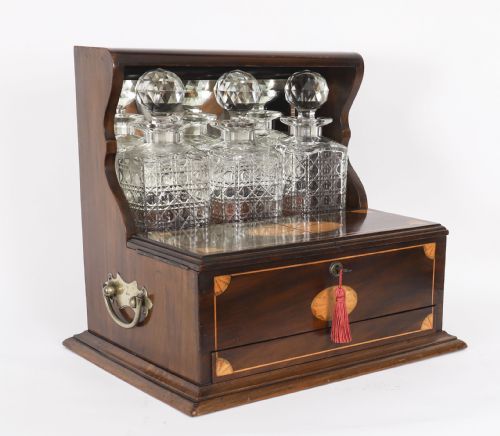
A wooden tantalus decanter combines secure locking frames with fitted compartments for spirits, appearing most frequently in oak and mahogany from the Victorian and Edwardian periods.
The selections span simple single bottle carriers to elaborate dry bars and games compendiums housing three or four cut crystal decanters alongside cards and cribbage boards.
Makers utilised resilient hardwoods like pollard oak, walnut, and satinwood, often enhanced with brass mounts, silver plating, or marquetry stringing for the drawing room.
Materials and construction
Carpenters constructed these drinking cabinets using solid oak, mahogany, and exotic coromandel, frequently incorporating decorative inlays and brass carrying handles.
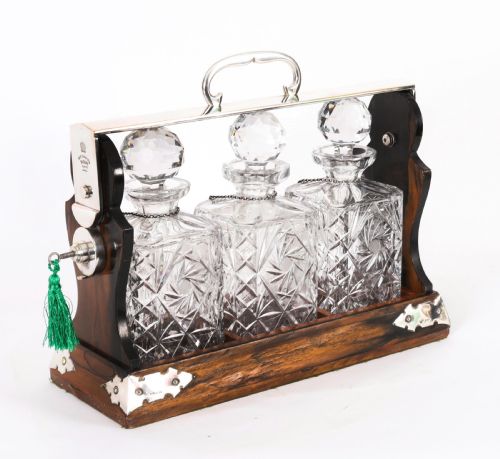
Locking mechanisms employ hinged metal bars that drop over the stoppers to prevent removal of the glass until the mechanism is released with a key.
Listings feature oak, mahogany, and coromandel constructions with brass mountings spanning the Victorian and Edwardian periods.
Assessing quality
The distinction between standard examples and exceptional pieces rests upon the complexity of the internal fittings, such as integrated games compendiums and humidor sections.
Refinement shows in the weight of the brass hardware, the clarity of the cut crystal decanters, and the precision of the wood marquetry.
Betjemann’s
The Wooden Tantalus Decanter Glossary
- Decanter box
- A fitted wooden case designed to hold spirit bottles without the locking bar of a traditional tantalus. These often house multiple square cut crystal decanters.
- Games compendium
- A multi-use box containing gaming equipment alongside the drinking vessels. These frequently feature fold-out boards for cards or chess.
- Coromandel
- A dense, dark decorative timber with contrasting light streaks. It was favored for luxury nineteenth-century boxes and writing slopes.
- Marquetry
- The art of applying pieces of veneer to a structure to form decorative patterns. Craftsmen utilised this technique on Victorian cabinetwork.
Wooden Tantalus Decanter: Frequently Asked Questions
How does a wooden tantalus work?
A hinged metal bar drops down across the necks of the decanters, fitting securely over the glass stoppers to prevent them from being lifted out of the frame.
Turning a key in the lock raises the bar, allowing the bottles to be removed for pouring.
What periods do these pieces date from?
The examples on this page date primarily from the nineteenth and early twentieth centuries, spanning the Victorian and Edwardian eras alongside a few earlier Georgian pieces.
Oak and mahogany versions appeared frequently during the late Victorian period between eighteen eighty and nineteen hundred.
Were these cabinets used only for spirits?
Many examples combine the decanter storage with compartments for cigars, playing cards, and counter trays, serving as comprehensive after-dinner entertainment pieces.
Some variants also house scent bottles or serve as miniature liquor caves.