
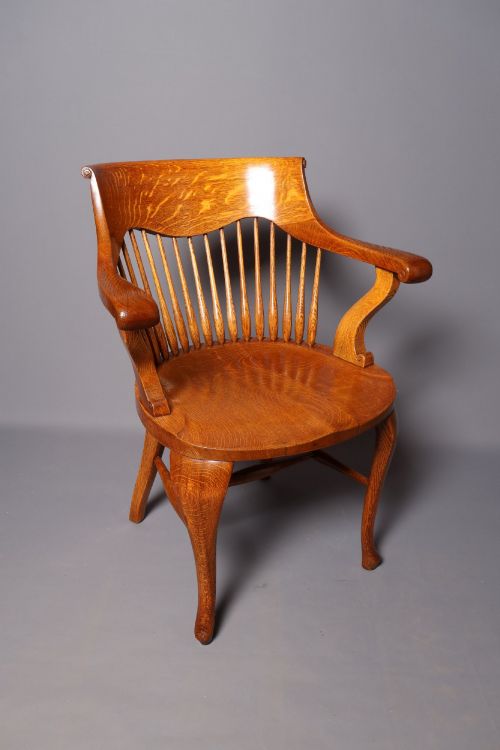
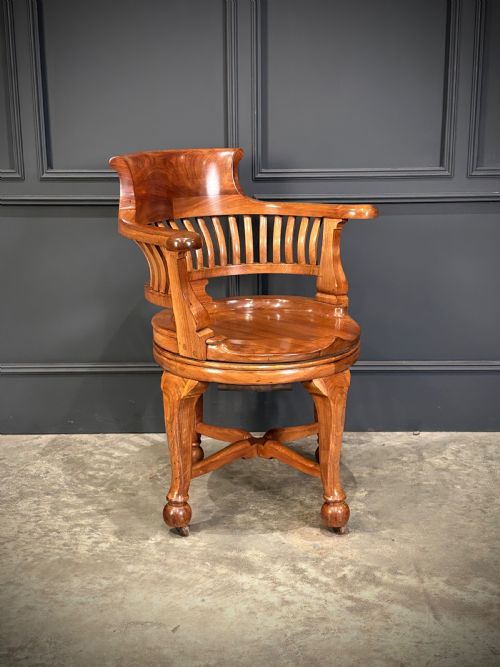
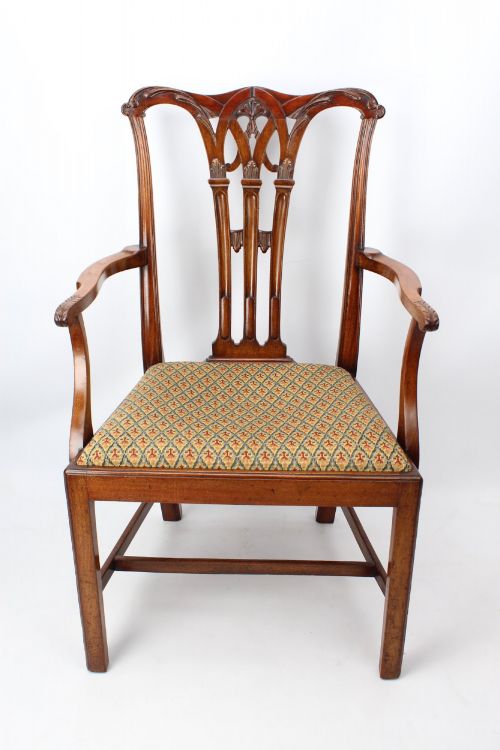


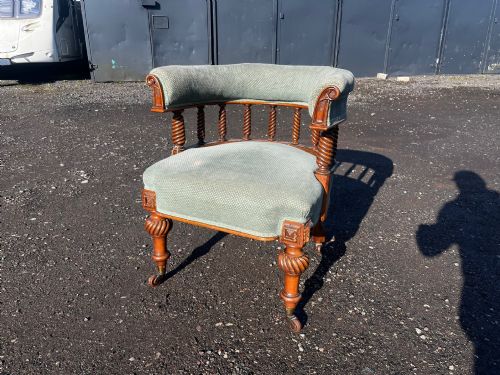


Wooden Study Chair
A wooden study chair brings working practicality together with period character, offering solid support for writing and reading at a desk.
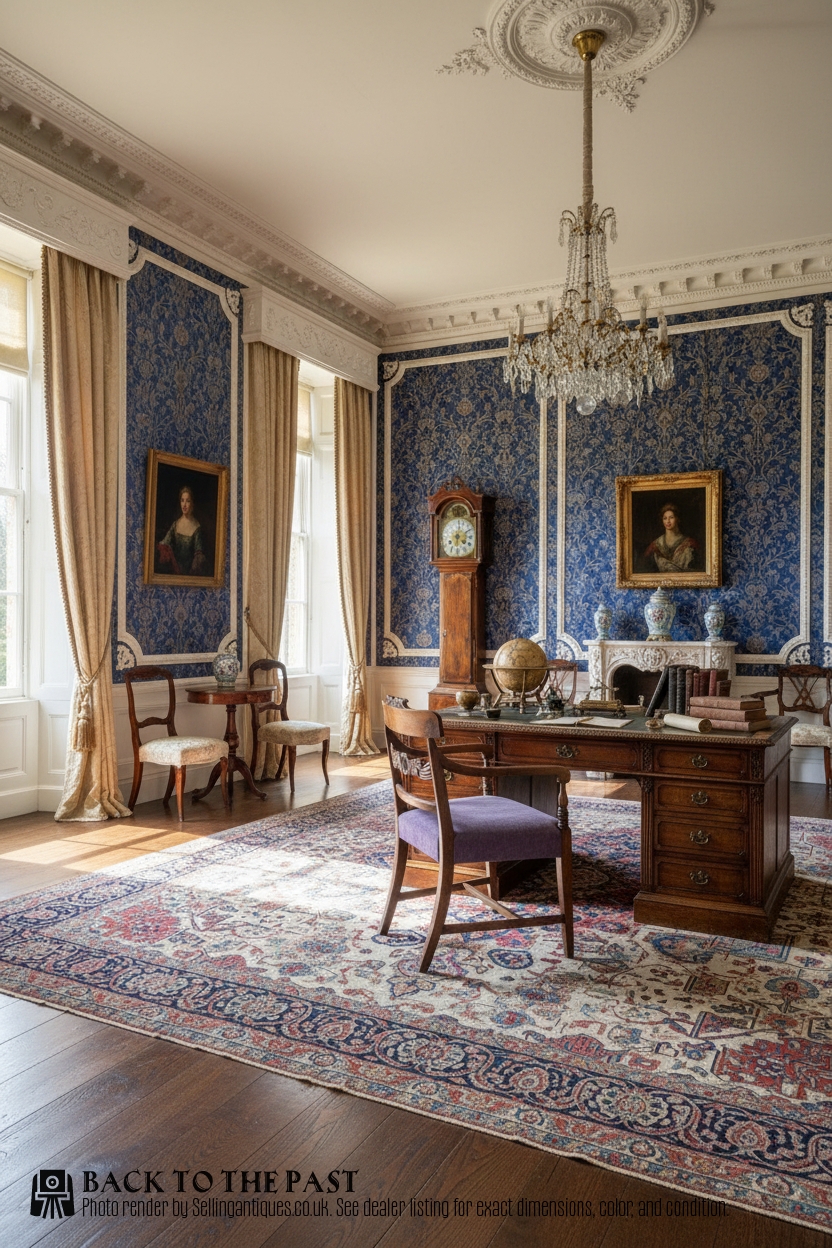
Wooden Study Chair
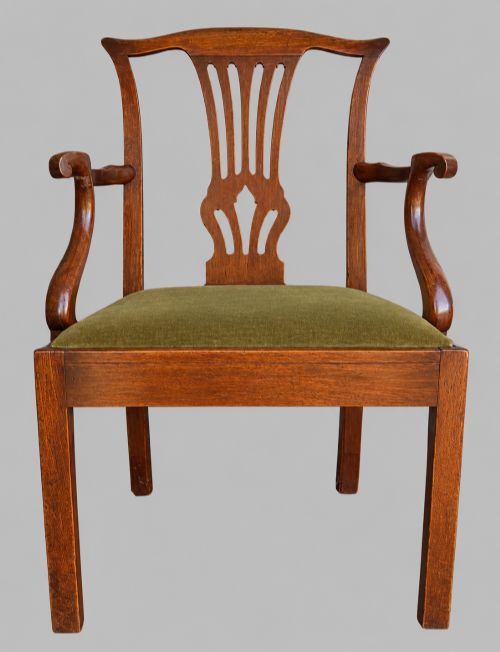
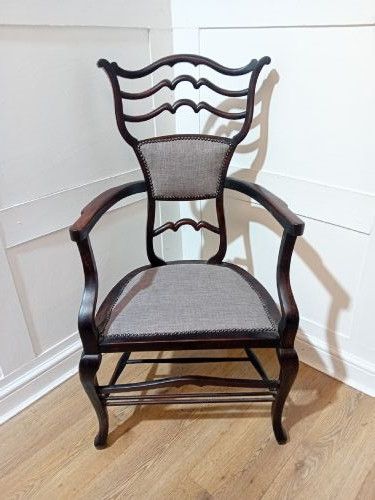
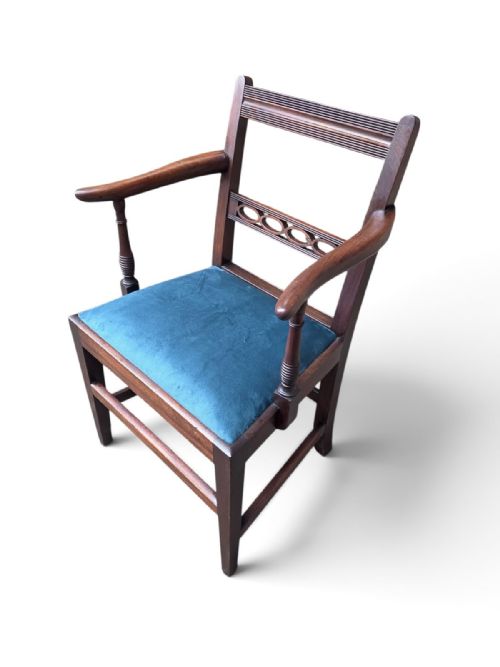
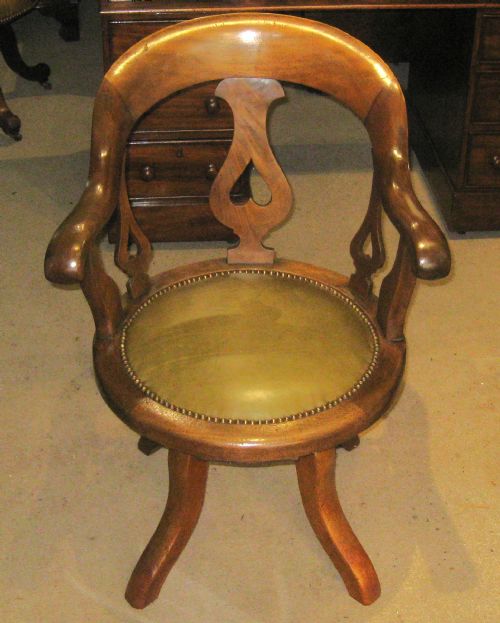
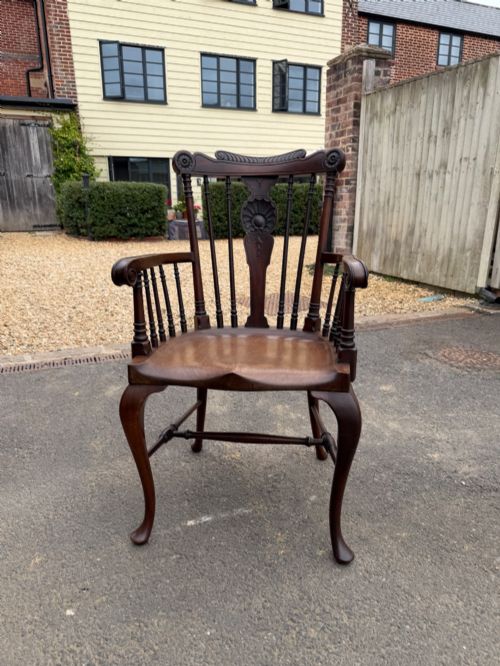
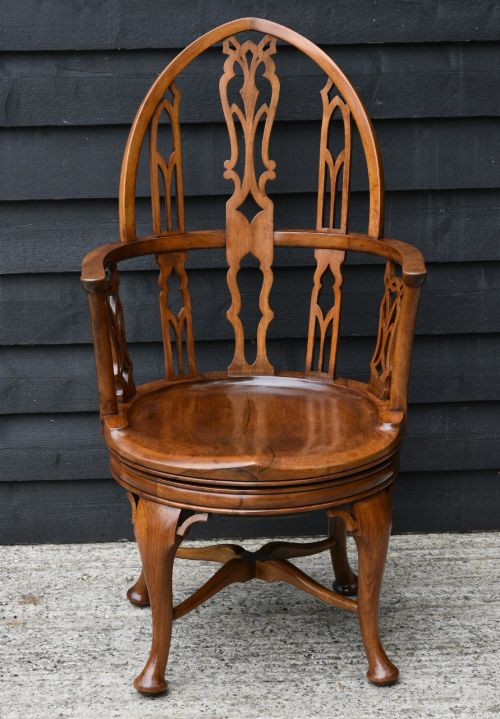
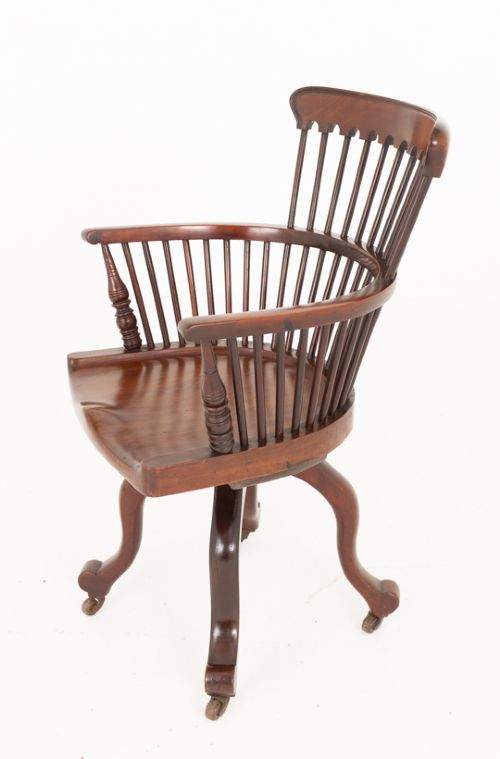
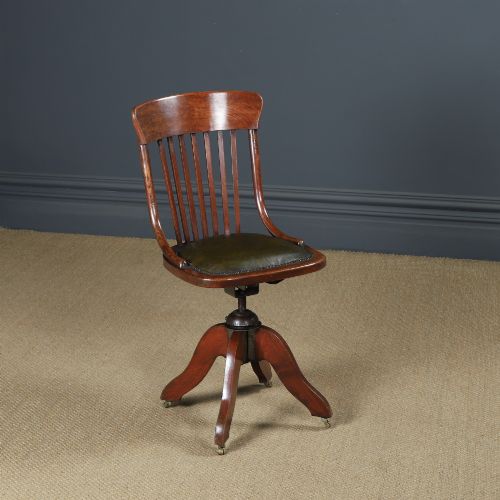
A wooden study chair serves as a practical seat for a desk or library table, taking forms such as revolving armchairs, swivel chairs, side chairs, and open armchairs. These seating pieces appear across periods spanning the Georgian era, Victorian times, Edwardian years, and the early twentieth century.
The most common examples on this page are Victorian and Edwardian pieces, often built with swivel actions or upholstered pads. Cabinet makers designed these chairs to endure daily service while fitting neatly beneath writing surfaces in studies and libraries.
Materials and construction
Cabinet makers relied primarily on dense timbers such as mahogany, oak, and walnut to build a sturdy framework capable of bearing weight and movement. They frequently incorporated secondary woods like beech alongside metal swivel mechanisms, brass castors, and iron spindle adjustments.
Seats and backrests often feature inserted panels of leather, fabric, velvet, or tan hide secured with brass tacks. Joinery techniques combined mortise and tenon frames with turned wooden spindles and bentwood components to create flexible, durable structures.
Listings span the Georgian, Victorian, Edwardian, and early twentieth-century periods, utilising mahogany, oak, walnut, leather, and brass.
Craftsmanship and proportion
Quality separates through the selection of timber, such as figured mahogany or burr elm, and the precision of the joinery in weight-bearing joints. Superior examples maintain tight, rigid frames even when fitted with complex revolving or swivelling mechanisms.
Design ambition also marks the better pieces, distinguishing standard turned office models from refined Chippendale Revival armchairs or Aesthetic Movement creations. The integration of high-grade leather upholstery and well-cast brass hardware elevates a piece above utility.
Kendrick & Jefferson·Edward William Godwin·Shoolbred
The Wooden Study Chair Glossary
- Revolving desk chair
- A seat mounted on a central spindle allowing rotation. This mechanism often uses wooden or iron screws concealed beneath the seat.
- Bergere
- An enclosed upholstered armchair with woven cane panels set into the wooden frame. This French style offers a lighter appearance in study rooms.
- Smokers bow
- A low-backed wooden armchair with a turned spindle gallery and a continuous curved armrail. It provides a robust, enveloping seat for prolonged sitting.
- Chippendale style
- A design framework drawing on eighteenth-century pattern books featuring carved splat backs and cabriole legs. Makers revived these patterns during the Victorian and Edwardian periods.
- Aesthetic movement
- A late nineteenth-century design approach prioritising simplicity and artistic character over heavy ornamentation. Pieces from this movement often display clean lines and exposed structural honesty.
Wooden Study Chair: Frequently Asked Questions
How do I spot a swivel mechanism?
Look underneath the seat for an iron spindle, a central wooden screw, or a metal spider base that allows the upper portion to turn independently of the legs.
Many nineteenth-century examples hide these mechanical parts within a wooden box frame or beneath a central pivot.
Can I use an antique office chair daily?
These seats were built for daily professional and domestic work using dense hardwoods and robust iron or wooden mechanisms. Checking the tightness of the joints and the condition of the leather ensures safe daily use in a modern study.
Applying appropriate leather food and checking castors will maintain their working condition over years of sitting.
How do I date an oak office seat?
Dating relies on combining the timber choice, hardware style, and joinery methods visible across the frame. Late Victorian and Edwardian pieces often incorporate simpler turned spindles and patent swivel ironmongery not found on earlier models.
Comparing the wear patterns on the wooden armrests and the stitching on any leather pad helps confirm the period of manufacture.