



Solid Oak Desk Seating
Solid oak desk seating brings together heavy timbers and working forms, built to endure daily office use.
Solid Oak Desk Seating
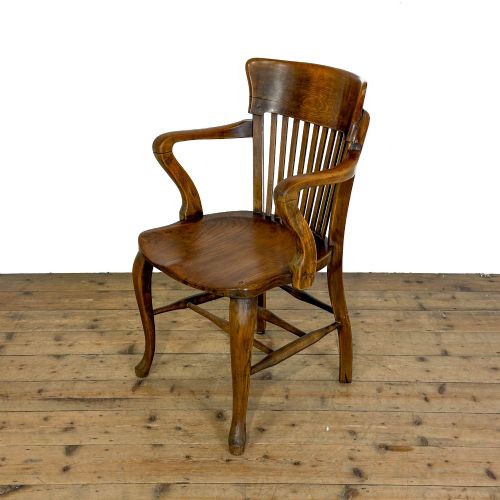
Solid oak desk seating encompasses heavy timber desk chairs, office armchairs, and country house elbow seats designed for workspace utility. These pieces primarily date from the nineteenth and early twentieth centuries, spanning Victorian, Edwardian, and Arts and Crafts periods.
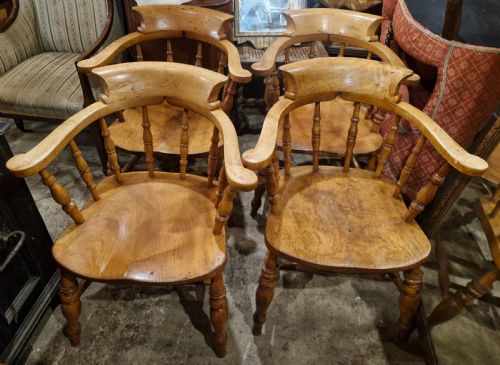
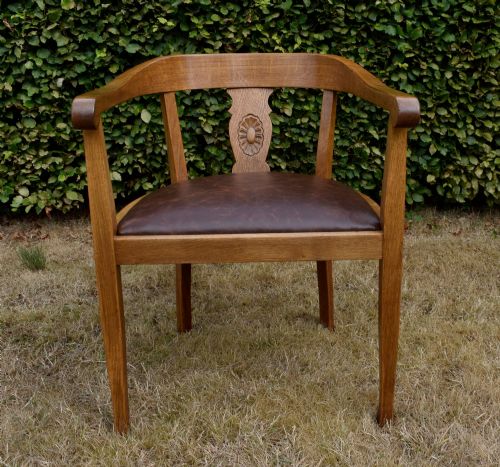
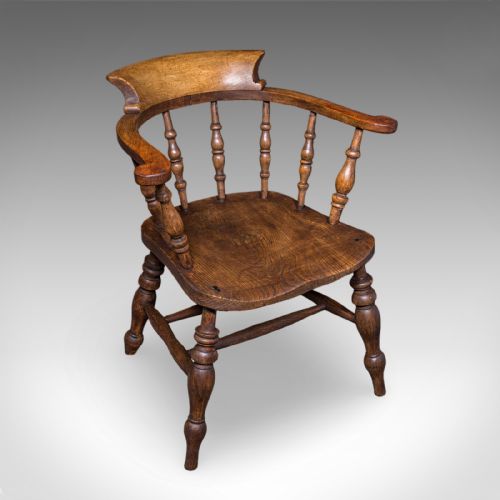
Buyers will most frequently encounter Edwardian and late nineteenth-century oak desk chairs alongside vernacular elm and ash country house armchairs. Forms range from smokers' bows and windsor chairs to carved arts and crafts elbow seats and slipper chairs.
The selection reflects both formal office environments and domestic studies, anchored by sturdy wooden frames and occasional leather or fabric upholstery. Each chair combines utilitarian function with period craftsmanship.
How they were made
Construction relies heavily on solid oak timbers, frequently paired with secondary woods like elm, ash, and brass fittings for structural reinforcement. Joinery methods prioritise durability, utilising traditional joints to withstand constant movement and weight.
Surface treatments range from simple waxed finishes on golden oak to carved ornamentation typical of the Arts and Crafts movement. Upholstered variants incorporate leather or fabric inserts secured directly into the wooden frames.
Solid Oak Desk Seating Retail Price Guide 2026
Typical asking prices for solid oak desk seating among the pieces listed under this phrase on Sellingantiques today, from the lower quarter to the upper quarter. They describe what is for sale here now, not the wider market.
The current selection spans the eighteenth, nineteenth, and early twentieth centuries, featuring oak, elm, ash, and leather.
What varies in quality
Quality rests upon the choice of timber and the ambition of the carpentry, distinguishing vernacular country pieces from more formal metropolitan furniture. Superior examples display thoughtful grain selection, robust joinery, and restrained carving.
The degree of preservation in the original wooden surfaces and structural integrity dictates the standing of each piece. Retaining original brass hardware and untouched patination elevates an example far above heavily restored alternatives.
The Solid Oak Desk Seating Glossary
- Smoker's bow
- A low-backed Windsor-style armchair with a continuous curved armrail, commonly found in sturdy oak or elm.
- Arts and Crafts
- A design movement focusing on traditional craftsmanship, simple forms, and visible construction methods, prominent around nineteen hundred.
- Elbow seat
- A traditional term for a sturdy armchair with low arms, typically utilised in country houses and offices.
- Patina
- The deep surface sheen and colour acquired by aged oak and leather through decades of handling and use.
Solid Oak Desk Seating: Frequently Asked Questions
Are these chairs comfortable for daily use?
Most period desk chairs feature supportive wooden backrests and generous proportions designed for working hours.
Adding a loose pad or cushion can improve comfort on unpadded timber seats during extended periods at a desk.
How do I date an oak desk chair?
Dating relies on stylistic clues like Edwardian carved motifs, Victorian golden oak finishes, or George III vernacular framing.
Construction marks, tool traces, and timber ageing further help pinpoint whether a piece originates from the eighteenth or twentieth century.
Do these chairs suit modern workspaces?
The sturdy proportions and warm timber tones of solid oak seating pair well with both contemporary and traditional desks.
Their robust construction ensures they handle modern flooring and daily wear without issue.
What is the difference between an office armchair and a desk chair?
Office armchairs usually feature enclosed elbow rests and broader frames intended for formal study or administration spaces.
Standard desk chairs often utilise lighter swivel or fixed wooden frames tailored specifically for writing tables.