
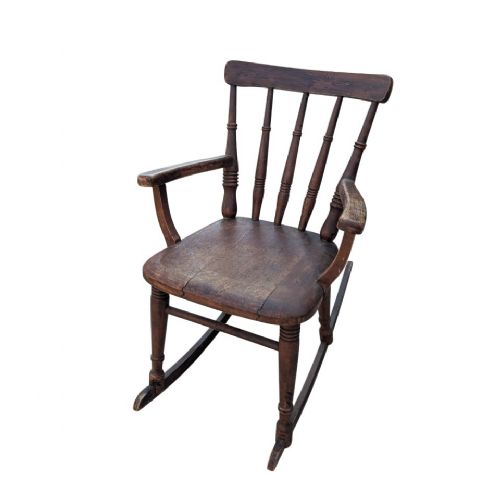
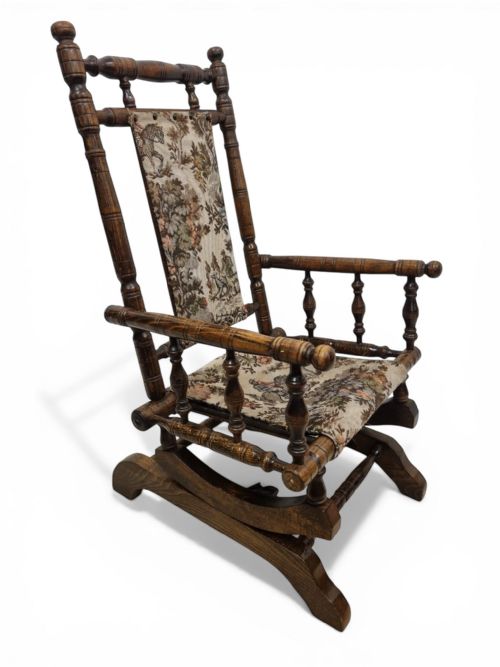


Wooden Spindled Child Chair
A wooden spindled child chair is a miniature vernacular seat made for the nursery, offering rustic charm and centuries of domestic history.
Wooden Spindled Child Chair
A wooden spindled child chair is a scaled-down domestic seat designed for young occupants, often following the structural traditions of adult vernacular seating. When exploring wooden spindled child chair examples, buyers encounter forms ranging from low rocking chairs to high chairs and potty chairs.
The pieces on this page span several centuries, with representation from Georgian, Regency, Victorian, and Edwardian periods. Regional vernacular traditions shape these items, drawing from English country workshops and Scandinavian country styles.
Makers of the period adapted full-size Windsor and spindle back designs for smaller occupants, utilising sturdy timbers to withstand daily nursery use. These survivors demonstrate how domestic furniture mirrored adult fashions on a smaller scale.
How they were made
Constructed from native hardwoods, these chairs frequently combine timbers to balance strength and weight. Elm seats provide stability to prevent warping, while ash and beech supply the slender spindles and legs required for turned components.
Joinery relies on traditional Windsor methods, where turned legs and back spindles are tenoned directly into solid plank seats. Steam-bending techniques shape the distinctive hoop backs and arm bows found on many of the Windsor examples.
Listings feature pieces spanning the Georgian, Regency, Victorian, and Edwardian periods, constructed in elm, ash, beech, pine, and oak.
What varies in quality
Quality in these domestic pieces depends on the crispness of the turning and the harmony of the proportions. Superior examples retain their original timber surfaces and patination without excessive structural intervention.
The complexity of the form also separates standard seating from more ambitious regional pieces. Metamorphic designs or sophisticated Windsor hoop backs with well-defined spindles represent the finer end of vernacular production.
The Wooden Spindled Child Chair Glossary
- Windsor chair
- A chair built with a solid wooden seat into which the legs and back spindles are driven directly. This construction method provides exceptional rigidity.
- Spindle back
- A chair back composed of numerous slender, turned vertical wooden rods. These rods support the sitter while keeping the furniture lightweight.
- Vernacular furniture
- Domestic objects made by local craftsmen using regional traditions and native materials rather than following metropolitan court styles. These pieces prioritise utility and local availability.
- Metamorphic furniture
- An object designed to transform from one type of furniture into another, such as a high chair converting into a low play table. This ingenuity served practical needs in smaller households.
- Potty chair
- A nursery chair featuring a cut-out seat designed to accommodate a chamber pot beneath. These utilitarian items were standard in historical domestic settings.
Wooden Spindled Child Chair: Frequently Asked Questions
How are these chairs dated?
Dating relies on timber characteristics, tool marks left by manufacture, and stylistic traits borrowed from adult furniture of the same period. Georgian and Regency pieces show different turning profiles compared to later Victorian examples.
Examining the construction methods and wear patterns helps determine whether a piece belongs to the eighteenth or nineteenth century.
Were these chairs used daily?
These pieces served practical roles in nurseries, dining rooms, and kitchens for feeding and resting children. Their robust construction in elm, ash, and beech allowed them to withstand active domestic environments.
Signs of heavy wear often reflect their original purpose as functional furniture rather than decorative showroom items.
Can I use one for a child today?
While structurally sound, antique children's seating often lacks modern safety standards such as harness systems or tip-prevention geometry. Many collectors prefer to display them as decorative objects or sculptural folk art.
Using them practically requires careful assessment of their current stability and joints.
What woods were commonly used?
Craftsmen selected native hardwoods that were locally available and tough enough for daily use. Elm appeared frequently for solid seats because its interlocking grain resisted splitting.
Ash, beech, and birch provided straight-grained timber ideal for turning slender spindles and legs on a lathe.