

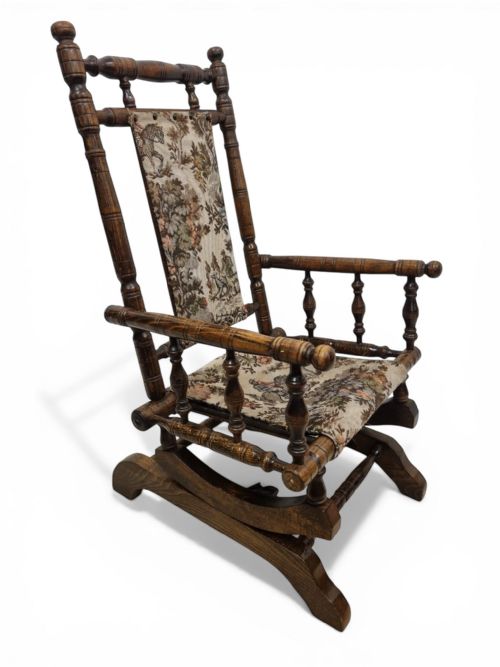


Vintage Childrens Armchair
A vintage childrens armchair brings diminutive scale and honest craft into a room, offering small-scale seating built with the same integrity as full-size antique furniture.
Vintage Childrens Armchair
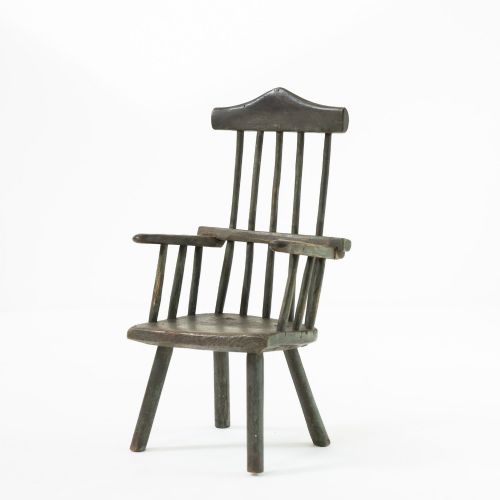
A vintage childrens armchair is a scaled-down seat designed for the nursery or parlour, often mirroring the prevailing styles of its parent era. When you search for a vintage childrens armchair, you encounter everything from rustic country vernacular stick backs to formal Georgian revival carvers.
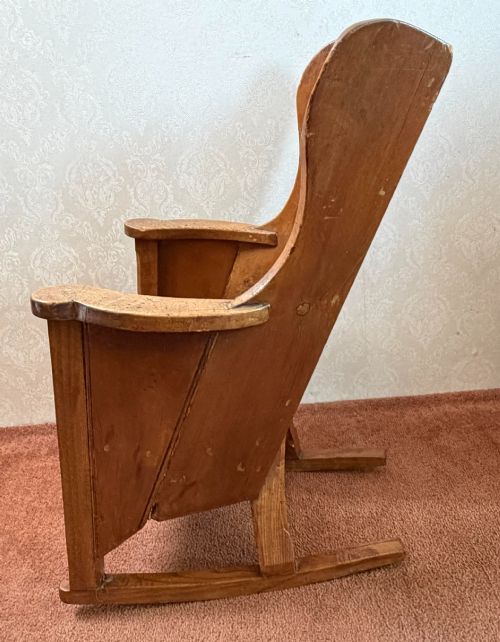
The selections span centuries, featuring nineteenth-century Windsor models alongside early twentieth-century rocking chairs and high chairs. These pieces reflect the domestic life of past generations, built smaller for practical household use rather than purely as toy furniture.
Materials and construction
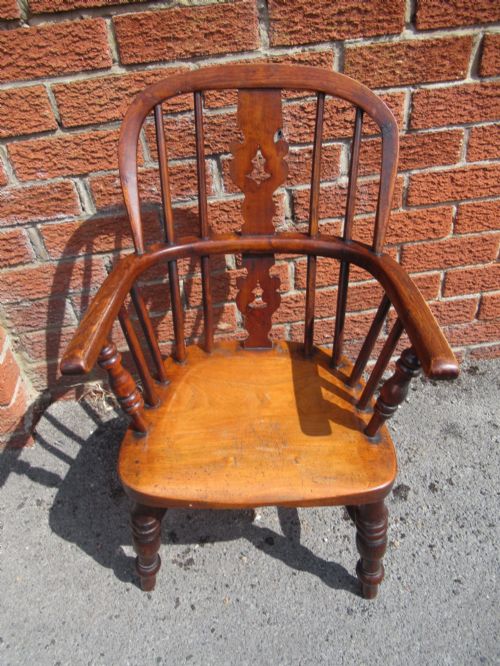
Cabinetmakers and country joiners utilised native hardwoods such as elm, ash, oak, and yew, selecting timber for strength and local availability. These woods often feature in Windsor frames or stick back designs where turned spindles meet solid bentwood arms.
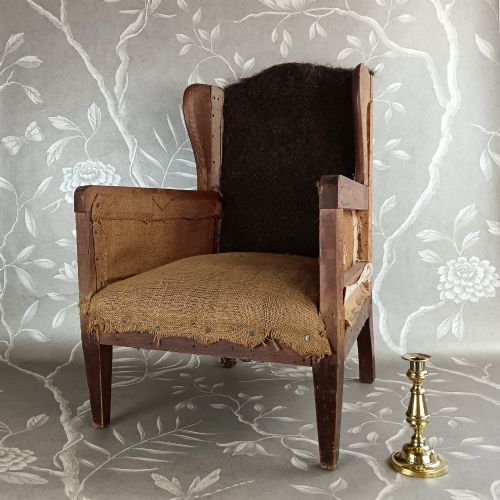
Seating surfaces vary from solid timber squabs to woven rush and tapestry upholstery. Frame construction relies on traditional joinery techniques like mortise and tenon joints, securing longevity across decades of heavy use.
The documented periods span the eighteenth, nineteenth, and early twentieth centuries, encompassing Georgian, Victorian, and Edwardian styles.
Assessing quality
The distinction between standard utility items and finer examples rests on the choice of timber and the sophistication of the turnings. Superior pieces display thoughtful grain matching in woods like mahogany or walnut rather than utility softwood framing.
Proportion and structural retention also dictate worth, as chairs that retain their original height and unaltered undercarriages hold greater integrity. Refined details, such as carved splats or elegant crinoline stretchers, elevate a vernacular form into a masterwork of miniature scale.
The Vintage Childrens Armchair Glossary
- Windsor
- A chair built with a solid wooden seat into which the legs and back spindles are bored directly. This method creates a sturdy, rigid frame characteristic of country seating.
- Rush
- Dried marsh grass twisted into cord and woven tightly to form a flexible seat platform. It offers a traditional tactile surface found on ladderback variants.
- Commode chair
- A piece of seating furniture fitted with an enclosed compartment beneath the seat for a chamber pot. Victorian examples often disguised this function beneath hinged wooden lids.
- Vernacular
- Objects built by local craftspeople following regional traditions rather than high-style metropolitan patterns. These pieces prioritise functional utility over academic design rules.
- Carver
- An armchair, usually designed with open arms to match a set of simpler dining or parlour chairs. They often provide a commanding silhouette in miniature proportions.
Vintage Childrens Armchair: Frequently Asked Questions
Are these chairs meant for children to use?
Many of these pieces were originally constructed for everyday juvenile use in domestic settings, built with robust timbers to withstand active households. Modern buyers often evaluate them for actual seating or decorative display.
While structurally sound antiques can still support small children, many collectors prefer to place them as decorative focal points or display pieces within a room.
How do I identify a Windsor chair?
A Windsor chair is characterised by its distinctive construction where the legs and back pieces fit directly into a thick, sculpted wooden seat. This method dispenses with a traditional box frame.
Look for turned spindles and a bentwood bow back which distribute weight effectively while maintaining a slender, elegant profile.
What is a commode chair?
A commode chair is a specialised piece of antique furniture that incorporates an internal chamber pot beneath a removable or hinged seat. They were standard nursery equipment before indoor plumbing.
Victorian iterations often hide the opening cleverly beneath upholstered cushions or solid wooden lids to maintain a conventional armchair appearance.
How do I date a wooden child's chair?
Dating relies on observing tool marks, timber selection, fastener types, and stylistic indicators borrowed from full-scale furniture of the period. Georgian examples often show different turning profiles than Edwardian pieces.
Patina accumulated through decades of handling also offers clues to the age and continuous use of the timber surface.
Why choose rush seating?
Rush seating provides a resilient, textured surface woven from natural marsh materials that flex slightly with weight. It represents a traditional craft method common in country vernacular pieces.
This technique adds an organic element to the chair, contrasting pleasingly with the rigid turned legs and solid wooden arms.