


Georgian Childs Windsor Chair
A georgian childs windsor chair is a miniature domestic seat shaped by regional makers for domestic use.
Georgian Childs Windsor Chair
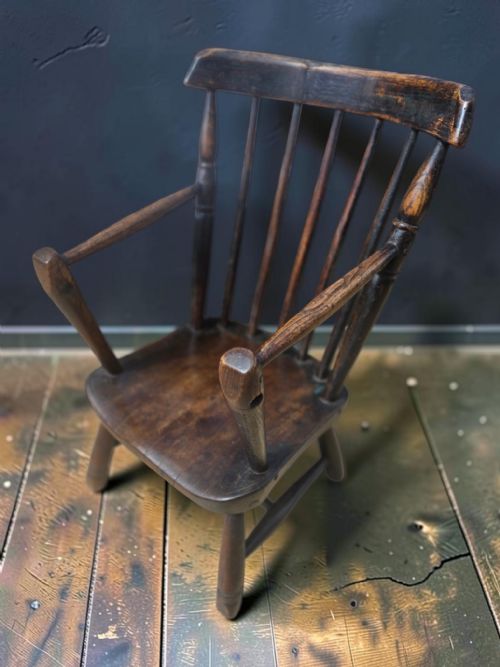
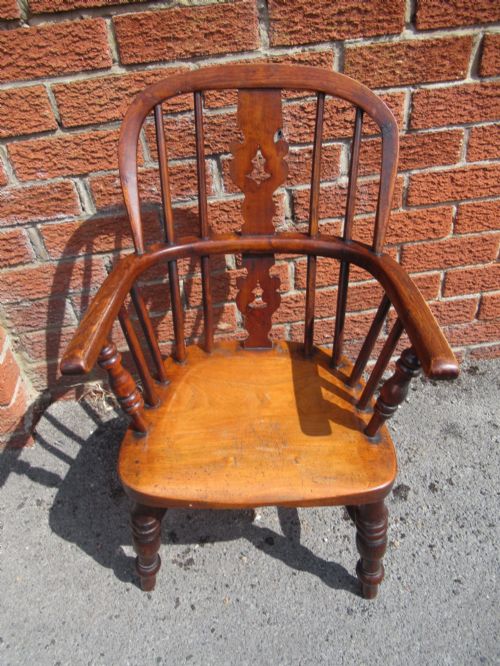
A georgian childs windsor chair brings domestic country seating into miniature proportions, mirroring adult forms produced across English regions. Buyers searching for a georgian childs windsor chair encounter armchairs, rocking chairs, high chairs and stick back designs spanning the eighteenth and nineteenth centuries.
The pieces appearing on this page originate from periods including the Georgian and Victorian eras, alongside styles such as English Country Vernacular and George III. The surviving examples utilise regional vernacular traditions rather than uniform metropolitan workshop practices.
Materials and construction
Makers built a georgian childs windsor chair using a combination of native timbers, frequently pairing yew wood or elm seats with ash, beech, fruitwood or oak for the spindles and legs. These woods were chosen for their specific structural qualities, allowing slender components to support weight without snapping.
Construction methods relied on traditional joinery where turned legs and back spindles locked directly into solid wooden seats. Details such as crinoline stretchers added rigidity to the undercarriage, while hoop backs and stick backs provided support for young occupants.
Georgian Childs Windsor Chair Retail Price Guide 2026
Typical asking prices for georgian childs windsor chair among the pieces listed under this phrase on Sellingantiques today, from the lower quarter to the upper quarter. They describe what is for sale here now, not the wider market.
Miniature armchairs sometimes show distinct wear patterns from tiny boots kicking against the front stretchers.
Judging quality and proportion
Quality in a georgian childs windsor chair rests on the balance of the miniature proportions and the selection of timber figures. Yew wood examples with strong grain patterns and well-turned spindles represent the finer end of regional production.
The integrity of the original joints and the survival of natural surface patination distinguish superior pieces from those with excessive replacements. Construction details such as shaped elm seats and carefully bent wood hoops reveal the skill of the original vernacular maker.
The Georgian Childs Windsor Chair Glossary
- Hoop back
- A continuous bentwood rail forming the upper back and arm support of a chair. This technique required skilled steam bending to achieve the curved profile.
- Crinoline stretcher
- A bowed undercarriage rail linking the legs of a chair to provide structural stability. It takes its name from the shape of nineteenth-century garments.
- Vernacular
- Objects built by regional craftsmen following local traditions rather than formal pattern books. These pieces reflect the specific materials available in local English areas.
- Splat back
- A chair back featuring a central vertical wooden panel flanked by spindles. This form appears across various regional seating traditions.
- Stick back
- A chair construction where turned wooden rods form the back rest rather than a solid carved splat. The rods fit into bored holes in the seat.
Georgian Childs Windsor Chair: Frequently Asked Questions
What were childs windsor chairs used for?
These miniature seats served everyday domestic functions within family spaces, allowing young children to sit securely at table height or by the hearth.
Versions built as high chairs or rocking chairs provided specific seating solutions for feeding and soothing infants in country homes.
How do I date a windsor chair?
Dating relies on observing construction methods, timber choices and the overall style of the turning on the legs and spindles. Earlier examples often feature elm seats combined with yew wood components and distinct vernacular stretcher arrangements.
Changes in back design, from stick backs to hoop backs and splat backs, help place a piece within the eighteenth or nineteenth century.
Are these chairs suitable for daily use?
Most surviving examples have spent centuries in domestic environments and retain sturdy construction, though timber shrinkage requires careful handling. Placing them in stable indoor conditions protects the dry wood and historic surface finishes from extreme humidity shifts.
Collectors often treat them as decorative display items rather than active seating for children today.
Where were these chairs made?
Regional workshops across England produced these vernacular seats, utilising local hardwoods gathered from surrounding woodlands. Distinct regional traits emerge in the choice of woods, such as Welsh country styles or West Country variations.
Local craftsmen adapted standard adult Windsor forms into smaller scales without formal factory standardisation.