

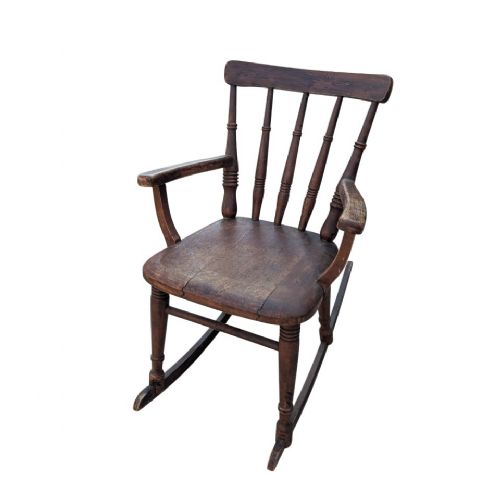


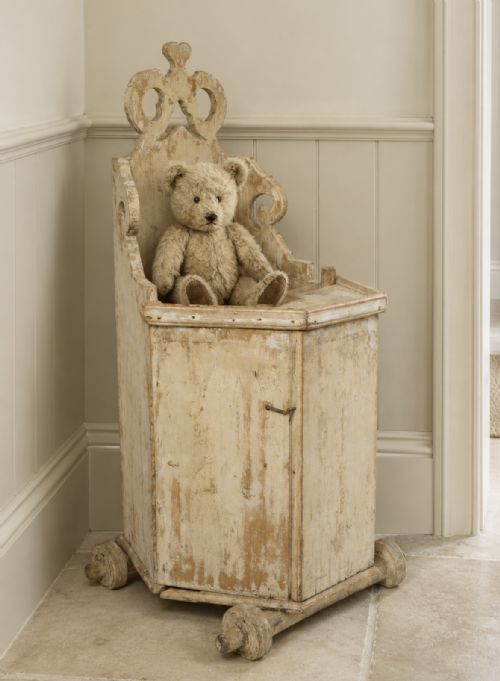


Rustic Timber Child Chair
A rustic timber child chair brings centuries of domestic history into a room, offering small-scale vernacular design shaped by local makers.
Rustic Timber Child Chair
A rustic timber child chair encompasses seating made for young occupants from the Georgian, Victorian, and early twentieth-century periods. These items emerge in diverse vernacular forms, including high chairs, rocking chairs, and Windsor designs.
The selection on this page demonstrates strong Scandinavian Country and Folk Art influences alongside standard British regional styles. Pieces range from simple natural form oak stools to sophisticated ash Windsor chairs.
Makers built these objects to serve everyday domestic functions within family homes rather than formal display. Consequently, their survival reflects the durability of woods like elm, oak, and pine over generations of use.
How they were made
Carpenters and village craftsmen utilised regional hardwoods such as oak, ash, elm, and birch to construct these miniature seats. Turned spindles, pegged joints, and solid plank seats formed the backbone of their construction.
Seating areas frequently incorporated woven rush or simple timber panels depending on the region and period. Surface finishes varied from natural wood stain to painted pine, displaying the straightforward methods of country workshops.
Rustic Timber Child Chair Retail Price Guide 2026
Typical asking prices for rustic timber child chair among the pieces listed under this phrase on Sellingantiques today, from the lower quarter to the upper quarter. They describe what is for sale here now, not the wider market.
Listings span the Georgian period, the nineteenth century, and the 1930s, utilising oak, ash, elm, pine, and birch.
What varies in quality
Quality rests upon the integrity of the timber selection and the retention of original structural components. Chairs that maintain their initial surface treatment and patination sit at the upper end of the scale.
The sophistication of the turning work and the harmony of regional vernacular proportions distinguish standard utility items from pieces possessing distinct folk art character.
The Rustic Timber Child Chair Glossary
- Windsor
- A chair built with a solid wooden seat into which the legs and back spindles are separately bored and pegged. This construction method provides notable strength despite slender members.
- Ladderback
- A chair back featuring horizontal arched slats between two upright posts. This traditional form appears frequently in vernacular seating.
- Rush
- Dried marsh grass twisted into cord and woven to form a flexible seat base. It requires skilled hand labour to produce a tight, supportive surface.
- Primitive
- A descriptive term for objects made outside urban workshop traditions, often displaying direct, unpretentious construction. These pieces rely on basic tools and local materials.
Rustic Timber Child Chair: Frequently Asked Questions
How were rustic child chairs used?
These chairs served young children during family meals or quiet household tasks, providing raised seating or safe rocking motion.
High chairs kept infants secure near table height, while smaller stools and rockers offered mobile seating about the floor.
How do I live with a timber child chair?
Place these small seats upon side tables, within bookcases, or upon the floor as sculptural decorative accents.
Their modest scale allows them to fit easily into modern interiors while introducing organic texture and historical depth.
How do I identify a Georgian child chair?
Look for proportions, timber choices, and construction details characteristic of the eighteenth century.
Georgian examples often display restrained classical influence blended with regional vernacular traditions.
What defines folk art seating?
Folk art pieces exhibit individual craftsmanship unconstrained by strict academic design rules.
They frequently feature unconventional shapes, painted surfaces, or natural forms that express the maker's personal interpretation.