



Wooden Sliding Book Rack
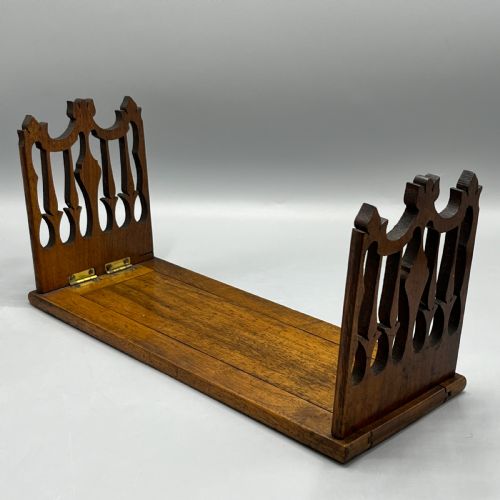
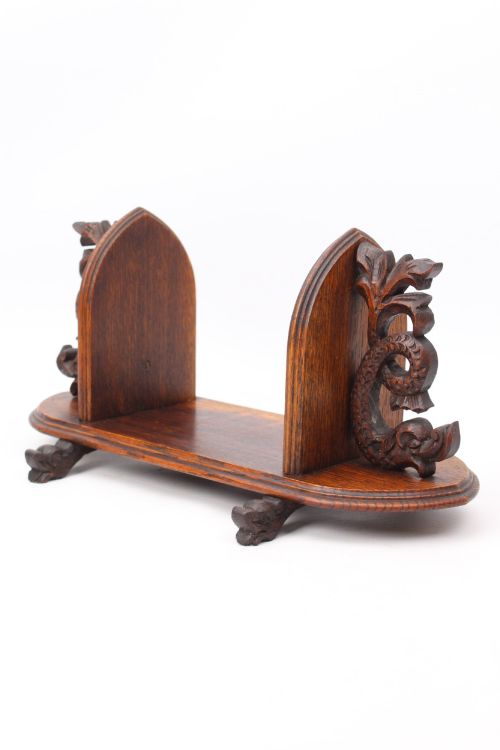
These wooden sliding book rack designs range from Gothic Revival oak to Tunbridge Ware and brass-mounted walnut, built to keep shelves tidy with expanding actions.
Wooden Sliding Book Rack
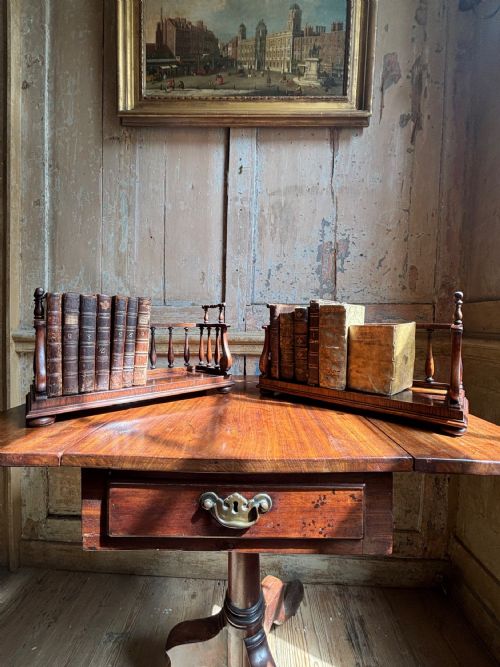
A wooden sliding book rack provides an adjustable platform for holding volumes upright on a desk or table. These desk accessories appear in forms such as book slides, book troughs, and book stands.
The pieces on this page span the Victorian and Edwardian eras through to the 1930s, alongside items from the 19th century. Buyers encounter styles ranging from plain mahogany and oak to intricate Anglo-Indian and Tunbridge Ware examples.
Common functional formats include extending book rests and novel rests that pull apart on slides to accommodate changing numbers of books. Most variants rely on hinged or sliding wooden mechanisms often reinforced with metal.
Materials and construction
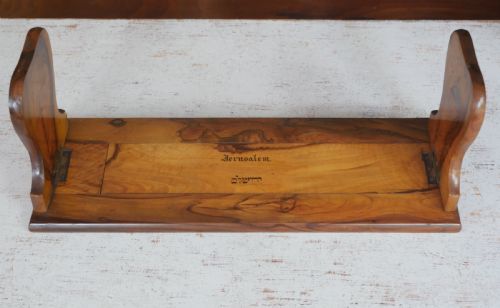
Cabinet makers utilised dense hardwoods such as rosewood, walnut, oak, coromandel, and ebonised wood to build sturdy book racks. Burr walnut and olive wood frequently provided decorative grain figures for display surfaces.
Many examples incorporate brass mountings, hinges, and corner brackets to strengthen the extending actions and joints. Inlays, bone details, carved teak, and painted plaques appear across regional and period pieces.
Listings feature woods such as rosewood, walnut, oak, olive wood, coromandel, and ebonised timber.
What determines quality
Quality rests in the precision of the extending mechanism and the stability of the sliding action. Smooth movement without binding separates superior examples from stiffer pieces.
Material selection and decorative execution define the upper tier. Finely figured burr walnut, detailed Tunbridge Ware mosaic work, or substantial brass mounts elevate an object above standard utility items.
Tiffany & Co
The Wooden Sliding Book Rack Glossary
- Book slide
- A device with extending sections designed to hold a varying number of books upright between two ends. These pieces sit on desks or tables for easy access.
- Tunbridge Ware
- Woodwork decorated with mosaic tesserae forming minute pictorial or geometric patterns. Makers used hundreds of tiny dyed wood blocks.
- Gothic Revival
- A design style drawing on medieval architectural motifs such as pointed arches and heavy tracery. This aesthetic appears frequently on Victorian oak examples.
- Ebonised wood
- Timber treated to imitate ebony through staining or painting. This finish creates a dark, uniform surface common on 19th-century desk accessories.
- Anglo-Indian
- Items produced in the Indian subcontinent under British influence, often featuring intricate carved teak or exotic timber details.
Wooden Sliding Book Rack: Frequently Asked Questions
How do wooden sliding book racks work?
These racks use overlapping or nesting wooden channels that pull outward to lengthen the base. This allows the user to adjust the span depending on how many volumes sit between the ends.
Metal hinges or brass mechanisms often support the moving parts to ensure smooth operation when expanding the unit.
Where were these book racks used?
Owners placed them on library tables, study desks, and parlour sideboards to keep working volumes close at hand. They served domestic and office environments alike.
Their compact footprint made them practical for managing smaller collections of reference books or daily reading material.
How do I date a wooden sliding book rack?
Dating relies on timber choices, decorative styles, and construction methods. Victorian pieces often display heavy brass mounts or Gothic carving, while later 1930s examples lean towards simpler mahogany or oak troughs.
Specific techniques like Tunbridge Ware mosaics or Anglo-Indian carving also point directly to distinct 19th and early 20th-century periods.
Can these racks hold heavy books?
Sturdier variants built from dense hardwoods like oak, rosewood, or walnut handle heavy volumes easily. The strength of the sliding mechanism and the thickness of the base wood determine load capacity.
Simpler or more decorative pieces suit lighter novels and poetry collections rather than massive folio volumes.