
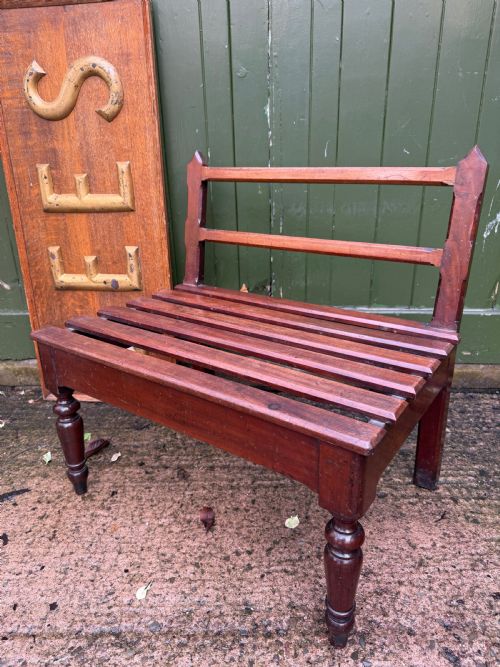


Wooden Slat Trunk
These wooden slat trunk examples combine rugged utility with period character, offering sturdy storage that anchors a room with historic substance.
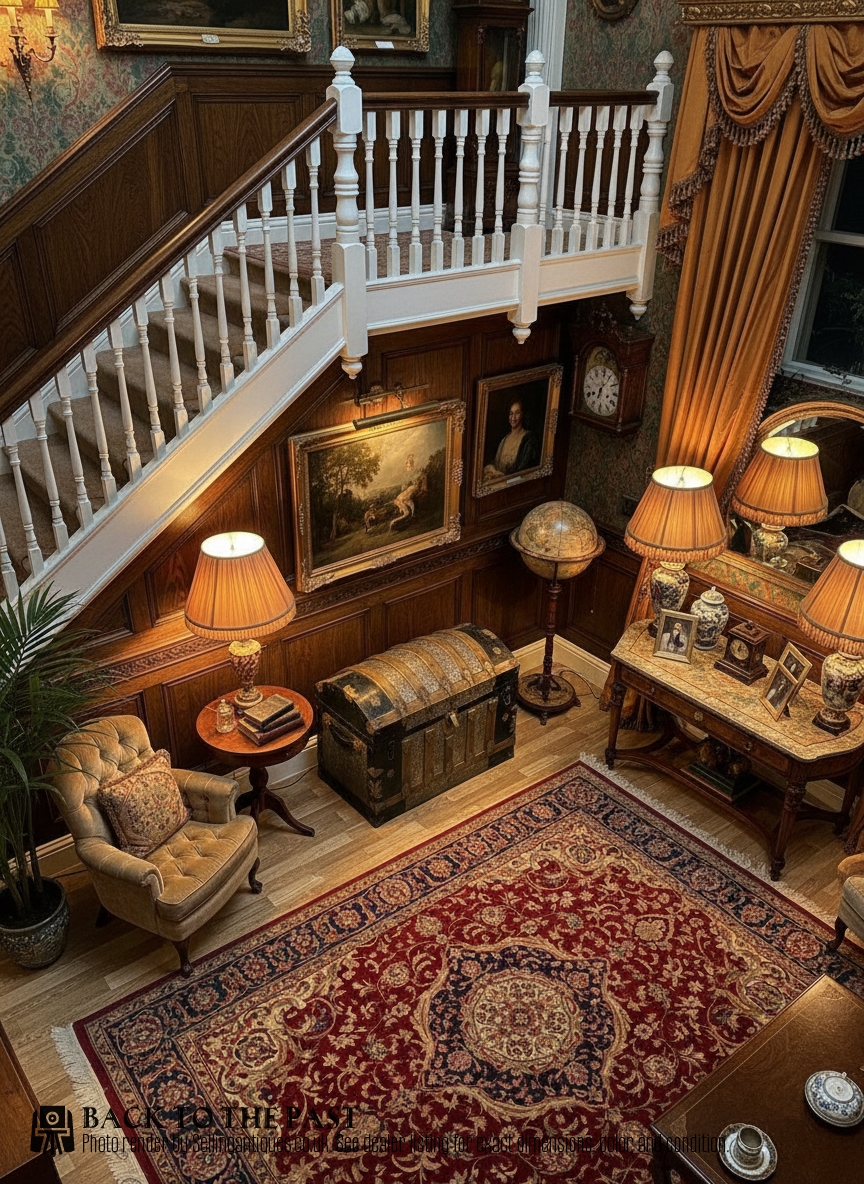
Wooden Slat Trunk
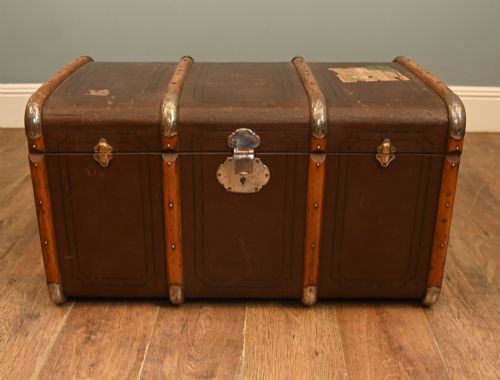
A wooden slat trunk forms a distinct subset of luggage and storage chests, built to withstand the rigours of transit while remaining presentable enough for domestic interiors. These pieces emerge from the nineteenth and early twentieth centuries, spanning periods from Victorian and Edwardian eras up to the nineteen-twenties.
Buyers seeking a wooden slat trunk frequently encounter related forms such as luggage stands, racks, and travel chests alongside traditional dome-top and steamer trunks. Construction relies on solid timbers and protective laths designed to take the brunt of handling during travel.
Origins stretch across English country houses, continental workshops, and international luggage makers, reflecting both domestic utility and grand travel. The most common survivals on this page balance functional storage capacity with the distinctive external framing characteristic of the type.
Materials and construction
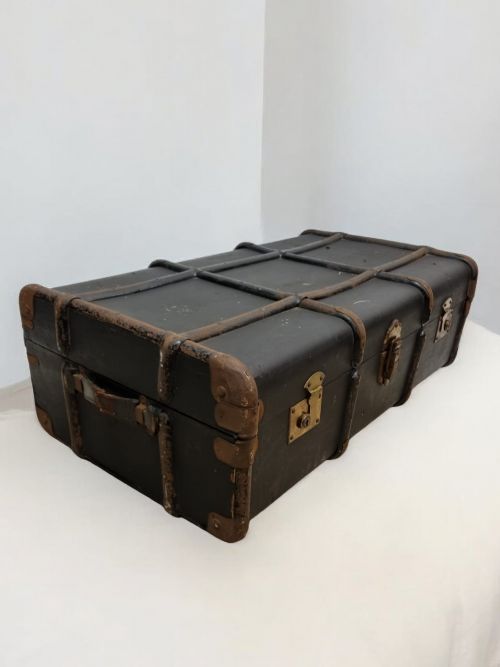
Construction relies heavily on timbers such as oak, mahogany, ash, beech, and pine, chosen for structural resilience and durability. Metal elements including brass, iron, and steel reinforce corners, edges, and latches to protect the wooden body from impact.
External surfaces frequently incorporate canvas or leather coverings secured by wooden slats, adding a layer of weather resistance and wear protection. Original hardware, locks, and stencilled monograms complete the fabrication, demonstrating the functional demands placed on travel gear of the period.
Current listings feature pieces spanning the nineteenth century through the nineteen-twenties, incorporating oak, mahogany, ash, canvas, and leather.
Measures of quality
Quality in a wooden slat trunk rests in the integrity of its original framework, the weight of its timbers, and the robustness of its metal hardware. Pieces retaining their foundational brass or iron mountings without structural timber replacement stand higher in the range than those altered over time.
Maker provenance and specialised construction details further separate standard utility pieces from exceptional examples. Stamped maker marks, branded locks, and finely fitted internal compartments demonstrate superior craftsmanship during production.
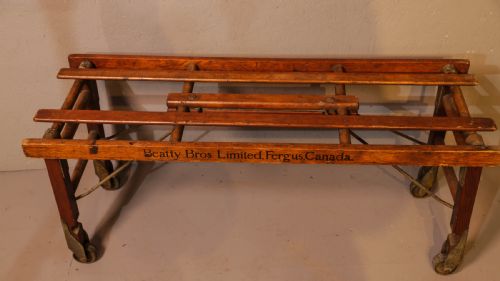
Beatty Bros Fergus Canada·Brown & Lamont·Waring & Gillow·Aux Etats Unis of Paris·Louis Vuitton
The Wooden Slat Trunk Glossary
- Dome top
- A trunk style featuring a rounded lid designed to shed water during transit. This shape alters internal packing capacity while providing distinct exterior proportions.
- Steamer trunk
- A lower-profile luggage piece built to fit beneath steamship cabin berths. These items emphasise compact storage and durable exterior laths.
- Luggage stand
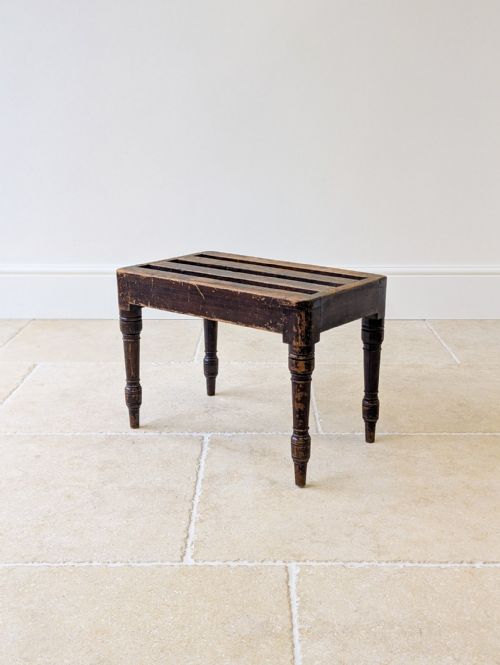
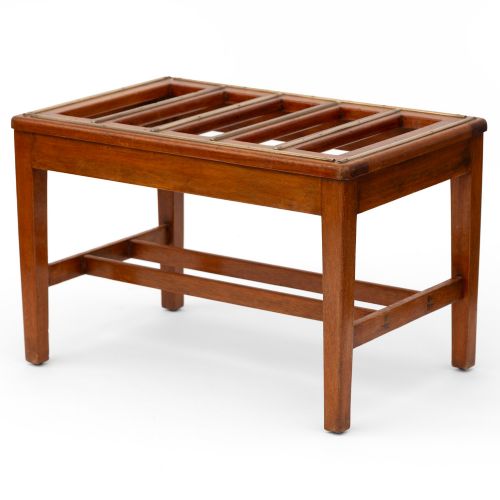
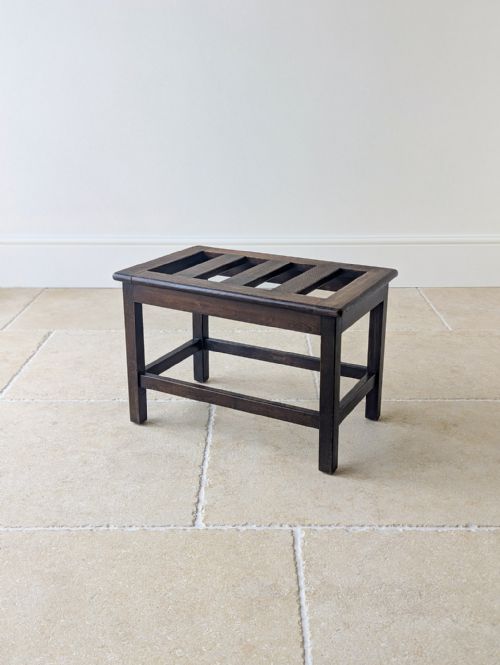
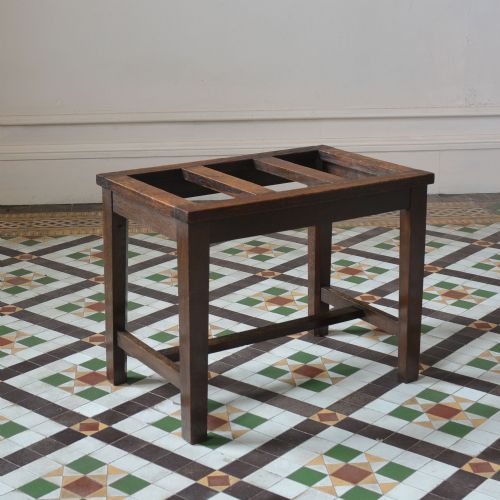
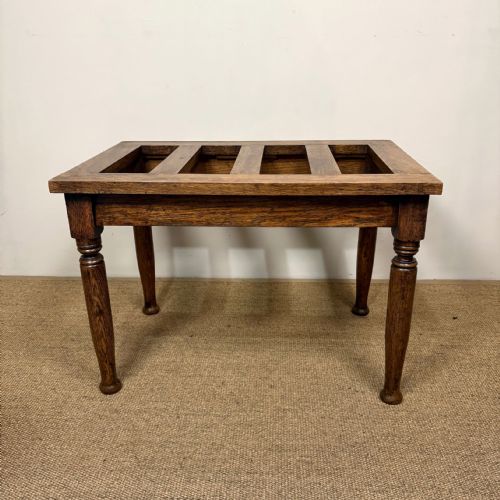
- An elevated rack designed to hold trunks off the floor for easier packing. These items share materials and construction methods with the trunks themselves.
- Hardware
- The metal latches, locks, corners, and handles attached to trunks. Original hardware indicates the authenticity and period of the piece.
- Upstand
- A raised and raked rear support found on certain stands. This element prevents items from sliding backward during use.
Wooden Slat Trunk: Frequently Asked Questions
How were trunks used originally?
These trunks served as primary luggage for travellers navigating train networks, steamships, and cross-country journeys during the nineteenth and early twentieth centuries.
At home, they transitioned into permanent bedroom storage, holding seasonal garments, linens, and personal possessions securely out of sight.
How do I date a wooden slat trunk?
Dating relies on examining the construction timber, lock mechanisms, and the style of exterior hardware. Victorian and Edwardian examples often feature heavy oak or pine frames with cast iron or brass fittings.
Maker stamps and stencilled travel labels also provide documentary evidence that helps narrow the production window.
Can I use a trunk as a coffee table?
Many buyers repurpose flat-topped trunks as coffee tables to introduce rustic texture and hidden storage into a living space. Ensure the lid structure remains stable and capable of supporting everyday items.
Placing a tray on top protects the historic wood and canvas surfaces from accidental liquid rings or scratches.
What is the difference between a trunk and a luggage stand?
A trunk is a fully enclosed storage chest intended for transporting belongings from place to place. A luggage stand is an open frame designed to support a trunk at a convenient height for packing.
Stands utilise the same woods and metals as trunks but function purely as domestic furniture rather than travel containers.