





Wooden Shield Plaque
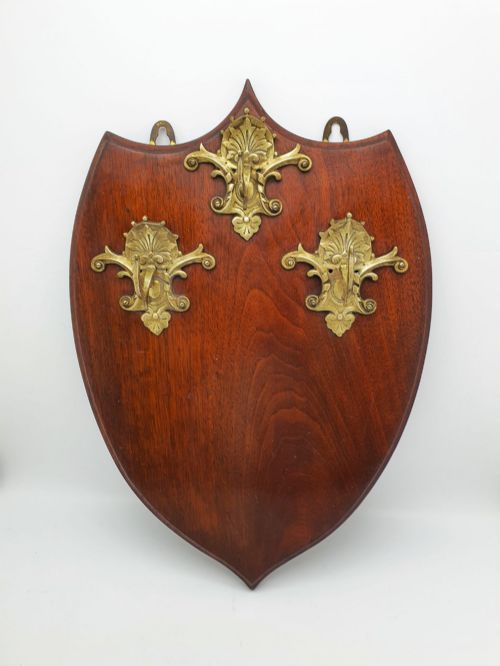
These wooden shield plaque items combine sturdy timber backings with heraldic carving, taxidermy mounts or utilitarian fittings to furnish hallways and studies.
Wooden Shield Plaque
When you search for a wooden shield plaque, you encounter a distinct category of wall-mounted items designed around a pointed timber backing. These pieces function as decorative armorial displays, practical coat racks, hotel key boards, or structural mounts for taxidermy trophies.
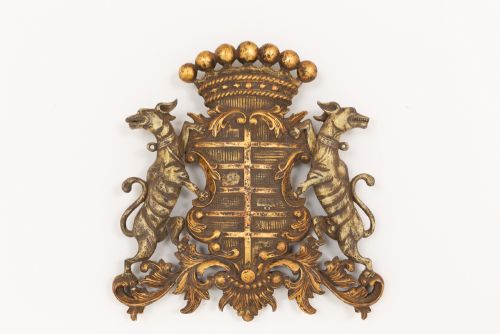
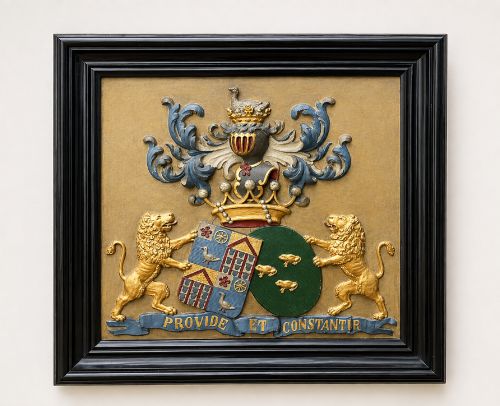
The selections span from the Victorian and Edwardian eras into the early twentieth century, reflecting both domestic utility and sporting traditions. You regularly meet examples shaped as heraldic crests, carved armorial lions, or wooden boards supporting animal horns and fox masks.
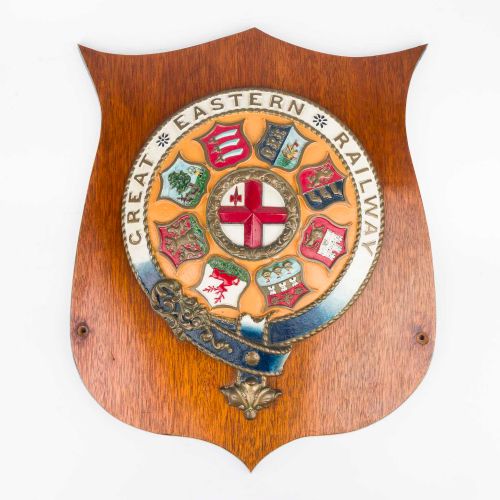
Makers utilised these shield formats to display railway crests, automobile club emblems, and marriage coats of arms. The resulting items transform natural timber and mounted specimens into formal wall decoration suited to traditional interiors.
How they were made
Cabinet makers shaped the foundational shields from oak, mahogany, and tiger oak, often applying deep hand-carving to create raised armorial borders and crests. Polychrome paint was occasionally added to highlight heraldic details and coat of arms symbolism on the timber face.
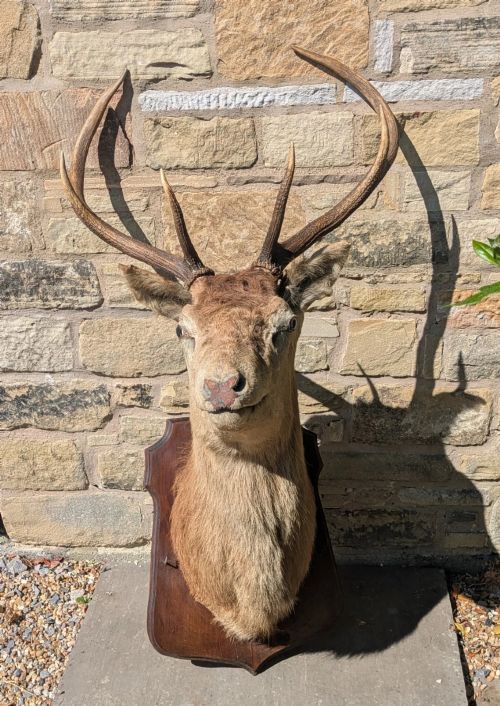
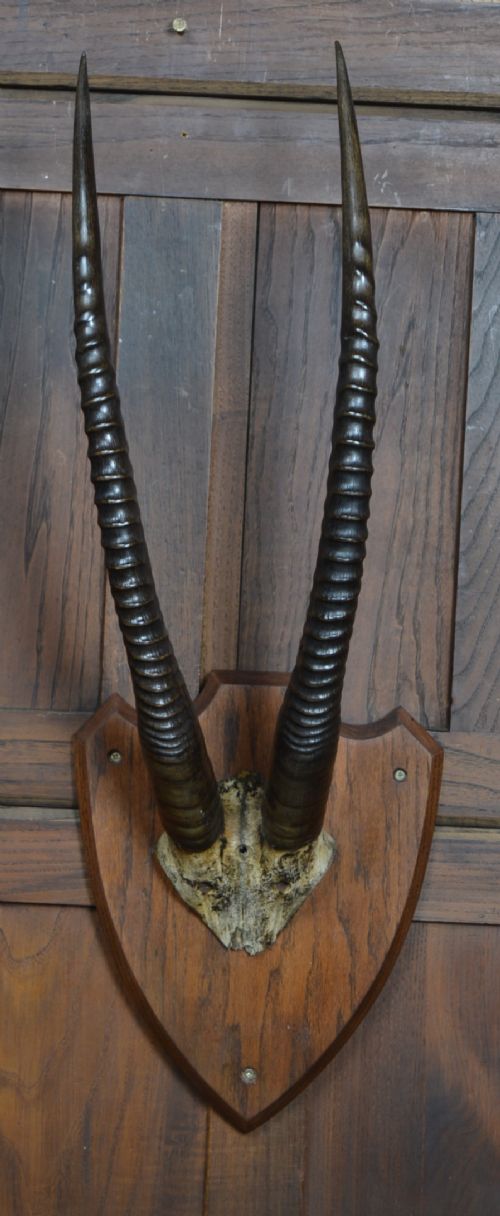
Taxidermists prepared horns, antlers, and animal masks such as fox heads or deer mounts, securing them firmly to the wooden boards with metal brackets. Workshops also integrated brass coat hooks, silver-plated plaques, and glass elements directly into the wooden framework for functional use.
Wooden Shield Plaque Retail Price Guide 2026
Typical asking prices for wooden shield plaque among the pieces listed under this phrase on Sellingantiques today, from the lower quarter to the upper quarter. They describe what is for sale here now, not the wider market.
Swiss motorists of the nineteenth century apparently loved small metal cartouche emblems so much they mounted them firmly onto polished wooden shields.
What varies in quality
The calibre of a wooden shield plaque rests upon the depth and precision of the timber carving, alongside the anatomical preservation of any taxidermy elements. Pieces executed by established taxidermy firms or skilled heraldic carvers exhibit superior anatomical accuracy and crisper lines in the woodwork.
Materials and secondary fittings dictate the distinction between standard utilitarian boards and high-status presentation pieces. Heavy mahogany or tiger oak foundations paired with cast brass hardware, silver plating, or hand-painted armorials command greater presence than simple turned-out factory boards.
P. Spicer & Sons·Peter Spicer & Sons
The Wooden Shield Plaque Glossary
- Heraldic
- Pertaining to coats of arms and armorial bearings. These designs often dictate the specific lineage or organisation represented on a carved wooden shield.
- Armorial
- Relating to heraldic arms or a crest. Such motifs appear carved in relief or painted onto the wooden plaque face.
- Cartouche
- An oval or oblong frame with ornamental scrollwork, frequently used for emblems or inscriptions on wall plaques.
- Taxidermy mount
- The preserved skin of an animal mounted over a form, often attached to a wooden shield for display as a sporting trophy.
Wooden Shield Plaque: Frequently Asked Questions
How were taxidermy horns mounted on shields?
Taxidermists and cabinet makers secured horns and antlers by bolting them through the wooden shield backing. A strong timber foundation, such as oak, was necessary to support the heavy weight of species like red deer, koodoo, or springbok.
Hide or velvet trimming was frequently used to conceal the join where the skull plate met the wood.
Where were shield plaques displayed?
Victorian and Edwardian households placed these plaques in entrance halls, stairwells, and smoking rooms to display hunting trophies and family crests. Commercial establishments also utilised them, mounting hotel key boards and railway insignia on public walls.
The shield format naturally directed attention toward the central crest or mounted specimen.
How do I date a wooden shield plaque?
Dating relies on the style of the carving, the wood species utilised, and any accompanying brass hardware or taxidermy mounting methods. Victorian and Edwardian examples often feature heavy oak frames, hand-carved armorial motifs, and traditional taxidermy preparation.
Permanent stamps, inscriptions, or maker signatures on the reverse of the wood provide precise chronological markers.