
Wooden Secretary Bureau
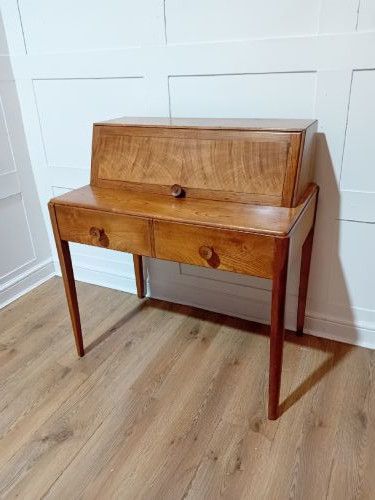
A wooden secretary bureau brings warmth and working space to a room, offering clever pigeonholes and a drop-down writing flap.
Wooden Secretary Bureau
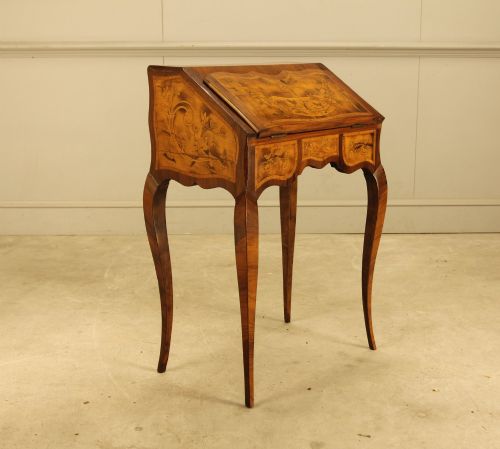
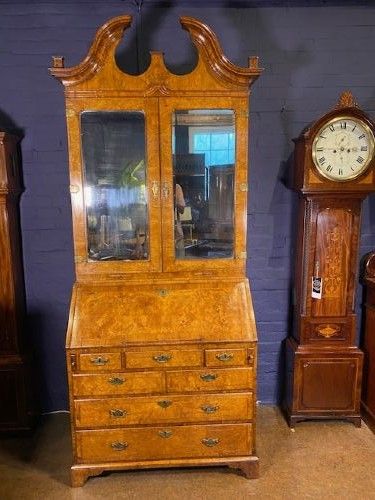
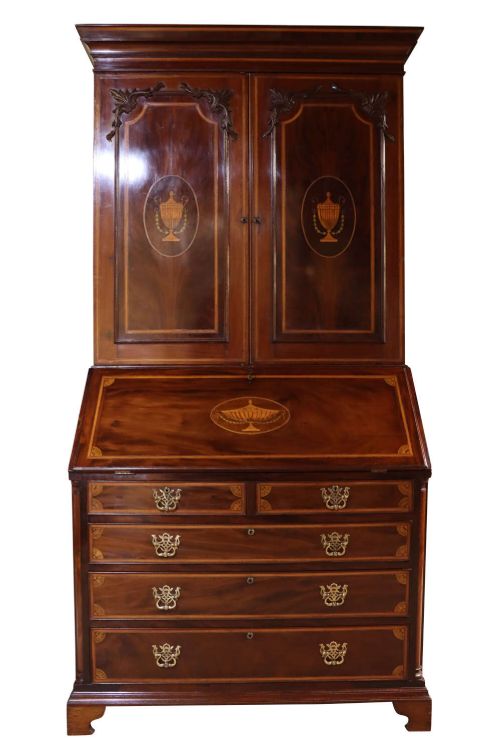
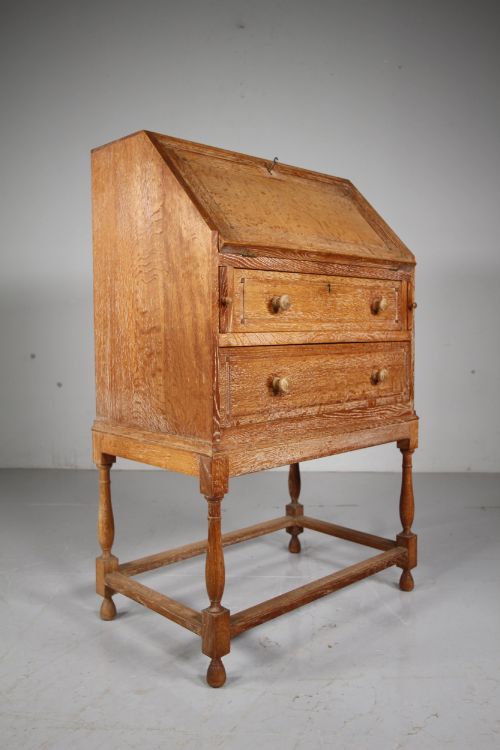
A wooden secretary bureau combines a practical writing surface with concealed storage drawers and compartments, often surmounted by a bookcase or cabinet. When searching for a wooden secretary bureau, buyers encounter various forms ranging from compact fall-front writing desks to tall bureau bookcases spanning multiple centuries.
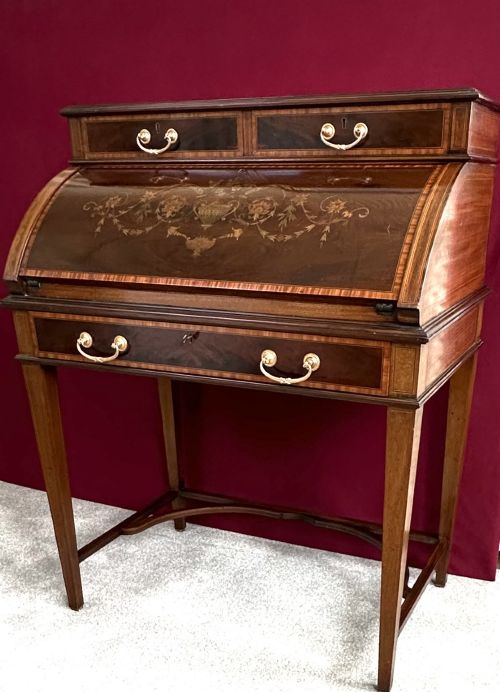
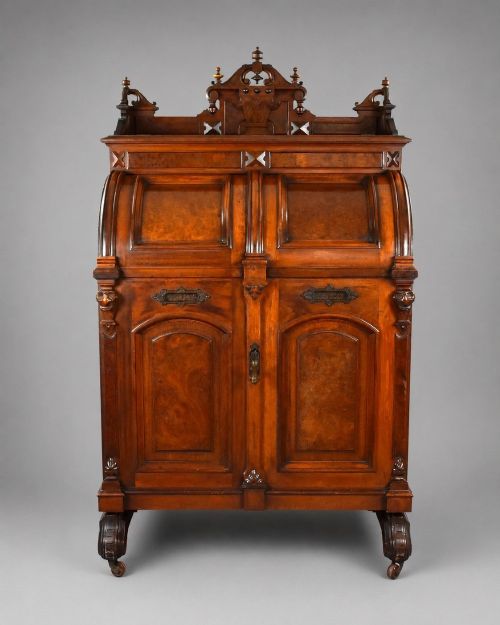
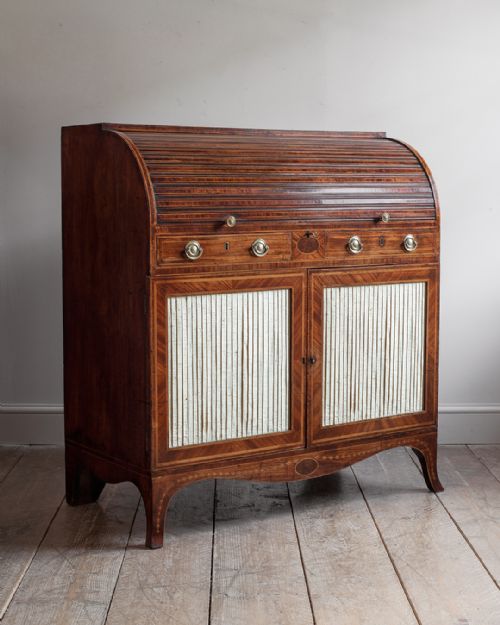
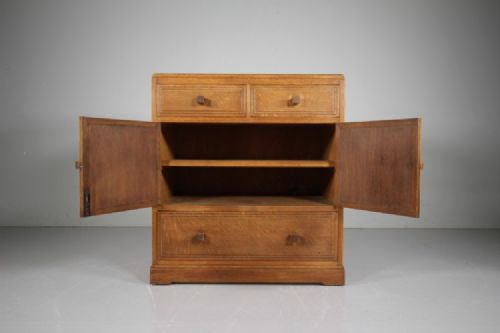
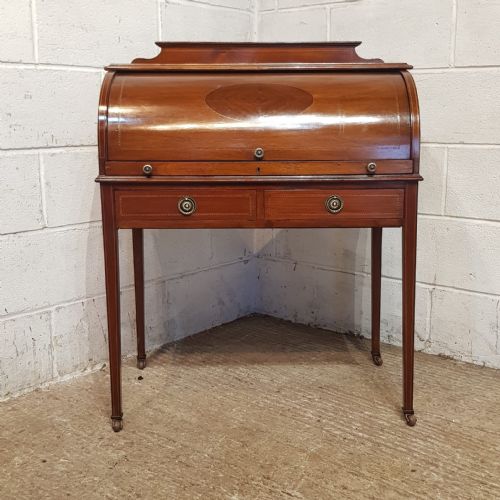
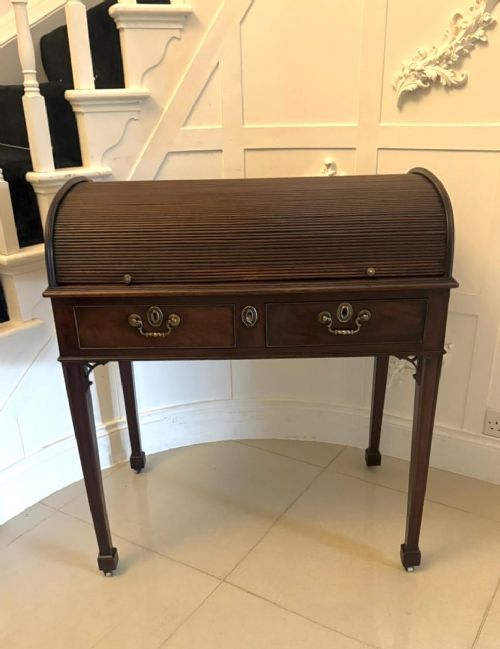
The pieces appearing on this page stretch from the early eighteenth century through the Georgian, Regency, and Victorian eras into the Edwardian period and the early twentieth century. Walnut, mahogany, and oak dominate the selection, appearing alongside specialised variations like cylinder desks, tambour tops, and bureau bookcases.
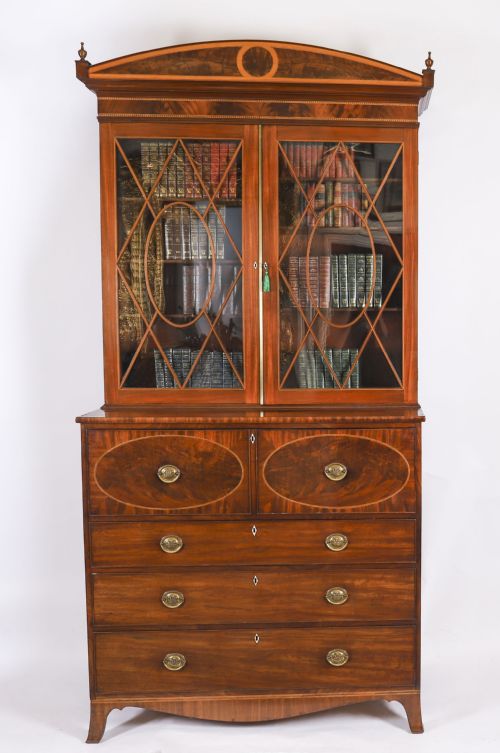
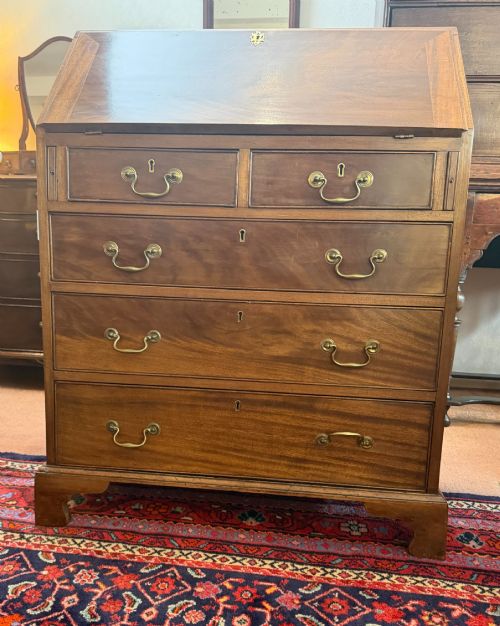
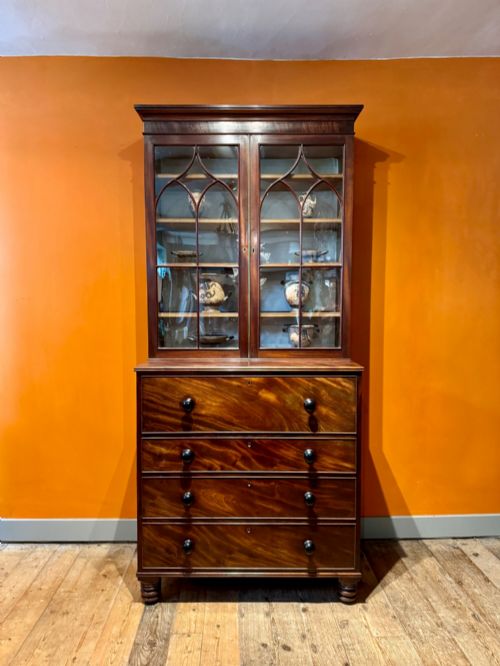
Simpler fall-front desks provide compact writing stations, while taller bureau bookcases integrate glazed upper shelving for displaying books and porcelain. Regional interpretations and labelled pieces from makers such as Heals of London add distinct character to the selection.
Materials and construction
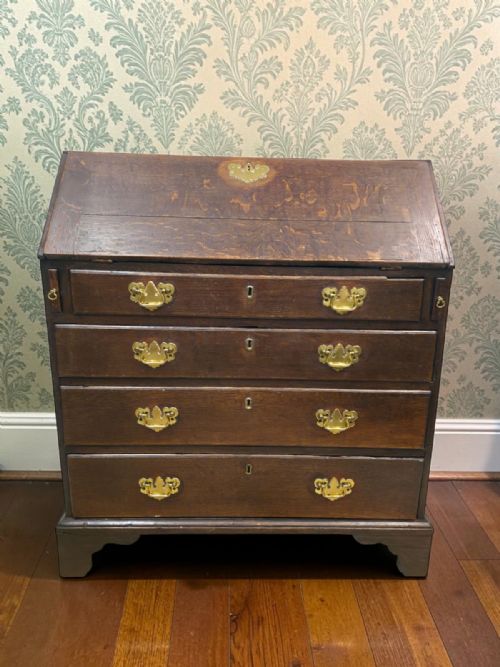
Cabinet makers built these pieces using dense hardwoods like mahogany, oak, and walnut, often applying decorative veneers such as burr walnut, flame mahogany, and satinwood to primary surfaces. Brass handles, escutcheons, and original ironwork provided functional hardware, while leather inserts frequently lined the pull-out writing slides.
Joinery techniques involved precise dovetailing for drawers and mortise and tenon joints for structural stability, supporting complex fall-front mechanisms, tambour slides, and internal pigeonhole structures. Selected examples incorporate inlaid banding and contrasting stringing to accentuate the cabinetwork.
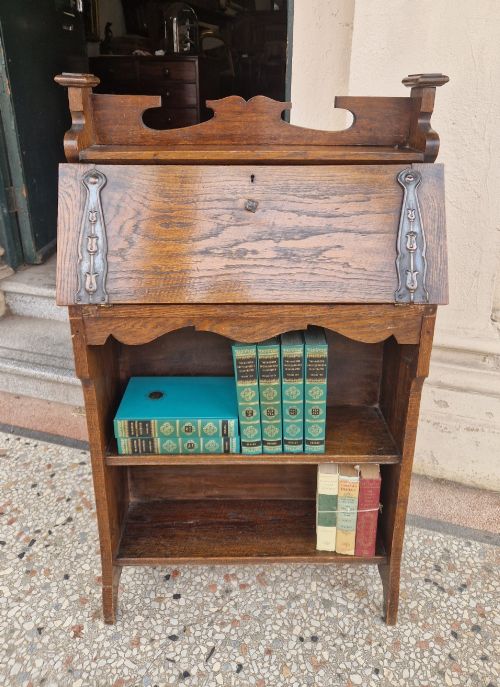
Design styles represented include Georgian, Regency, Victorian, Edwardian, Queen Anne, and Arts and Crafts.
Assessing quality in writing furniture
The standard of a piece depends on the depth of figure in the timber, the precision of the veneer matching, and the integrity of the internal fittings. Superior examples retain original ironwork or brass hardware and demonstrate uncompromised drawer construction with hand-cut dovetails.
Proportion and execution separate standard utility pieces from exceptional cabinetmaking, particularly in the complexity of internal compartments and the crispness of inlaid stringing or carving. Original surfaces and unaltered interior layouts carry greater weight among collectors than heavily restored examples.
Heals of London·Arthur Basil Reynolds
The Wooden Secretary Bureau Glossary
- Bureau bookcase
- A writing bureau combined with an upper shelving cabinet enclosed by doors. This tall form houses books or display items above the sloping desk section.
- Fall front
- A hinged writing flap that drops down to form a horizontal desk surface. This panel conceals internal pigeonholes and small drawers when closed.
- Tambour
- A sliding shutter made of narrow vertical strips of wood glued to a canvas backing. It pulls across a cylinder desk to cover the writing area.
- Pigeonhole
- A small compartment within a desk interior used for sorting letters and papers. These compartments often surround a central locking cupboard.
Wooden Secretary Bureau: Frequently Asked Questions
What is a wooden secretary bureau?
A wooden secretary bureau is a dual-purpose item featuring a sloping or folding writing flap that opens to reveal internal compartments, set above storage drawers.
These pieces range from modest writing desks to towering bureau bookcases designed to hold libraries and display collections.
How do I use a bureau daily?
The drop-front flap lowers to provide a stable wooden surface for writing or placing a laptop, while the interior compartments organise stationery and post.
When writing is finished, the flap lifts to conceal paperwork instantly, restoring a tidy appearance to the room.
How do I date an antique bureau?
Dating relies on timber choices, construction methods, and hardware styles, such as the walnut favoured in early periods or the mahogany typical of Georgian pieces.
Secondary woods inside drawers and the style of dovetailing offer further clues to the decade of manufacture.
What is the difference between a bureau and a secretaire?
A traditional bureau relies on an angled fall-front flap that opens downward, whereas a secretaire often looks like a chest of drawers with a pull-out or drop-front top drawer hiding a desk interior.
Both serve the same primary function of providing concealed writing space within domestic furniture.