


Wooden Room Partition Screen
A wooden room partition screen divides a space with height and texture, bringing panels of carved wood, lacquer or fabric directly into a room.
Wooden Room Partition Screen
A wooden room partition screen is a hinged multi-panel structure designed to divide interiors, block draughts or create privacy within a floor plan. The examples found here span periods from the late nineteenth century through the interwar years, including Edwardian pieces and items dated across the decades up to nineteen thirty.
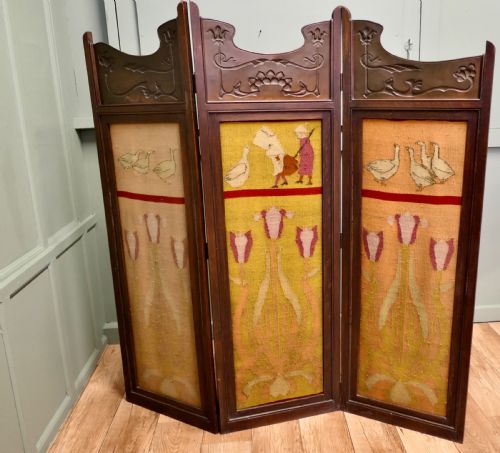
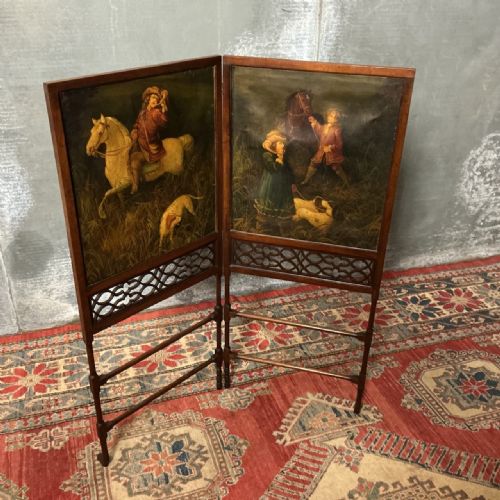
Most entries take the form of folding screens or room dividers, constructed with three, four or eight panels. Alongside domestic room dividers, the selection includes specialised variations such as fire screens and dressing screens.
Geographic origins and aesthetic styles vary widely across the inventory. Pieces reflect British Arts and Crafts, Art Nouveau and Edwardian tastes alongside global traditions including Anglo-Indian woodwork, Islamic and Persian revival designs, Chinese coromandel lacquer and Japanese painted panels.
How they were made
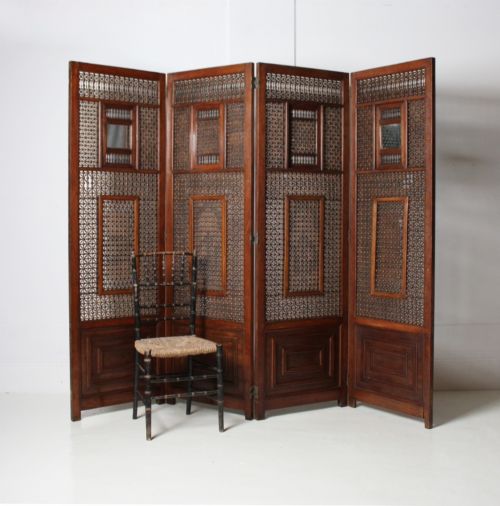
Construction relies upon solid timbers and frame assemblies using woods such as oak, mahogany, padauk and general hardwoods. These structural frames support varied infills, ranging from carved fretwork and mashrabiya lattice to lacquered wood surfaces.
Decoration is applied through multiple specialised techniques across different cultures. Examples incorporate oil paintings, naive wool needlework panels, William Morris strawberry thief velvet fabric, brass elements, and glass inserts alongside deep surface carving and dark lacquer work.
One screen doubles as a political battleground, housing the original nineteenth-century oak frame for a college debating society.
What varies in quality
Quality shows in the depth and crispness of the carving, the stability of the hinges connecting multiple folds, and the integrity of the timber frame. Superior panels maintain structural rigidity across wide spans without excessive warping in the wood.
Artistic execution sets individual items apart, from the complexity of coromandel lacquer work and hand-painted details to the quality of integrated textiles such as art fabrics and wool panels.
The Wooden Room Partition Screen Glossary
- Mashrabiya
- An architectural element of turned wood woodwork forming decorative lattices. It provides ventilation and shade while screening views.
- Coromandel
- A type of Chinese lacquerware featuring dark surfaces incised with designs and filled with colours. The technique creates rich relief patterns across multiple folding panels.
- Padauk
- A dense tropical hardwood known for its deep reddish colour and durability. It takes fine carving detail exceptionally well.
- Fire screen
- A small ornamental screen placed in front of an empty fireplace during warmer months. It shields the room from soot or draughts.
Wooden Room Partition Screen: Frequently Asked Questions
How are wooden room partition screens supported?
These screens stand upright through the arrangement of their hinged panels, which angle slightly to create a stable zigzag or accordion footprint on the floor. Each vertical fold supports the next to distribute weight evenly.
Heavier panels constructed from dense hardwoods or thick lacquer require sturdy metal hinges to maintain alignment across the entire width of the divider.
Can these screens be folded flat?
Most folding screens use bidirectional or single-direction hinges that allow the panels to fold back against one another for storage or transport. This flexibility lets owners adjust the overall width of the screen to fit different spaces.
Screens decorated with delicate protruding carvings or inset paintings often require careful handling when folding to avoid surface friction between adjacent panels.
Where were these screens placed originally?
In period interiors, large multi-panel screens divided drawing rooms, created private dressing areas, or blocked draughts near doors and windows. Smaller versions sat on desks or functioned as fire screens.
They offered a flexible alternative to permanent walls, allowing households to alter the layout and atmosphere of a room according to the season or occasion.
How do I care for lacquered wood panels?
Lacquered surfaces benefit from gentle dusting with a soft, dry cloth to prevent abrasive particles from scratching the finish. Direct sunlight and extremes of humidity should be avoided to protect the lacquer from cracking.
Applying chemical polishes or modern cleaning sprays can damage historic finishes, so maintenance is best kept minimal and dry.